Quick Answer
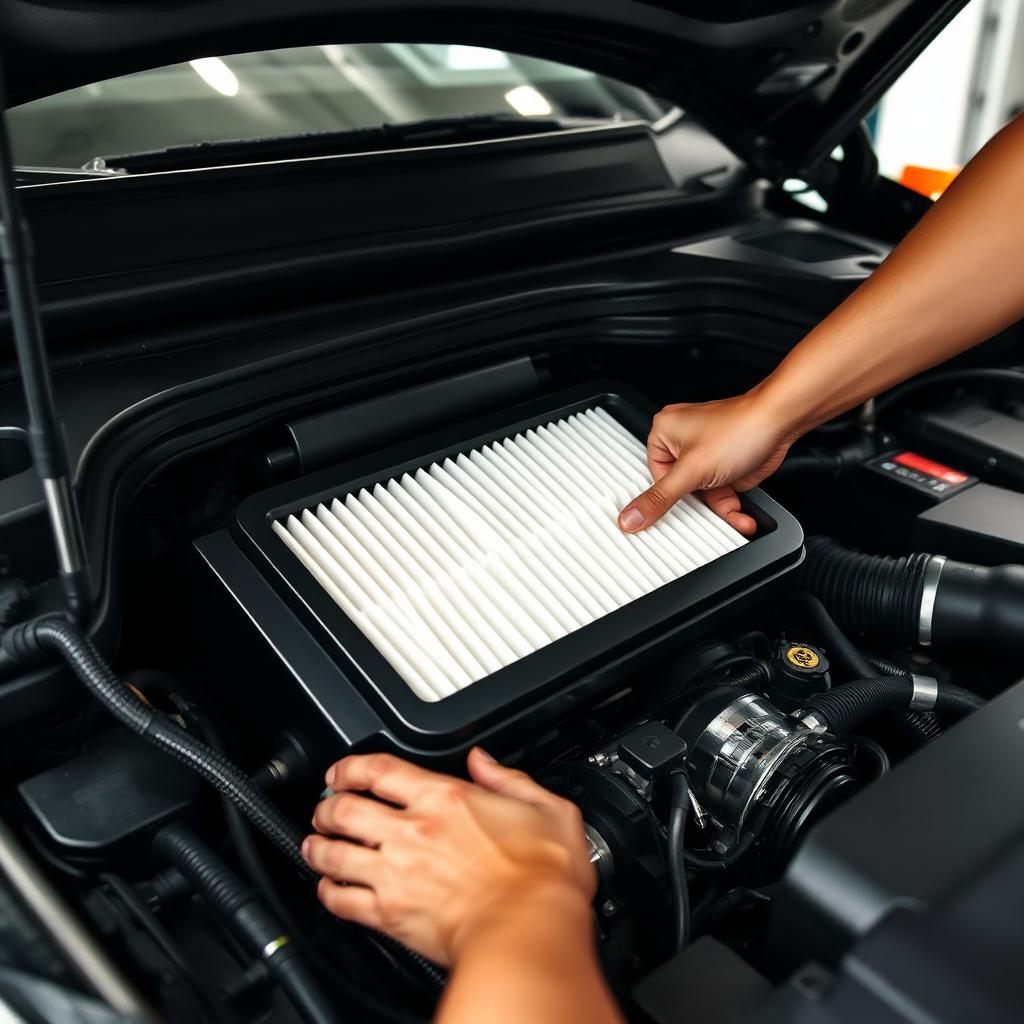
To change a car air filter, open the hood, locate the black plastic airbox connected to the intake hose, release the clips or screws on the lid, lift out the old pleated filter, note which way the pleats and gasket faced, drop a fresh filter in the same orientation, and close the lid. The whole job takes about five minutes and needs no tools on most cars.
Why a Clean Air Filter Matters
Your engine is essentially a large air pump that mixes air with fuel and burns it. The air filter is the first defence against airborne grit, sand, leaves, and insects that would otherwise score the cylinder walls.
A clogged filter chokes airflow, which forces the engine computer to add more fuel to keep the air to fuel ratio correct. You feel that as a drop in fuel economy, lazy throttle response, and sometimes a rough idle.
Signs Your Filter Is Due
- Sudden drop in miles per gallon.
- Sluggish acceleration, especially under load.
- Rough idle or a faint engine miss at stops.
- A musty smell through the cabin vents (often the cabin filter, but worth checking both).
- Visibly grey, oily, or matted pleats on the existing filter.
Step by Step Replacement
- Find the airbox. Open the hood. The airbox is a black plastic enclosure connected to a wide ribbed intake hose, usually near the front or one side of the engine bay.
- Open the lid. Depending on the car, the lid is held on by metal spring clips, by Phillips head screws, or by a combination. Release them all and lift the lid carefully so any debris does not fall into the intake.
- Pull the old filter. Lift the old filter straight up out of the housing. Before you do anything else, look at how the pleats face and which side the rubber gasket seals against.
- Vacuum the housing. Use a small vacuum or a damp cloth to clean leaves and dust out of the bottom of the empty airbox.
- Drop the new filter in. Seat the new filter in the same orientation, with the gasket flush all the way around the edge.
- Close and clip. Re fasten the lid clips or screws and start the engine to confirm everything sounds normal.
Engine Air Filter vs Cabin Air Filter
These are two different filters and they are easy to confuse.
The engine air filter cleans the air going into the cylinders. The cabin air filter cleans the air coming out of your dashboard vents. The cabin filter usually lives behind the glovebox and has its own quick swap procedure.
How Often to Change It
Most manufacturers recommend replacing the engine air filter every 25,000 to 50,000 km, but I always inspect at every oil change. Dusty climates, dirt roads, and pollen heavy seasons all shorten the life. If light no longer passes through the pleats when you hold it up, replace it.
Cost and Brand Choice
A quality OEM equivalent paper or cotton filter typically costs $15 to $40. Reusable performance filters cost more upfront but can be cleaned and re oiled. For most daily drivers, a quality OEM equivalent paper filter is the right answer.
What Not to Do
Do not start the engine with the airbox open. Anything sucked in goes straight into the cylinders. Do not install a filter upside down. The pleat direction and gasket placement matter for sealing.
The takeaway
Changing a car air filter is one of the cheapest and most satisfying maintenance jobs you can do. Locate the airbox, release the clips, swap the filter in the same orientation, and close the lid. Done at the right interval, it protects your cylinders and quietly preserves fuel economy.
Common Questions About the Engine Air Filter
Can I clean and reuse a paper filter?
No. Tapping it out lightly is fine in a pinch, but blowing it with high pressure air or washing it will tear the pleats and let dirt straight into the engine. Replace, do not wash, paper filters.
Will a high flow filter add real power?
On a stock car the gain is small. The bigger benefit is the reusable design over many years. Save real power gains for a proper cold air intake system tuned for your engine.
How do I know if the filter is too dirty?
Hold it up to a bright light. If you cannot see light through the pleats, replace it. Surface dust on the outside is normal and not a reason to replace by itself.
Practical Tips and Common Mistakes
Most of the value in this kind of routine comes from doing the boring steps consistently rather than chasing the perfect product. Buy a quality core kit, store it where you will actually use it, and put a reminder on your phone so the schedule does not slip. A weekend habit, even a short one, will keep your car ahead of the curve.
The most common mistake I see is rushing. Five extra minutes spent doing each step carefully almost always saves a redo or a much larger repair down the line. Take your time, follow the manufacturer instructions for your specific vehicle, and do not be afraid to stop and look up a question before you continue. There is no shame in pausing to confirm a torque spec or a service interval.
Keep a simple log in your phone with the date, mileage, and what was done. When the next service comes around or you go to sell the car, that history is worth real money and removes any guesswork about what is due. A photo of the dipstick, the brake pad, or the new battery sticker takes seconds and answers a future question in one tap.
Finally, do not assume more is better. Overfilling fluids, over scrubbing surfaces, and over tightening fasteners all cause their own problems. Follow the spec, stop when the job is done, and move on. The same rule applies to upgrades: pick the part that actually solves your problem rather than the most expensive option on the shelf.
Build a small kit you can keep in the car: a digital tyre gauge, a microfibre towel, a quart of the correct oil, a torch, jumper cables or a lithium jump pack, and a quality torque wrench at home. None of these are exotic, but together they cover most roadside surprises and let you handle routine work with confidence.
The last habit worth building is paying attention. New noises, new smells, new vibrations, and new warning lights all mean something. Catching them early almost always turns a major problem into a minor one. A car that gets a few minutes of attention every week rarely surprises you with a major bill.