Quick Answer
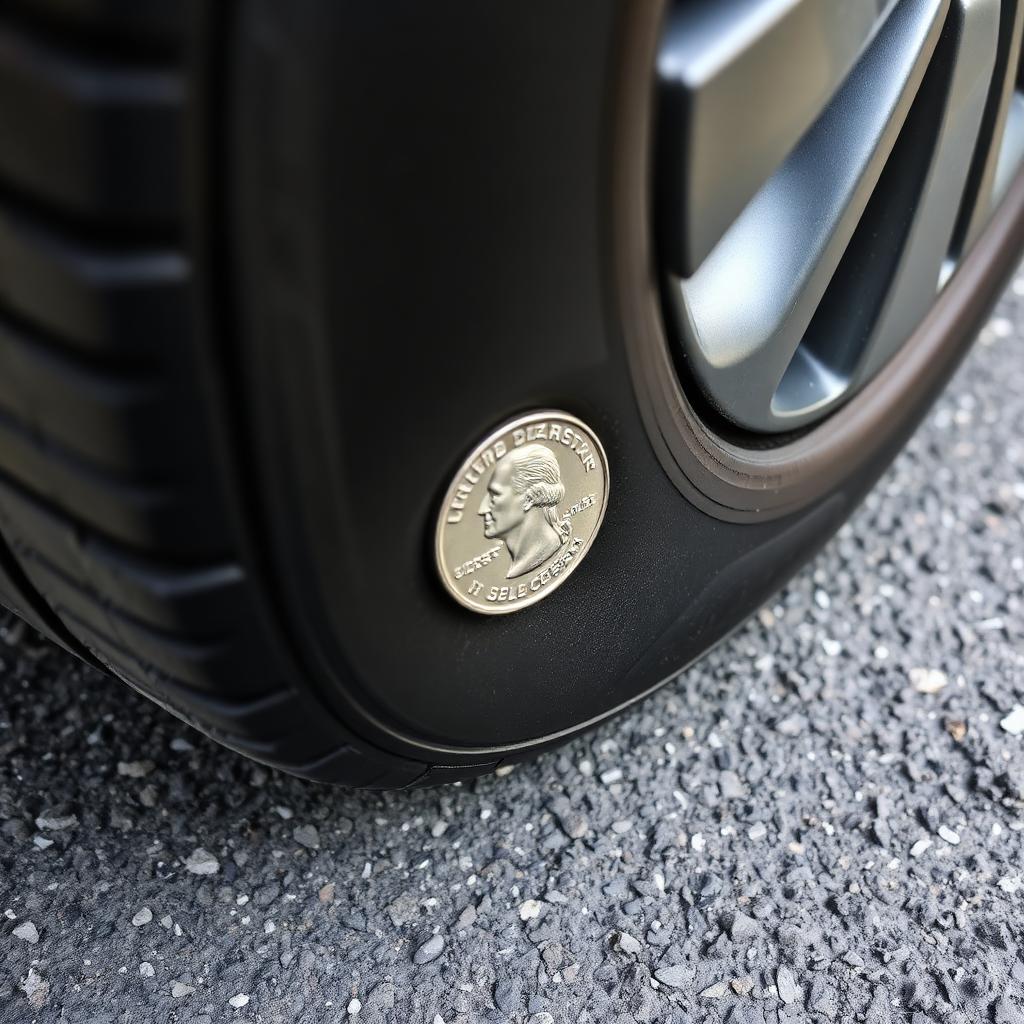
Insert a US quarter head-down into the deepest groove of your tire. If the tread covers part of George Washington's head, you have more than 4/32 inch of depth and you are safe in the rain. If you can see all of Washington's head, start shopping for new tires.
A penny with Lincoln's head down is the legal minimum: if Lincoln's head is fully visible, you are at or below 2/32 inch and the tire is unsafe and illegal in most US states.
Why tread depth matters
Your tires are the only contact point between thousands of pounds of vehicle and the road. The grooves engineered into the tread are not decorative. They channel water out from under the contact patch so the rubber can grip the pavement instead of riding on a thin film of water.
As tread wears down, that water-evacuation capacity drops. Stopping distances on wet roads grow, and the risk of hydroplaning rises sharply. Below the legal minimum, the tire can lose grip entirely during heavy rain.
Tread depth safety chart
| Tread depth | Status | Action |
|---|---|---|
| 6/32 inch and above | Safe | Routine driving, check pressures monthly |
| 4/32 inch | Caution | Plan a replacement, longer wet stopping distance |
| 2/32 inch or less | Unsafe and illegal | Replace immediately |
1. The quarter test (modern standard)
The classic penny test only flags tires that are already legally bald. Consumer Reports and tire engineers have shown for years that wet-weather grip drops off well above the legal minimum, so the quarter test gives a safer earlier warning.
- Hold a US quarter between your thumb and finger.
- Orient George Washington's head pointing down into the tread.
- Insert the coin into the deepest central groove.
- Look at the coin from eye level.
If the tread covers any part of Washington's head, you still have more than 4/32 inch and the tire is safe. If the entire head is visible above the rubber, the tread is thin and you should start pricing replacements before the next rainy season.
2. The penny test (legal minimum)
Insert a penny with Abraham Lincoln's head pointing straight down into the groove. If the rubber does not touch any part of Lincoln's head, your depth has dropped to 2/32 inch or less. At that point the tire is essentially bald, will not pass a state inspection, and is dangerous in any rain.
2/32 inch is the federal legal minimum across the United States. Anything at or below requires immediate replacement, not a plan for later.
3. Built-in tread wear indicator bars
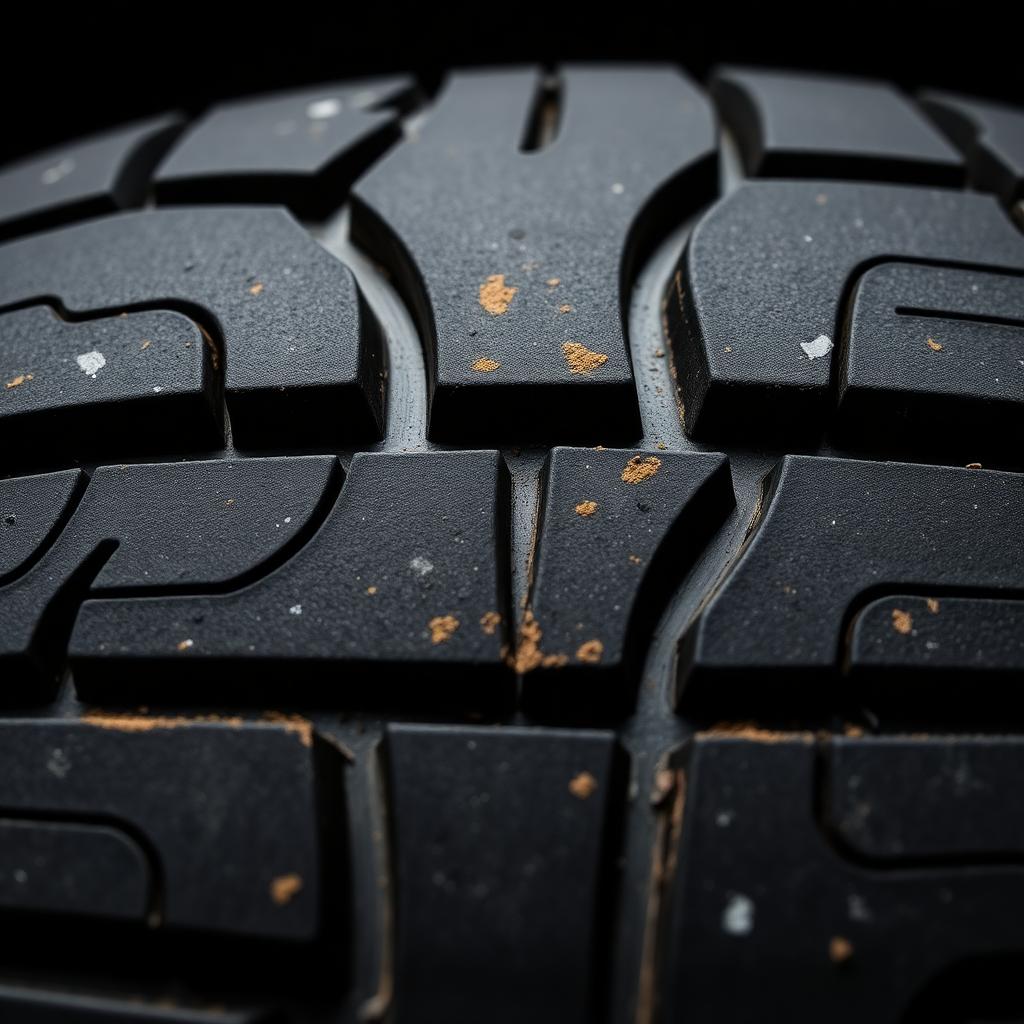
Every modern tire ships with built-in safety markers called Tread Wear Indicator Bars. Look inside the main grooves and you will spot small raised rubber bridges running sideways across the channel at several points around the tire.
As the surrounding tread wears down, it eventually sits flush with these bars. When the bars form a continuous smooth strip of rubber across the tread, the tire has hit its end of life and must be replaced.
4. Use a tread depth gauge for precision
A digital or simple plunger-style tread depth gauge costs less than $10 at any auto parts store and gives you an exact reading in 32nds of an inch or in millimeters. Press the pin into the deepest groove until the base is flat against the tread block, then read the number.
Check three spots on every tire: outer shoulder, center, and inner shoulder. Uneven wear (a much lower number on one shoulder) almost always means a wheel alignment problem or chronic under or over inflation, both of which a tire shop can address quickly.
5. When to check and what else to watch
Check tread depth once a month, ideally when you check tire pressures. Also scan for:
- Bulges or blisters on the sidewall (immediate replacement, the tire is structurally compromised)
- Cracking in the sidewall (usually age and UV damage)
- Embedded screws, nails, or glass
- Uneven shoulder wear (alignment issue)
Tires also age out independent of tread. Six years from the manufacture date stamped on the sidewall is a common upper limit even if the tread still looks deep.
Takeaway
A coin, two minutes, and a quick look at the wear bars are enough to tell you whether your tires are safe. Default to the quarter test as a real safety threshold, treat the penny test as the legal floor, and replace immediately when the tread sits flush with the indicator bars.