Quick Answer
Park on a flat surface, turn off the ignition, and put on gloves and safety glasses. Loosen and remove the negative (black) terminal first, then the positive (red) terminal, then the hold down clamp. Lift the old battery out, drop the new one in with the posts in the same position, secure the clamp, and reconnect in the reverse order: positive first, negative last. Spray a thin coat of dielectric grease on the terminals to slow corrosion.
The whole job takes 15 to 30 minutes with a single socket wrench. The negative first, positive last rule is the one safety detail that matters most; following it prevents short circuits and protects expensive electronics.
Why the order of terminals matters
Your car's metal frame is bonded to the negative battery terminal as the electrical ground. If you loosen the positive terminal while the negative is still connected and your wrench touches any metal surface, current flows from the positive post through the wrench to the frame, creating a short circuit. The spark can melt the wrench, throw molten metal, or fry sensitive control modules.
Removing the negative first breaks the path to ground, so even if the wrench touches metal during the positive removal, no current can flow.
Tools and supplies
- A new battery that matches your vehicle's group size, cold cranking amps (CCA), and terminal layout. Check your owner's manual or take the old battery to the parts store.
- Socket wrench with 10mm, 13mm, and an adjustable wrench (battery hardware varies by brand).
- Safety glasses and acid resistant gloves.
- Wire brush or terminal cleaner.
- Dielectric grease or anti corrosion terminal spray.
- Optional: a memory saver tool that plugs into the OBD II port and keeps your radio presets and clock alive during the swap.
Before you start
- Park on flat ground and engage the parking brake.
- Turn the engine off, remove the key, and let the car sit for at least five minutes so the alternator stops cycling.
- Close all doors and the trunk to power off interior lights.
- If your car has a security code on the radio or navigation, write it down. Disconnecting the battery wipes it.
- Locate the battery (usually under the hood; some vehicles place it under a rear seat or in the trunk).
Step by step replacement
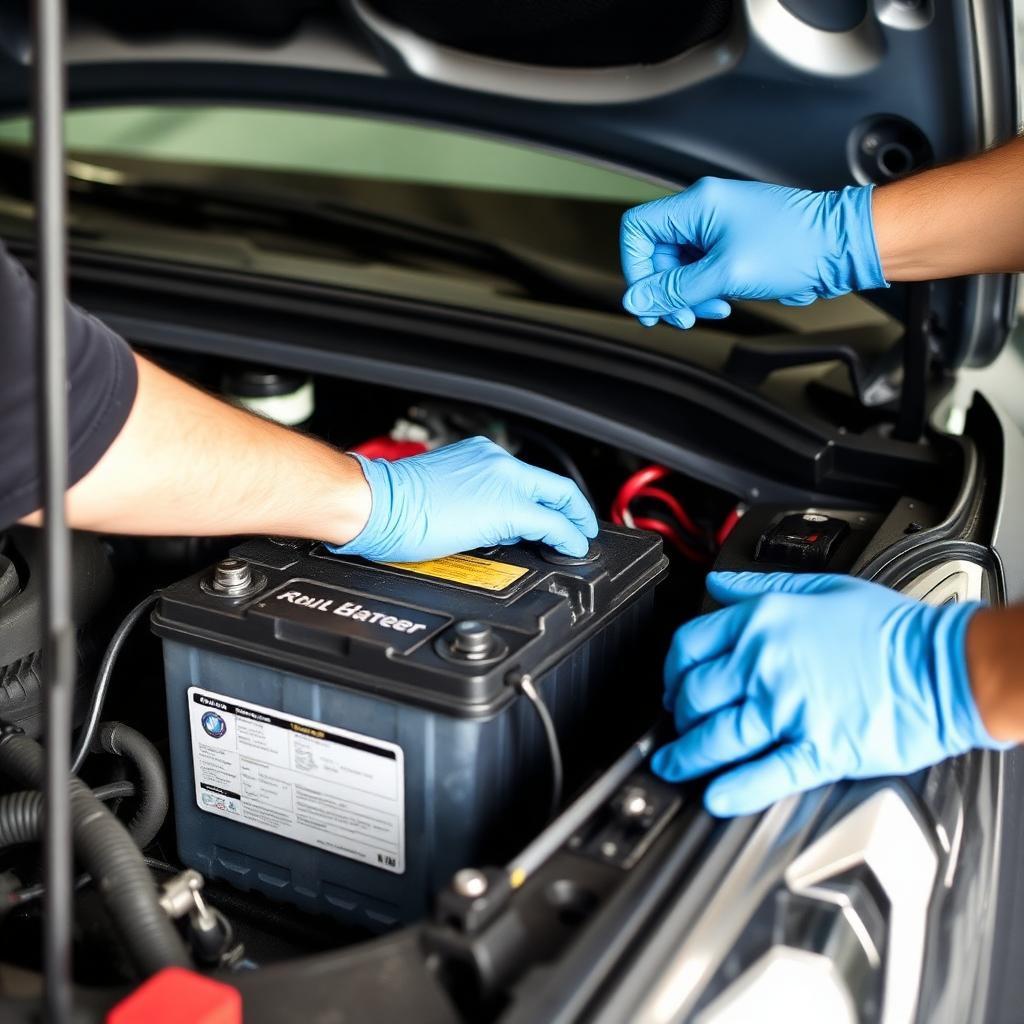
- Identify the terminals. Negative is marked with a minus sign and usually a black cap; positive is marked with a plus sign and a red cap.
- Disconnect the negative terminal first. Loosen the nut on the negative cable clamp with your socket wrench, lift the clamp off the post, and tuck the cable to the side so it cannot spring back and touch the battery.
- Disconnect the positive terminal. Same process. Move the cable well clear of the battery.
- Remove the hold down clamp. Most batteries have a bracket across the top or a wedge at the bottom. Loosen the bolt and lift the bracket off.
- Lift the battery out. A 12 volt battery weighs 30 to 50 pounds. Lift with your legs, use the carry handle if there is one, and keep it upright so acid does not spill.
- Clean the tray and terminals. Use a wire brush on the cable ends until the metal shines. Wipe the battery tray with a baking soda water mix if there is white or green corrosion, then dry it.
- Set the new battery in place. Match the terminal positions exactly. Tighten the hold down clamp until the battery cannot rock side to side.
- Reconnect positive first. Place the red cable clamp over the positive post and tighten until snug. The clamp should not twist on the post.
- Reconnect negative last. Same process for the black cable. A small spark when you make contact is normal; it is the car waking up.
- Apply dielectric grease to both terminals to slow corrosion.
- Start the car. The engine should crank strongly. Reset the clock and radio presets.
Disposing of the old battery
Most auto parts stores accept old lead acid batteries for free recycling and refund the core charge (often 15 to 25 dollars) you paid on the new one. Do not put a battery in household trash; it is hazardous waste in every state.
Common mistakes to avoid
| Mistake | Why it matters |
|---|---|
| Removing positive first | Risk of short circuit if the wrench touches metal |
| Skipping safety glasses | A spark can spray acid mist or molten metal |
| Loose hold down clamp | A vibrating battery cracks and leaks acid within months |
| Wrong group size | Battery does not fit the tray or cables do not reach |
| Touching both terminals with a tool at the same time | Instant short, melts the tool |
FAQs
Will the engine reset its computer when I disconnect the battery?
The engine control module relearns idle and shift behavior over the first 50 to 100 miles. Drive normally and any rough idle smooths out.
Do I need to charge a new battery before installing?
No. Factory new batteries arrive with about 90 percent charge. The alternator tops it off on your first drive.
What if the new battery has a different post height?
Cable clamps adjust to small differences. If the post is much shorter, the cable may slip; pick a battery in the correct group size for your vehicle.
Can I jump start my car instead of replacing the battery?
A jump start gets you to the parts store but does not fix the underlying problem. A battery that fails the load test at a parts store will not hold a charge and needs replacement.
The takeaway
Negative off first, positive off second; positive on first, negative on last. Match the group size, tighten the hold down, and grease the terminals. Twenty minutes, one wrench, and a recycled core fee, and you save the shop labor for a job you actually need.