Quick Answer
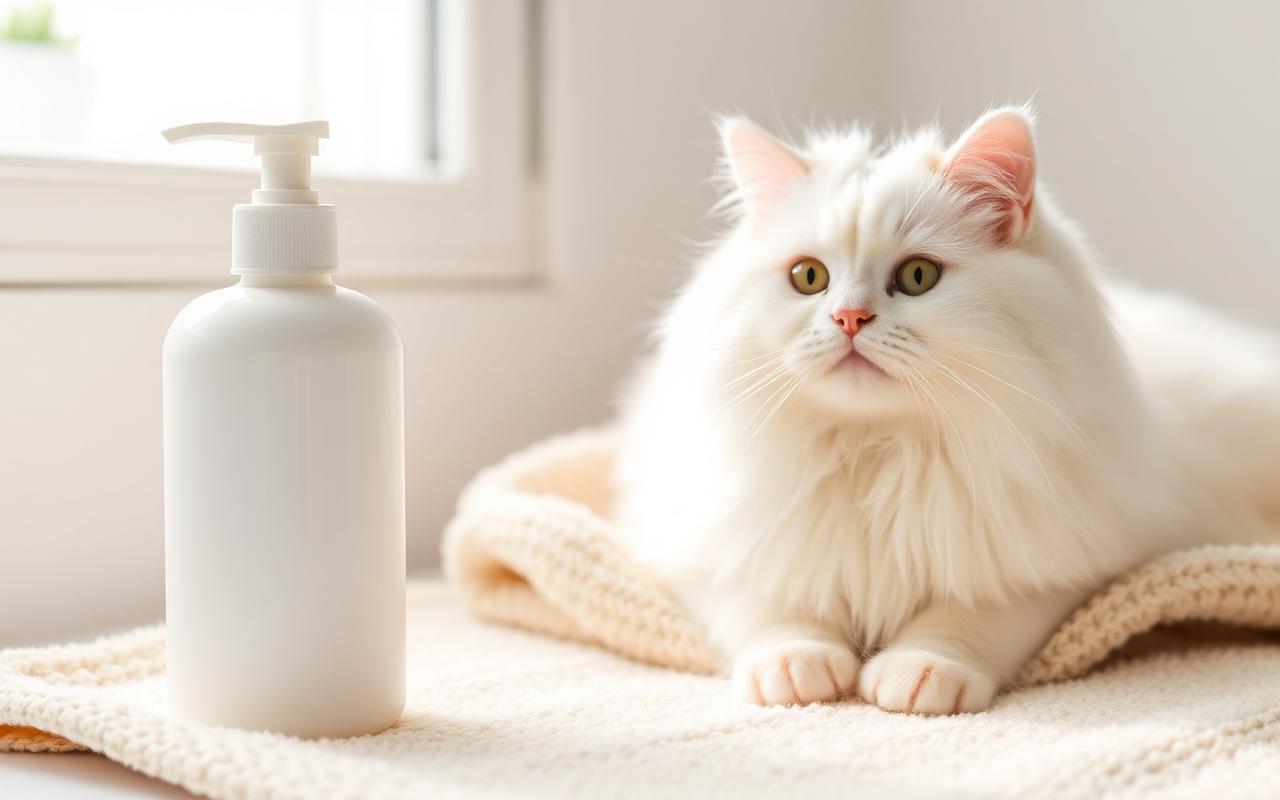
The best waterless bath for cats is a plant-based, essential-oil-free, alcohol-free rinse-free foam. Mild coconut or apple glucoside surfactants lift dirt, dander, and dried saliva off the coat; a towel dry and brush do the rest. Foams work better than sprays on thick or long coats because you control placement and depth.
Never use human dry shampoo or heavily fragranced dog waterless products on cats. Feline livers lack the enzymes to metabolize many essential oils safely.
Why waterless is often better than a water bath
Cats groom obsessively. Their coat and skin balance rely on a thin sebum layer. Frequent water baths strip that layer faster than skin can replenish it, which paradoxically leads to more dander and more odor. A well-formulated waterless bath cleans without stripping. It is also the right choice for arthritic seniors, kittens, and any cat too anxious for water.
Ingredients that matter
What to look for
- Coconut, apple, or oat-derived glucoside surfactants. Gentle, plant-based, safe if licked at normal exposure.
- Aloe vera, colloidal oatmeal, panthenol. Soothe and hydrate.
- Hypoallergenic and fragrance-free labeling. Reduces the odds of skin irritation.
- Certified cat-safe. Not just "for pets."
What to avoid
- Tea tree, lavender, citrus, eucalyptus, peppermint, wintergreen, and pennyroyal essential oils. Toxic to cats.
- Alcohol as a main ingredient. Dries skin and stings any nick.
- SLS, SLES, and parabens. Common irritants.
- Undisclosed "fragrance" high on the ingredient list. Common allergen.
Foam vs spray: pick the right delivery
Foaming mousse (best for most cats)
The dense foam sits where you put it. You can push it deep into a thick coat and control how much lands on the skin. Ideal for long-haired breeds and full-body clean-ups.
Fine-mist spray (best for spot cleaning)
Quick paw wipe, sticky-tail rescue, post-litter-box refresh. Faster to apply, but the mist startles some cats; spray onto a cloth first, then wipe.
Product picks
Vet's Best Waterless Cat Bath Foam
Fragrance-free foam with aloe, oatmeal, and vitamin E. Cat-formulated, no essential oils, easy to control on long coats.
Burt's Bees Waterless Cat Shampoo Spray
Apple and honey base, no fragrance, no SLS or parabens. Good for spot cleaning and paw refreshes.
Earthbath Cat Wipes plus Foam Combo
The wipes handle paws and rears; the foam handles full-body clean-ups. Together they cover 90% of at-home clean-up situations.
How to give a waterless bath
- Brush first. Loose hair and dry debris come off before you add product.
- Warm the foam in your palm. Cats bolt when cold product hits skin.
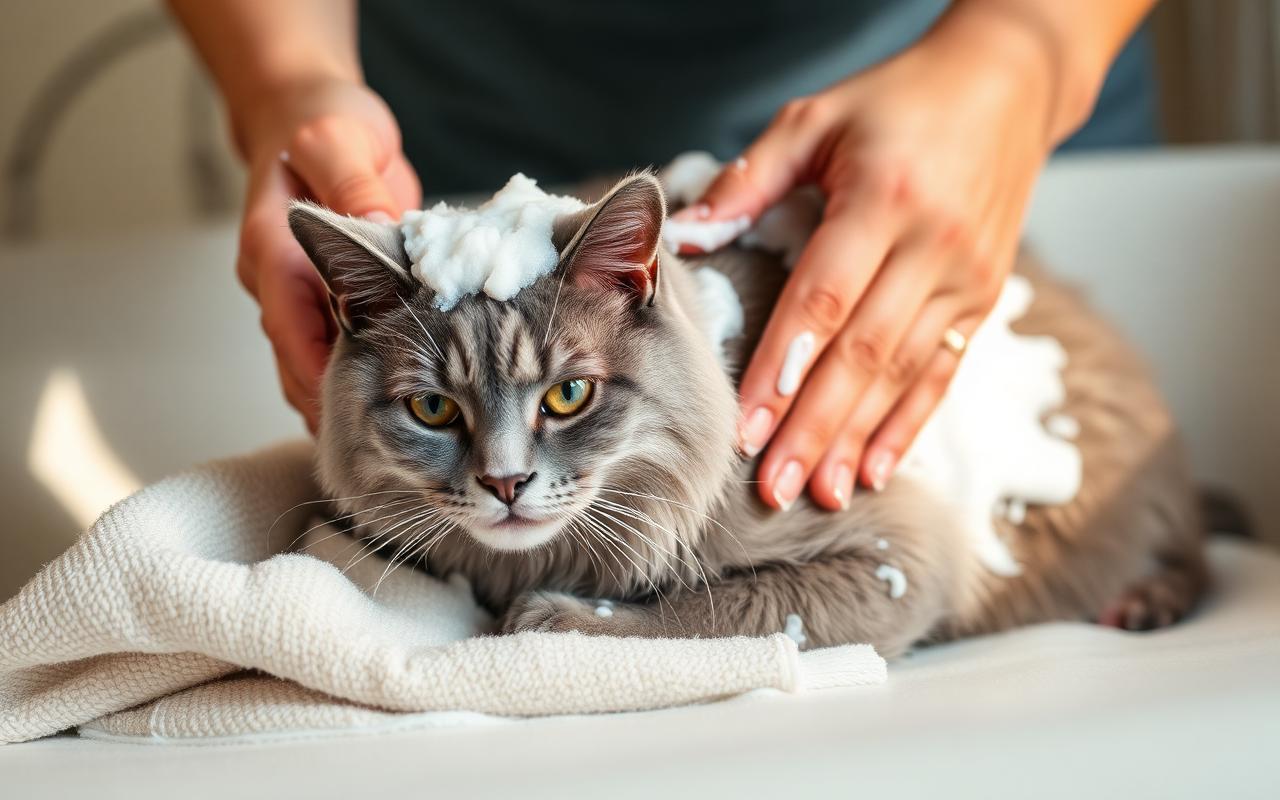
- Apply in sections. A palm of foam per section, worked from neck to tail. Avoid the eyes, ears, nose, and mouth.
- Massage to the skin. Odor lives on the skin, not on the hair.
- Towel-buff, then brush. A dry microfiber towel lifts the loosened dirt off. A final brush realigns the coat.
Common questions
Can I use a waterless bath every week?
Yes on the body. Skip weekly use on the face and belly, which need airflow and fewer product interactions.
Does it handle skunk or severe odor?
No. A serious skunking or heavy fecal soiling still needs a water bath and, for skunks, a specific peroxide/baking soda/dish soap wash within 24 hours.
Is waterless shampoo safe for kittens?
Only products explicitly labeled safe for kittens 12 weeks and older. Younger kittens should be spot-cleaned with a warm damp cloth and no product.
Bottom line
Choose a plant-based, essential-oil-free waterless foam for full-body cleaning and a lick-safe mist for spot jobs. Brush before and after, work product to the skin, and buff dry. That combination keeps a cat clean and comfortable while preserving the sebum layer a healthy coat depends on.