Quick Answer
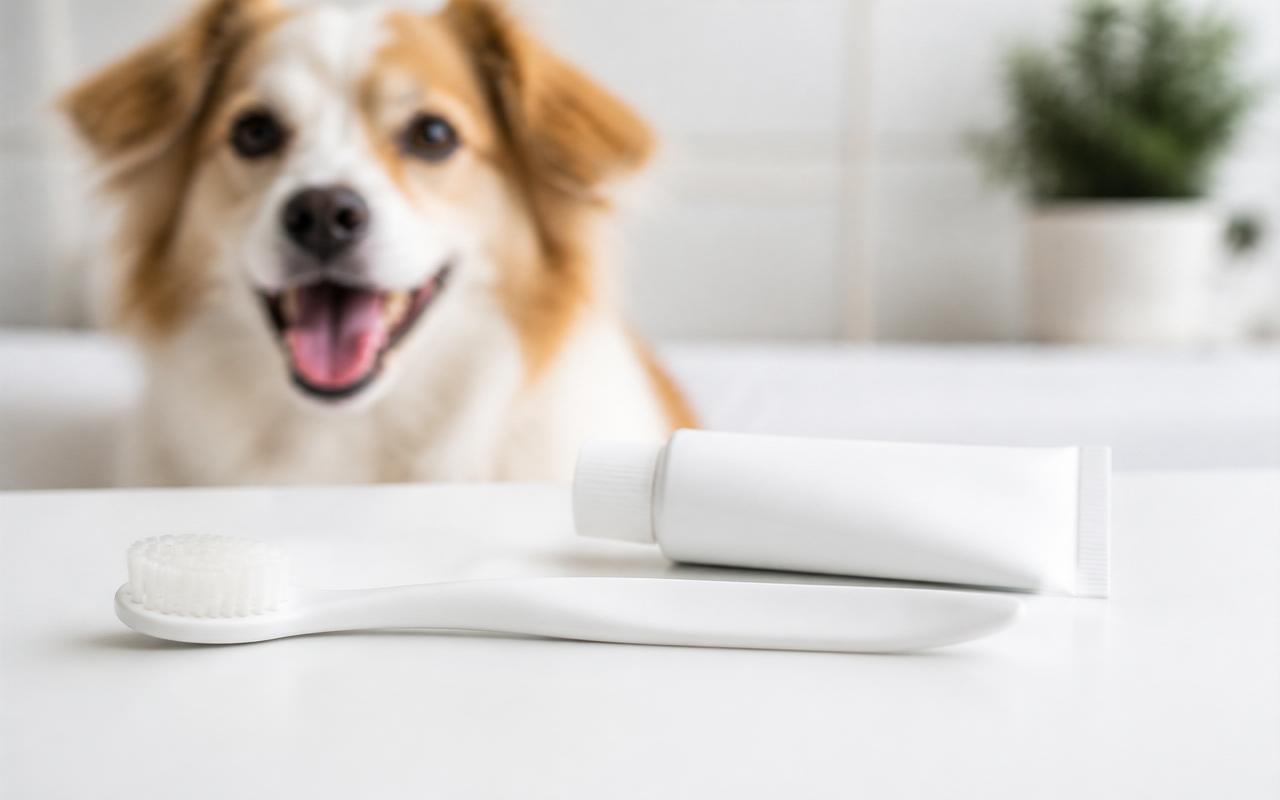
The best toothbrush and paste kit for dogs is the Virbac C.E.T. Enzymatic Toothpaste Kit. The paste uses a glucose-oxidase / lactoperoxidase enzyme system that keeps working after brushing, comes in poultry, malt, and vanilla-mint flavors dogs accept, and pairs with a dual-headed brush that fits both small and large mouths. The Veterinary Oral Health Council (VOHC) accepts C.E.T. toothpaste for plaque control.
For puppies and toy breeds, the Petsmile Professional Dog Toothpaste + Finger Brush Kit is another VOHC-accepted option that requires no brushing (you can also just apply). For a 360-degree scrub, the Vetoquinol Vet Solutions Enzadent Kit with triple-head brush hits all three tooth surfaces in one stroke.
Never use human toothpaste. Human formulas contain xylitol (toxic to dogs), fluoride (upsets stomachs when swallowed), and foaming agents (SLS) that dogs cannot spit out.
Why brush a dog's teeth at all
By age three, over 80 percent of dogs show clinical signs of periodontal disease (American Veterinary Dental College). Plaque forms within 24 hours of eating and hardens into tartar in 3 to 5 days. Tartar causes gingivitis, then periodontal disease, and eventually pushes bacteria into the bloodstream where it can seed infections in the heart valves, kidneys, and liver. Brushing three times a week reduces plaque scores by 30 to 60 percent versus no brushing.
How enzymatic toothpaste works
Dogs swallow toothpaste; they cannot rinse. Canine pastes are formulated to be safe to ingest, without foaming agents. The enzymatic versions do more than clean while you brush , they seed the mouth with a mild antibacterial reaction that continues after the brush is put away.
The mechanism: glucose oxidase converts glucose into hydrogen peroxide, which lactoperoxidase converts into hypothiocyanite, a natural antimicrobial ion. It targets plaque bacteria without irritating oral tissue.
What to look for in a kit
- VOHC seal. Products accepted by the Veterinary Oral Health Council have been tested for plaque and tartar reduction. Look for the seal.
- Enzymatic formulation. Glucose oxidase + lactoperoxidase, or a similar dual-enzyme system.
- Dog-safe flavor. Poultry, beef, malt, or peanut butter. Not mint (the eucalyptol can irritate small dogs).
- No xylitol, no fluoride, no SLS. Confirm on the label.
- Brush that fits the mouth. Dual-ended (small head + large head) covers the range from a Yorkie to a Lab.
Toothbrush designs, ranked by ease of use
Dual-ended brush (Virbac C.E.T.)
Small head for incisors and toy-breed mouths, large head for molars. The standard shape most dogs tolerate.
360-degree triple-head brush
U-shaped bristle arrangement that brushes buccal, lingual, and occlusal surfaces in one stroke. Cuts brushing time roughly by two-thirds. Best for dogs who tolerate less than 90 seconds of brushing.
Silicone finger brush
Slides over your index finger. Ideal for introducing puppies and toy breeds. Not aggressive enough to break down established tartar, but excellent for daily maintenance.
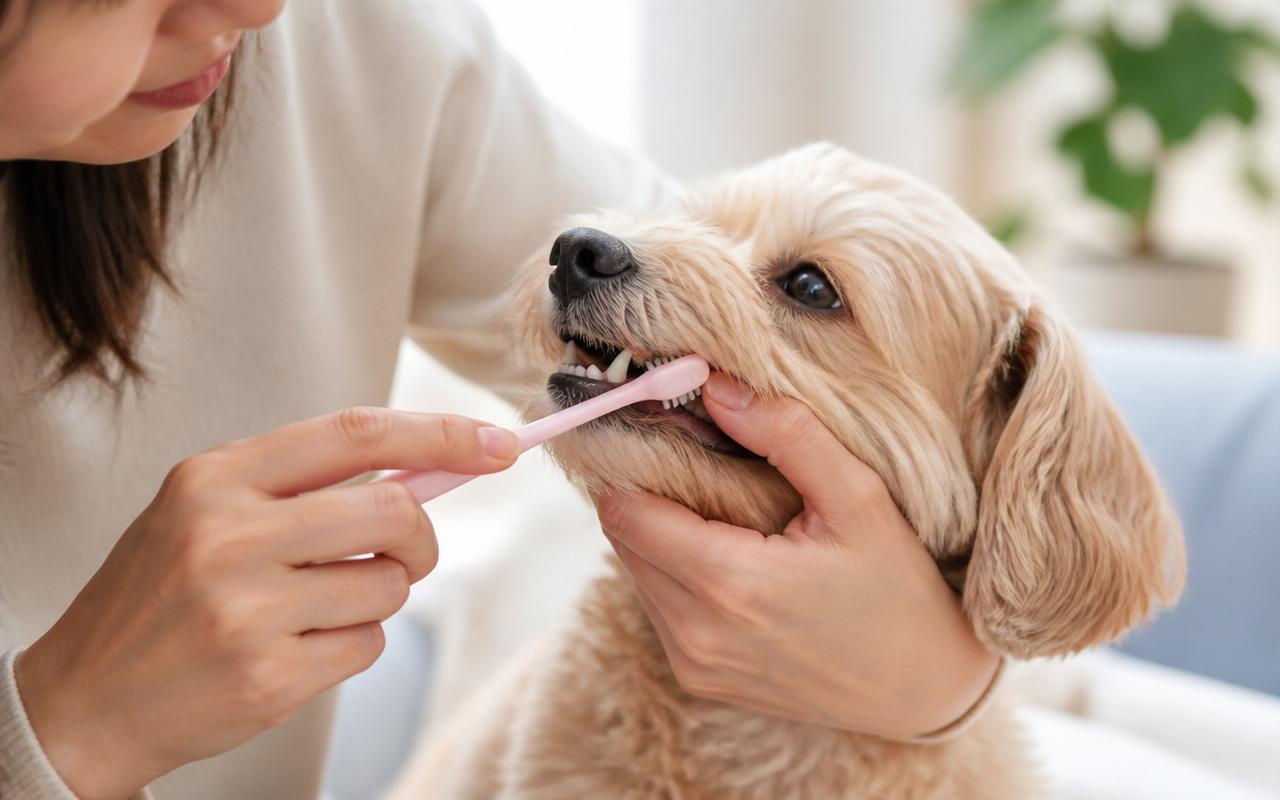
The 4-day introduction protocol
- Day 1: Let the dog lick enzymatic paste off your finger like a treat. Praise. Done.
- Day 2: Rub the paste along the outer gums of the front canines with your finger. Ten seconds. Praise and treat.
- Day 3: Switch to a silicone finger brush. Brush just the outer surfaces of the four canine teeth. Twenty seconds. Praise.
- Day 4 onward: Move to the real toothbrush. Brush in gentle circular motions along the outer gum line of every tooth you can reach.
Focus on the outer surfaces
Plaque builds heaviest on the buccal (outer) surfaces of the upper premolars and molars, because that is where the parotid salivary gland opens into the mouth. You rarely need to brush the inside surfaces; the dog's tongue keeps those cleaner. Aim for 30 seconds per side, three days a week minimum.
What brushing does not replace
Brushing controls plaque, but it does not reverse existing tartar. If your vet sees hardened brown or yellow deposits at cleaning, book a scheduled dental prophylaxis under anesthesia. AVDC-accredited veterinary dentists do a scale-and-polish that removes what a brush cannot. Follow-up daily brushing keeps the clean teeth clean for years.
Common questions
Are dental chews a substitute for brushing?
VOHC-accepted dental chews reduce plaque by roughly 10 to 20 percent. Brushing three days a week reduces plaque by 40 to 60 percent. Chews help; they do not replace a brush. Use both.
What if my dog refuses to accept the brush?
Restart the 4-day introduction protocol from Day 1. Rushing steps is the number-one reason dogs never accept brushing. Some dogs will only ever tolerate a silicone finger brush; that is still better than nothing.
Is coconut oil a good substitute for enzymatic toothpaste?
No. Coconut oil has mild antimicrobial properties but no enzymatic action against plaque bacteria, and its high fat content can trigger pancreatitis in prone breeds. Use a proper canine enzymatic paste.
Bottom line
The Virbac C.E.T. Enzymatic Toothpaste Kit is the best toothbrush and paste kit for dogs because the enzymatic paste is VOHC-accepted, safe to swallow, and comes in flavors dogs willingly accept. Step to a triple-head 360-degree brush if your dog only tolerates 30 seconds. Never use human toothpaste. Do this three days a week and you may cut your dog's lifetime dental bills in half.