Quick Answer
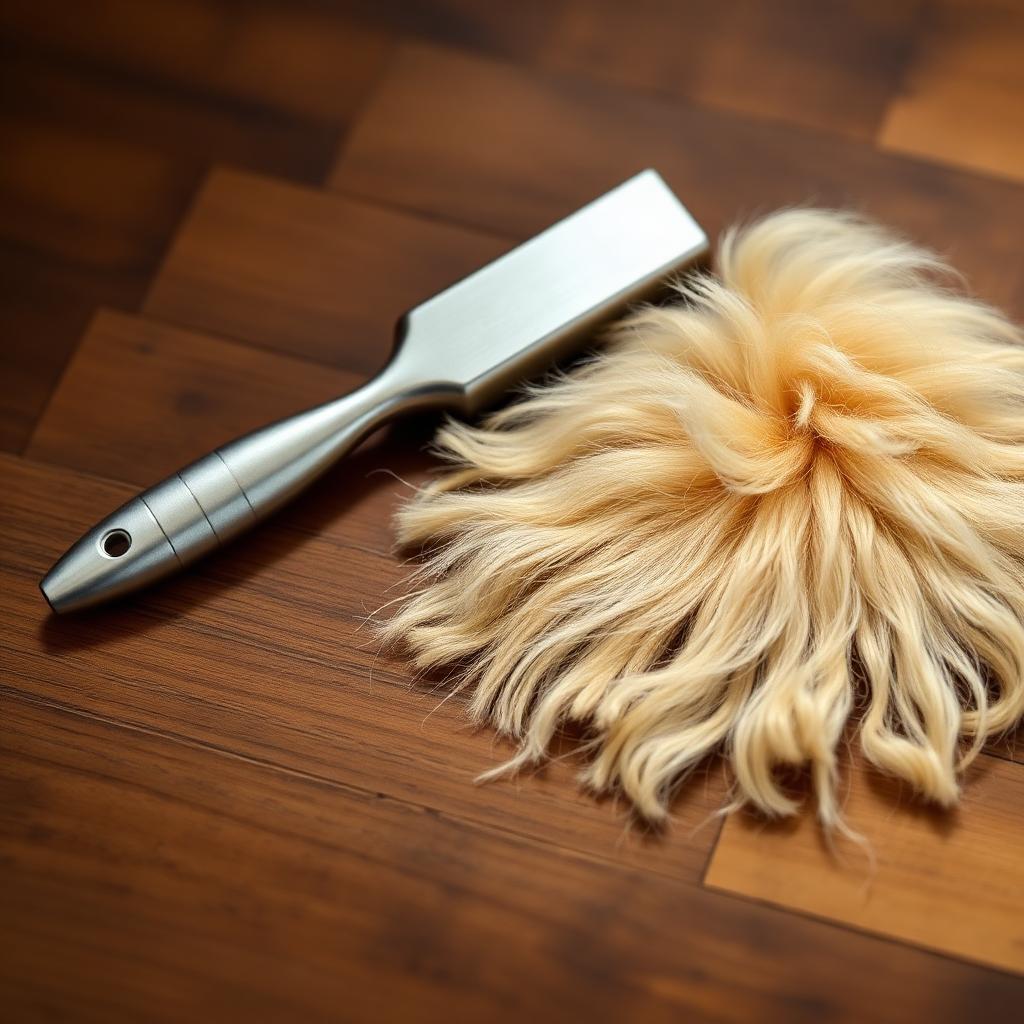
The best slicker brush for double-coated dogs is the Chris Christensen Big G Slicker Brush. Its hand-set 20mm pins are long enough to pass through the coarse guard hairs on Goldens, Aussies, Huskies, and Bernese, and firm enough to lift loose undercoat without bending flat on the first stroke. The curved back allows a rocking motion that pulls dead hair with minimal wrist effort.
For giant breeds where you need wide coverage per stroke, use the Chris Christensen Big K Slicker. On a budget, the Safari Firm Slicker (Large) covers the same job at a third of the price, though the pins soften faster over 12 to 18 months of use.
A short-pinned slicker made for Yorkies and Bichons is the wrong tool. Its pins bend before they ever reach the undercoat, so you brush the tips of the guard hairs and the mats keep forming underneath.
What makes a double coat different
Double-coated breeds carry two layers: a coarse, weather-resistant outer guard-hair coat over a dense, insulating undercoat. During spring and fall "coat blows," a dog can drop the entire undercoat in four to six weeks. If loose fibers are not brushed out, they trap moisture and matt against the skin, causing hot spots and yeast infections. The right slicker lifts those loose fibers before they matt.
The three specs that matter
- Pin length 15 to 22 mm. Long enough to pass the guard-hair layer and reach undercoat near the skin.
- Angled or bent tips. A subtle bend near the tip hooks loose hair without scraping the epidermis.
- Firm cushion resistance. The rubber pad must push back when the pin meets a mat, not compress flat.
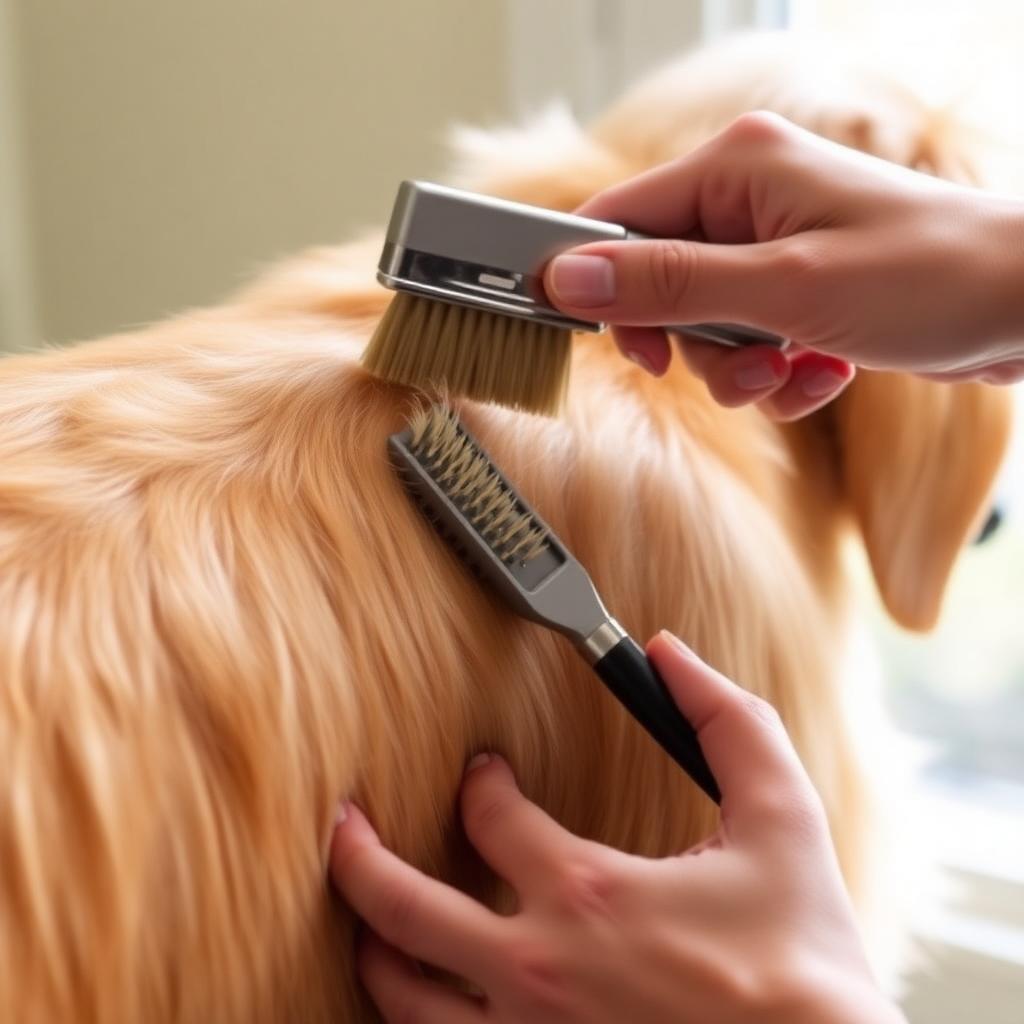
Best overall: Chris Christensen Big G
The Big G is the show-groomer default. The pins are hand-set (not glued into a molded pad), so they replace individually if one bends. The curved back changes the pin entry angle so a rocking wrist motion pulls out clumps of undercoat in seconds. Not cheap , around $80 , but it lasts 8 to 10 years of weekly use.
Best for giant breeds: Chris Christensen Big K
Newfies, Great Pyrenees, and Saint Bernards need coverage more than curve. The Big K has a wider flat back that clears more square inches per stroke. Same pin quality, more surface area.
Best budget: Safari Firm Slicker (Large)
Under $20. Long enough pins, decent firmness, no ergonomic curve. Expect the pin bed to soften after 12 to 18 months of weekly use on a heavy shedder; at that point the tool is done.
Line-brushing: the technique that unlocks the brush
Surface brushing does nothing on a double coat. Use the line-brushing method every professional groomer uses:
- Lift a horizontal section of hair up with your free hand to expose a line of skin.
- Brush that thin line downward with short, gentle strokes from root to tip.
- Drop the next layer and repeat, working up the flank one 1-inch line at a time.
- Every 3 to 4 lines, verify with a steel Greyhound comb: if it glides from skin to tip without catching, the section is clear.
Never scrub, saw, or drag the slicker across the coat surface. That is what causes "slicker burn," the pink irritated patches on the flanks that owners mistake for allergies.
Slicker vs. undercoat rake vs. deshedding blade
These three tools are complementary, not interchangeable.
- Slicker brush (long-pin): daily and weekly brush-out; catches mats early; safe on wet or dry coats.
- Undercoat rake: heavy shed weeks; wide-tooth steel rake pulls big volumes of loose fluff.
- Deshedding blade (FURminator style): use sparingly; blades trim guard hair if pressed too hard. Not for weekly use.
How often to brush a double coat
Once a week is the year-round minimum. Bump to three sessions a week during the spring and fall coat blow. Ten minutes on a Tuesday beats an hour-long emergency session after your dog has left a hair drift under the couch.
Common questions
Can I use the same slicker on a Poodle or Doodle?
Yes, but drop pin length. A 20mm pin is right for a Golden or Aussie; for a Poodle or Doodle single coat, use a 15mm slicker or you will rip topcoat. Use a lighter hand.
How do I stop slicker burn?
Slicker burn is caused by pressing hard and dragging in one direction. Fix it by holding the brush loose, using short strokes, and lifting the coat so the pins pass through hair, not skin. If a patch turns pink, stop for the day and switch to a soft-tip pin brush for that spot.
When do the pins need replacing?
Hand-set slickers like the Big G let you swap bent pins individually. Molded-pin slickers are done when the pin bed goes soft, usually after 12 to 24 months of weekly use on a heavy shedder.
Bottom line
The Chris Christensen Big G Slicker is the best slicker brush for double-coated dogs because the 20mm hand-set pins are long enough, firm enough, and durable enough to line-brush a heavy shedder without wrist strain or slicker burn. Step up to the Big K for giant breeds, or down to the Safari Firm Slicker (Large) if the budget rules. Whatever tool you buy, line-brushing is what makes it work.