Quick Answer
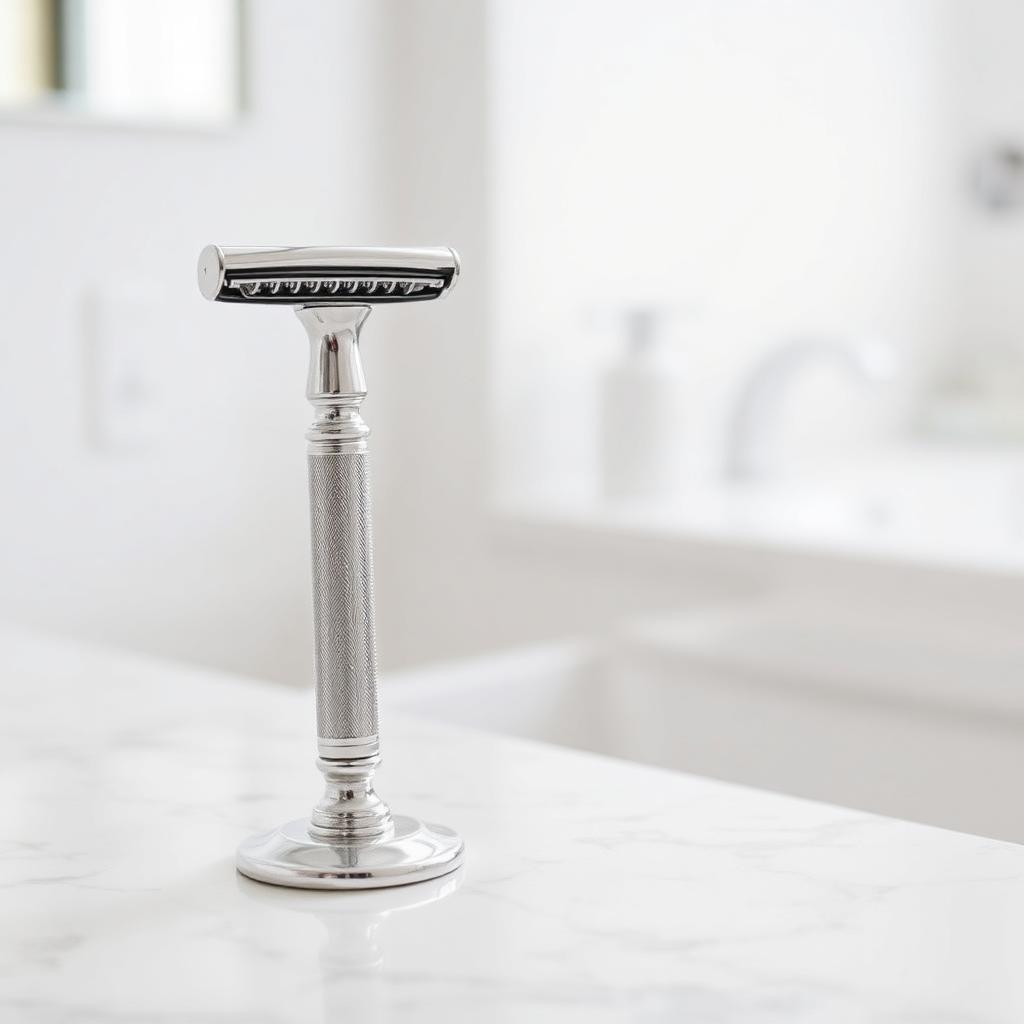
The best safety razor for a beginner has a mild closed-comb head, a heavy knurled handle around 3 to 4 ounces, and a three-piece design that lets you swap standard double-edge (DE) blades without moving parts. Mild closed-comb models forgive first-time technique mistakes; the weight lets gravity do the cutting so you never press.
Skip aggressive open-comb or adjustable razors for the first year. They are for experienced shavers who want a closer cut, and they are unforgiving of angle errors.
Why a safety razor instead of a cartridge
Multi-blade cartridges tug the hair up before slicing it slightly below the skin surface. Coarse regrowth then pushes through inflamed skin, curling and forming ingrown-hair bumps. A single-edge safety razor cuts the hair level with the surface without pulling. The result: less irritation, fewer bumps, and a blade that costs about 15 cents instead of $4.
Anatomy of a beginner-friendly razor
Closed-comb head
A solid safety bar runs below the blade. It flattens the skin before the edge arrives, so nicks are rare. Open-comb (scalloped) heads shave closer but expose more blade and require confident technique.
Mild blade exposure
Manufacturers grade razors as mild, medium, or aggressive based on how much of the blade sticks out beyond the safety bar. Mild is the beginner setting; you can move to medium after a few months.
Three-piece vs butterfly (TTO)
Three-piece razors break into head, base plate and handle. Blade changes are simple and cleaning is thorough. Butterfly (twist-to-open) razors open both plates via a dial for one-handed blade swaps but have more moving parts that eventually loosen.
Handle weight and knurl
Look for 85 to 115 grams (3.0 to 4.1 oz). A knurled crosshatch pattern grips wet fingers reliably. Cheaper plastic or hollow handles feel light, which forces you to press.
How to shave with a safety razor (first time)
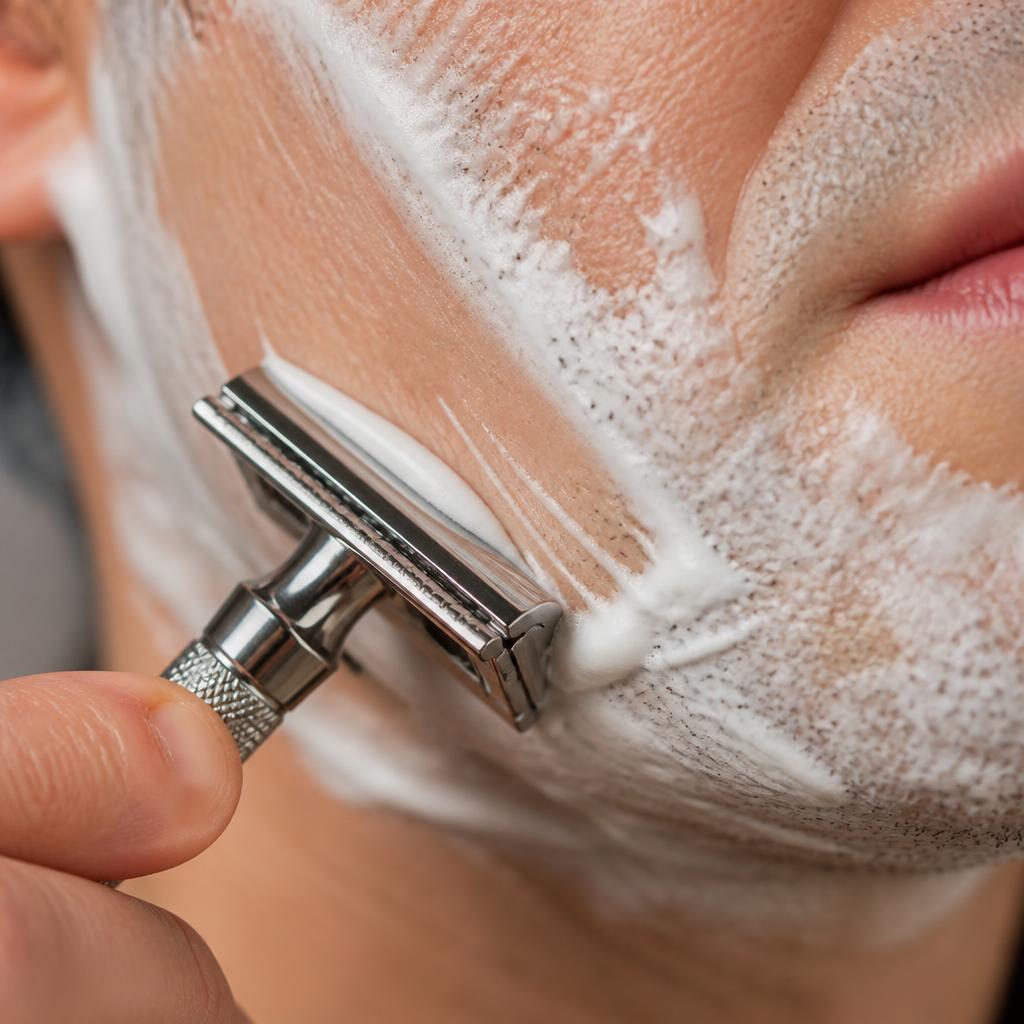
- Prep. Warm shower or hot damp towel for 2 minutes.
- Lather. Traditional shaving soap or cream with a brush, worked into the beard in small circles.
- Set the angle. Rest the top cap flat on your skin, then tilt the handle down until the blade touches. Around 30 degrees.
- Short strokes with the grain. One to two inches at a time. Never long cartridge-style sweeps.
- Zero pressure. The weight of the razor is the pressure.
- Rinse and repeat. First pass with the grain. Optional second pass across the grain (once you are comfortable). Skip against-the-grain for the first month.
- Cold rinse and alcohol-free balm. Nivea Sensitive is fine.
Blade choice matters more than the razor
Every DE razor takes the same standard double-edge blades. Try a variety pack: Feather (very sharp), Astra Green (mid), Derby (mild), Personna Lab Blue (mid-mild). Beginners usually land on Astra or Personna. Replace blades every 4 to 7 shaves.
Common mistakes
- Applying cartridge-style pressure. Instant nicks.
- Wrong angle. Too flat scrapes without cutting; too steep bites.
- Going against the grain on day one. Guaranteed razor burn.
- Cheap plastic handles. No weight, no control.
- Alcohol-heavy splash aftershave. Stinging, not disinfecting.
Care and lifespan
- Rinse and towel-dry after every shave.
- Unscrew, rinse and air-dry weekly.
- A good safety razor lasts 20+ years. It's a one-time buy.
Bottom line
The best safety razor for a beginner is a mild, closed-comb, three-piece design with a heavy knurled handle. Add a variety pack of DE blades, a shaving brush and a real shaving soap. Two weeks in you will save money, and a month in your skin will look better than it ever did on cartridges.