Quick Answer
The NOCO Boost HD GB70 is the best portable jump starter for most cars. 2,000 peak amps handles gas engines up to 8 liters and diesels up to 6 liters, its patented spark-proof and reverse-polarity protection makes it beginner-safe, and the IP65 housing shrugs off snow, rain, and workshop grime.
For a beginner-friendly display and cold-weather pre-heat, the Hulkman Alpha 85 is the pick. For heavy-duty diesel trucks and marine engines, the Gooloo GP4000 pushes 4,000 peak amps. For everyday small cars on a budget, the NOCO GB40 at 1,000 amps is enough.
Why a portable jump starter beats cables
Traditional jumper cables require a second running vehicle nose-to-nose with the dead one, and a mistake in clamp polarity across a modern car can spike the ECU and cause thousands of dollars of damage. A lithium jump starter fits in a glovebox, works alone in a driveway, deserted parking lot, or roadside shoulder, and modern units refuse to send current until the clamps are attached correctly. It is the single most useful thing you can keep in a trunk.

What actually matters in a jump starter
Peak amps vs cranking amps
Peak amps is the brief spike a jump starter can deliver at the moment of ignition. Cranking amps (also called starting amps) is a steadier rating over a few seconds. Both matter, but peak amps is the headline number. Match the number to your engine:
- Compact cars and sedans (under 4L): 1,000 to 1,500 peak amps is plenty.
- SUVs and light trucks (4 to 6L gas): 1,500 to 2,000 peak amps.
- Full-size trucks (6 to 8L gas, 3 to 6L diesel): 2,000 to 2,500 peak amps.
- Heavy diesel and marine (6L+ diesel): 3,000 to 4,000 peak amps.
Safety electronics
Every jump starter you should even consider has spark-proof clamps and reverse-polarity protection. Cheap Amazon boxes without those features can weld a wrench to a battery terminal or fry your car's computer. Look for the words "spark-proof," "reverse-polarity protection," and ideally a mention of over-current and thermal shutdown.
Clamp gauge and cable length
Cheap jump starters ship with thin zinc-coated clamps that flex under load. Look for solid copper or heavy brass clamps with cables at least 10 to 12 inches long so you can reach the battery in awkward engine bays. NOCO and Hulkman both use heavy-gauge copper.
Cold-weather performance
Lithium batteries lose capacity below freezing. A jump starter is exactly the tool you need on a 10 F morning, so this matters. The Hulkman Alpha 85 has an internal pre-heat element that warms the cells before firing. NOCO units rate down to about -4F (-20C) without pre-heat.
Best overall: NOCO Boost HD GB70
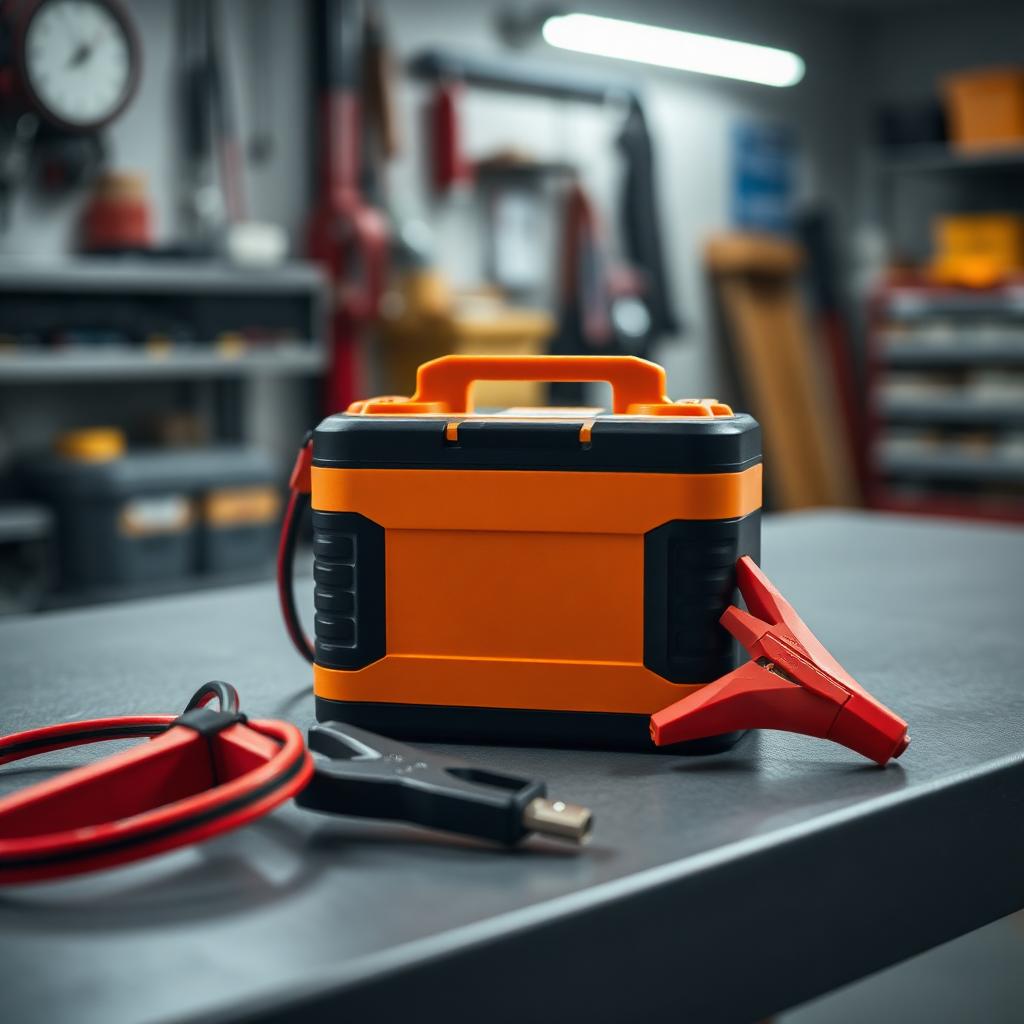
The GB70 is the current fleet standard. 2,000 peak amps starts every gas engine up to 8 liters and diesels up to 6 liters. Solid copper clamps, IP65 rain and dust rating, and NOCO's UltraSafe circuitry that refuses to power the clamps until they touch a battery correctly. It doubles as a 12V power source (tire inflator, portable fridge) and dual USB ports for phone charging. Roughly 40 to 50 jumps per charge, and it holds a charge on a shelf for over a year.
Best beginner-friendly: Hulkman Alpha 85
The Alpha 85 replaces the confusing colored LEDs on most jump starters with a proper 3.3 inch color screen that walks you through the process. Big warnings if you reverse polarity, a live countdown showing when to crank, and a battery health readout. 2,500 peak amps handles gas up to 8.5L and diesel up to 6.5L, and the automatic cold pre-heat is real: it will start in weather where a cold NOCO GB40 sometimes will not.
Best for heavy-duty: Gooloo GP4000
4,000 peak amps is overkill for a sedan and exactly right for a diesel truck, RV, or boat with a tired battery. The GP4000 is bulkier and heavier than the NOCO GB70, but it will crank a 10L diesel block cold-start on the first try. Comes with dual USB and a 12V outlet.
Best budget: NOCO Boost Plus GB40
The 1,000 peak amp GB40 covers most cars under 6L gas and 3L diesel. Same UltraSafe circuitry, same solid copper clamps, at less than half the price of the GB70. If you drive a Corolla, Civic, RAV4, or Accord, this is the honest pick.
The 60-second jump sequence
- Turn everything off in the dead car. Headlights, HVAC fan, radio, dome light.
- Red clamp to positive (+). Attach directly to the positive battery terminal, marked with a red cap or a plus sign.
- Black clamp to a clean bolt on the engine block or chassis. Not to the negative battery post. Grounding to the engine block prevents any small spark from occurring next to the battery, which can vent flammable gas.
- Turn on the jump starter. Wait for the green ready light.
- Crank for 3 seconds max. If it does not fire, wait 30 seconds and try once more. Do not crank continuously.
- Disconnect in reverse order. Black clamp first, then red.
- Drive for at least 20 minutes. That is how long the alternator needs to bring the battery back above starting voltage.
Storage and maintenance
Recharge the jump starter every 3 months even if you have not used it. Lithium cells self-discharge slowly, and a jump starter with 20 percent charge in a hot glovebox for a year will be dead when you need it. Store it in the trunk or a soft case rather than the glovebox in summer, and out of direct freezing in winter if possible.
Bottom line
Buy the NOCO Boost HD GB70 for most trucks, SUVs and daily drivers. Drop to the NOCO GB40 if you have a small car and a smaller budget. Step up to the Hulkman Alpha 85 for cold-climate friendliness or the Gooloo GP4000 for heavy diesel. Recharge every 3 months, ground the black clamp to the engine block, and keep one in every car you own.