Quick Answer
The best grooming wipe for cats is a thick, cross-woven plant-fiber wipe with an alcohol-free, fragrance-free, lick-safe solution. It captures dirt, dander, and litter dust without leaving a residue that will irritate a cat's tongue during self-grooming.
Never substitute baby wipes or household surface wipes. Both contain alcohols, propylene glycol, or fragrance loads that are not safe for a cat to lick.
Why cat wipes need their own formula
Anything left on a cat's coat will end up in the cat's mouth within an hour. That eliminates most of the ingredients used in human and household wipes: fragrance, ethanol, benzalkonium chloride, and phenoxyethanol at higher concentrations. The formula must be functionally cleaning while being fully non-toxic to ingest at low doses.
What separates a great cat wipe from a cheap one
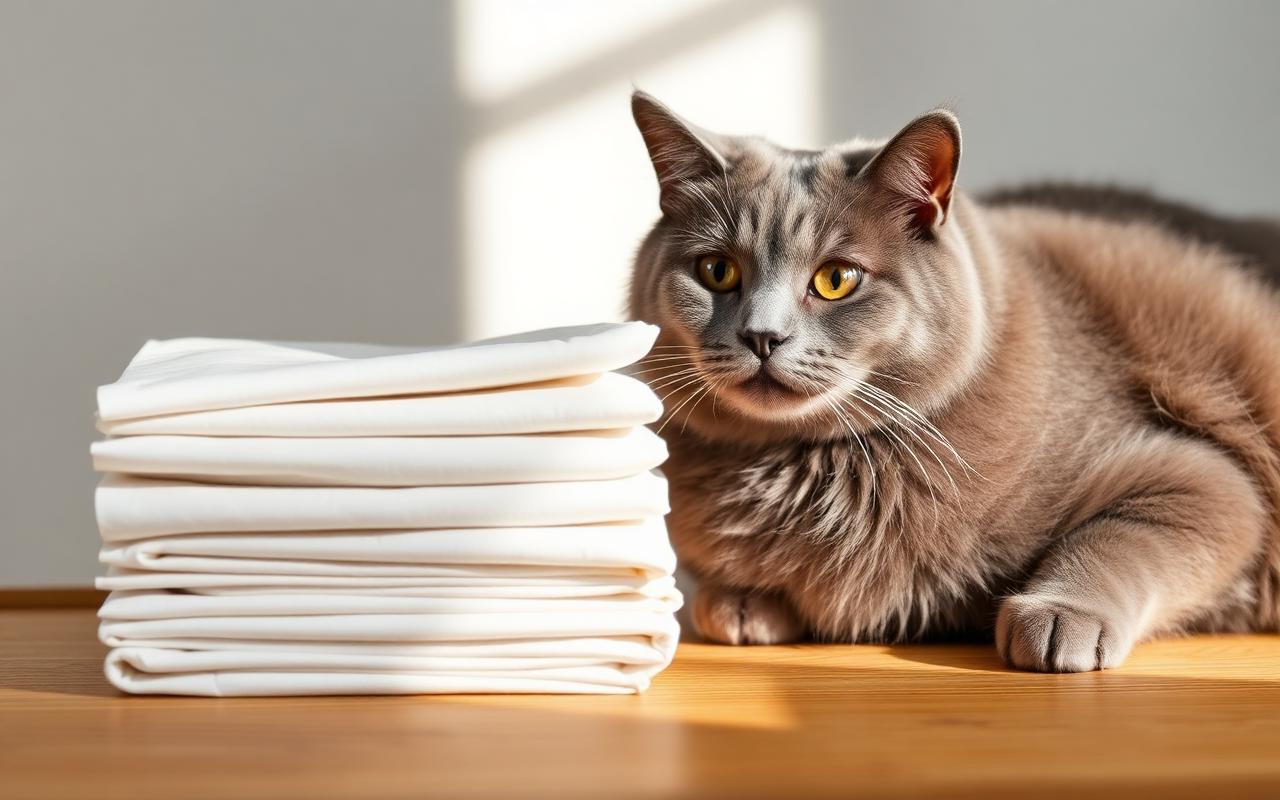
Thick, cross-woven fabric
Cheap paper-based wipes tear at the first pass on rough fur. Look for bamboo or heavy-duty spunlace with cross-woven fibers. It survives full-body cleanups and picks up more debris per wipe.
Alcohol-free, fragrance-free solution
Alcohol dries skin and stings any scratch. Fragrance is a top irritant for cats and often drives them to over-groom the wiped area.
Enriched with soothing agents
Aloe vera, colloidal oatmeal, vitamin E, glycerin. These calm minor irritation and support the skin barrier.
Certified cat-safe
Not "for pets" language. "Safe for cats" or "veterinary-formulated for cats" is the label to look for.
Best overall: Earthbath Hypo-Allergenic Grooming Wipes for Cats
Thick plant-fiber wipe, fragrance-free, aloe and vitamin E. Widely stocked and moderately priced.
Best for sensitive skin: Burt's Bees Dander Reducing Cat Wipes
Aloe and colloidal oat with a mild pH suited to cat skin. No harsh preservatives.
Best for paw sanitation: Pogi's Pet Fragrance-Free Wipes
Larger sheet, thicker weave, and the fragrance-free variant is a safe cat option even though the line also sells scented dog wipes.
How and when to use a cat wipe
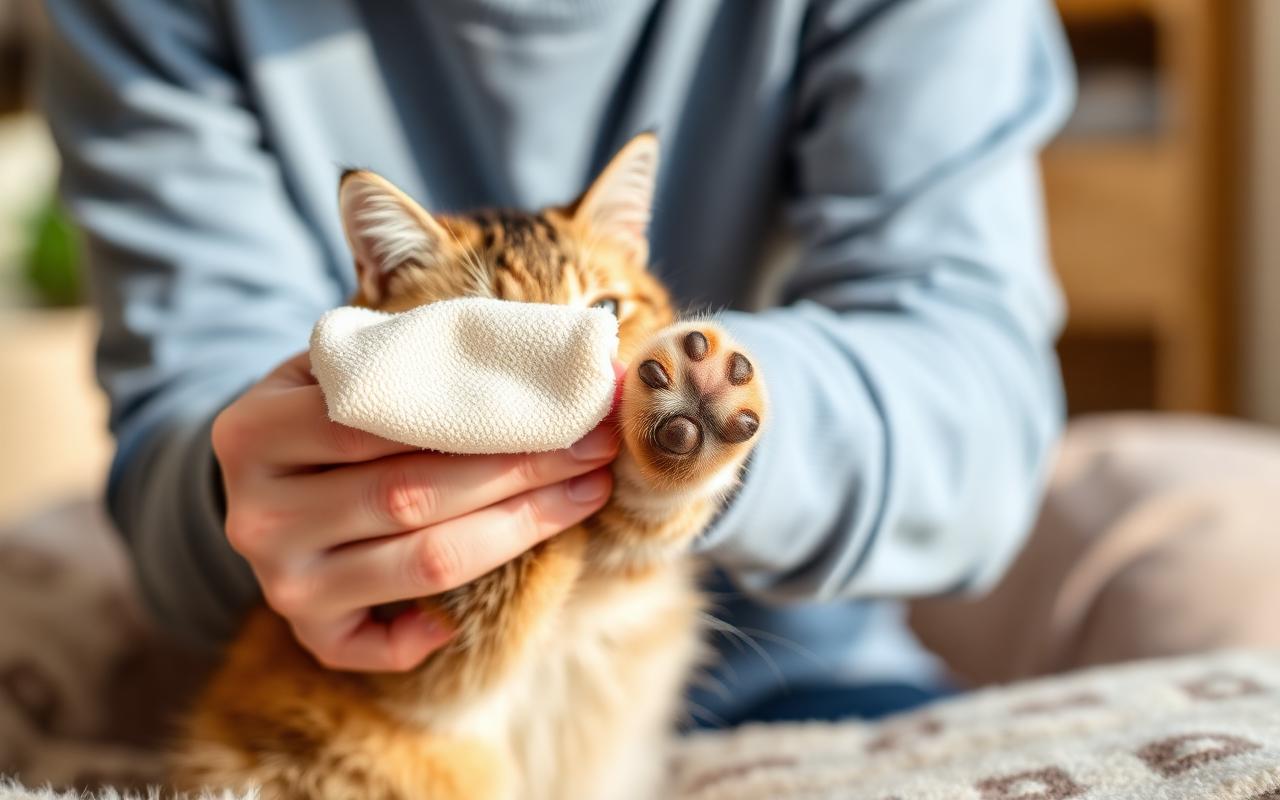
- Paw sanitation. After the litter box or after a trip outside. Wrap the wipe around each toe pad and rotate.
- Allergen reduction. Wipe smoothly along the spine and flanks twice a week to reduce Fel d 1 protein levels shed into the air.
- Senior cat support. Older cats stop cleaning the lower back and tail base first. A gentle wipe of that zone keeps mats from forming.
- Rear hygiene. Any residue near the sanitary area. Use a fresh wipe, never reuse.
Technique that keeps cats calm
- Warm the wipe in your palm. A cold wet cloth is what makes a cat leave the room.
- Work with the direction of hair growth. Reduces friction and static.
- Keep sessions short. Two to three minutes tops.
- End on a treat or a scratch under the chin. The cat associates the wipe pack with a reward.
Storage and shelf life
Reseal tightly after every use. Open packs typically dry out in two to three months if resealed properly, six to eight weeks if left loose. Store away from direct sunlight and heat sources.
Common questions
Are cat wipes safe to use daily?
Daily use on paws is fine. Full-body wiping is fine two or three times a week. More than that risks disturbing the sebum layer.
Can I use dog grooming wipes on my cat?
Only if the label specifies "safe for cats" and the ingredients list is free of essential oils, alcohol, and fragrance. Most dog wipes fail one of those.
Do wipes replace a bath?
For maintenance yes. For serious soiling no; a full waterless bath or a real water bath is still the right call.
Bottom line
Choose a thick, cross-woven wipe with an alcohol-free, fragrance-free, lick-safe solution and soothing extras like aloe and oat. Use them for paws, sanitary areas, and light allergen management. Reseal the pack tightly, work with the coat, and keep sessions short. That is the pattern that keeps a cat clean without the water-bath stress.