Quick Answer
The best dog ear-cleaning solution is Virbac Epi-Otic Advanced. It is veterinary-grade, alcohol-free, and uses salicylic acid plus a mild surfactant to dissolve wax and lift debris out of the L-shaped canine ear canal. It leaves a drying residue that discourages yeast regrowth. Vets recommend it as the go-to maintenance cleaner for floppy-eared and swim-happy breeds.
For dogs with active mild yeast issues, the Zymox Otic Enzymatic Solution uses natural antimicrobial enzymes and works without pre-cleaning. For a lower-cost alternative, Vetericyn Plus Antimicrobial Ear Rinse is a solid weekly maintenance option.
Skip DIY vinegar, alcohol, or hydrogen peroxide "recipes." They sting on any tiny scratch and, in the case of vinegar, feed yeast rather than kill it.
Why floppy-eared dogs get infections
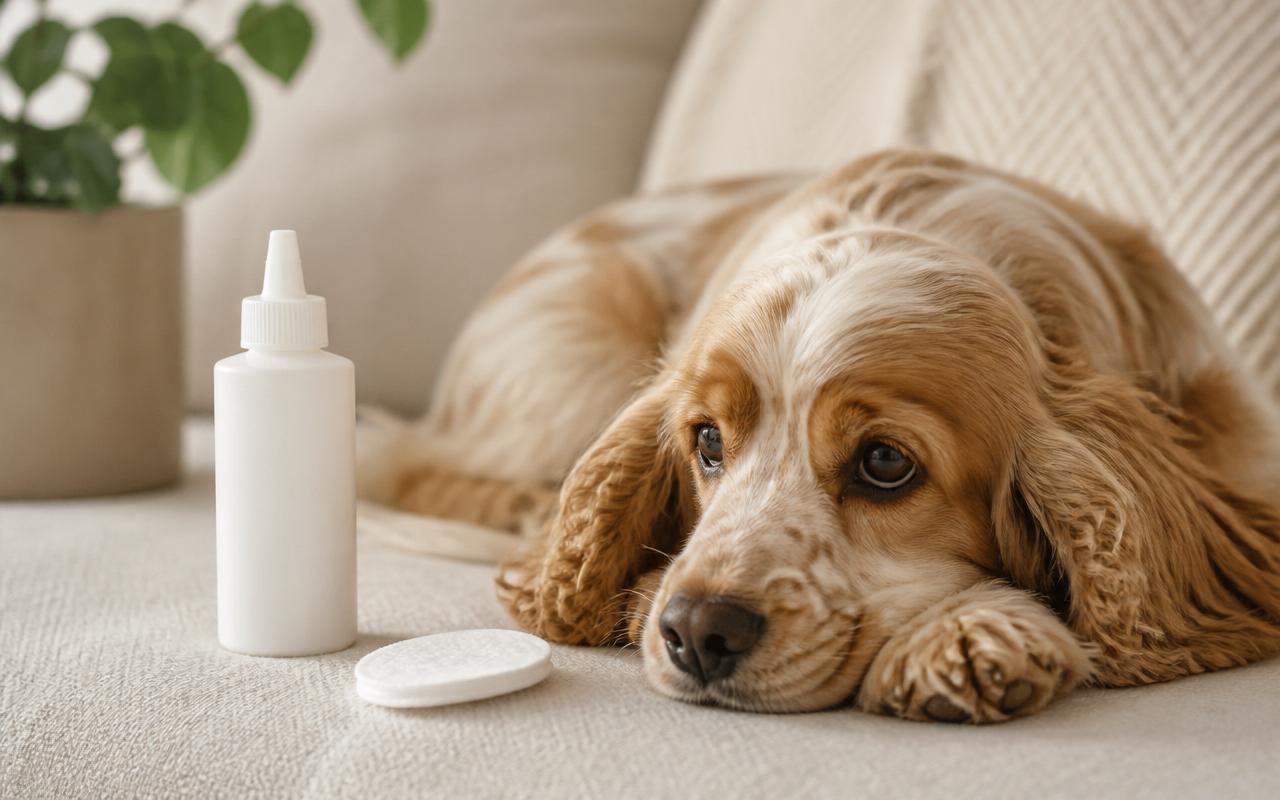
Basset Hounds, Cocker Spaniels, Labs, Goldens, and Cavaliers share a shape problem: their long ear flaps cover the canal, trapping heat and moisture. That warmth plus darkness plus wax is the ideal environment for Malassezia yeast and secondary bacterial infections (otitis externa). Regular cleaning keeps the wax load down and the canal dry, and it flushes out debris (grass seeds, sand, pond water) before it lodges near the eardrum.
The canine ear canal is L-shaped
Unlike the human canal, which is a straight horizontal tube, the canine ear canal drops vertically for about an inch, then makes a sharp 90-degree turn toward the eardrum. That L-bend means:
- Water that enters during a bath cannot drain out naturally.
- You cannot damage the eardrum with the nozzle of an ear cleaner (it does not reach the bend).
- A cleaning solution must be liquid enough to pool at the bottom of the L and thin enough to be flushed out by a head shake.
Active ingredients that actually work
- Salicylic acid + benzoic acid. Keratolytics that dissolve skin flakes and wax deposits.
- Cocamidopropyl betaine. Mild surfactant that lifts debris off the canal lining.
- Isopropyl myristate. Fast-evaporating drying agent that leaves the canal dry.
- Zinc gluconate or PCMX. Mild antimicrobials that discourage yeast regrowth.
- Aloe / calendula. Soothes inflamed canal lining after scratching.
Ingredients to avoid
- High-concentration alcohol. Stings on any scratch or hot spot.
- Hydrogen peroxide. Foams painfully in raw tissue; not recommended by any veterinary school.
- Household vinegar. Acetic acid feeds yeast at low dilution, stings at higher dilution.
- Tea tree essential oil. Toxic to dogs at concentrations above 1 percent.
Best overall: Virbac Epi-Otic Advanced
Formulated for veterinary use, alcohol-free, pH 5.5 to match canine skin. Contains salicylic acid, PCMX (antimicrobial), and monosaccharides that block bacterial adhesion. Sold in 8 oz and 16 oz bottles. Roughly $18 to $25.
Best for mild yeast: Zymox Otic Enzymatic Solution
Uses the LP3 enzyme system (lactoferrin, lactoperoxidase, lysozyme) that naturally attacks yeast and mild bacterial overgrowth. No pre-cleaning required. Available with or without 1 percent hydrocortisone (the hydrocortisone version helps with itch). Not a replacement for prescription medication in a full-blown infection.
Best budget maintenance: Vetericyn Plus Ear Rinse
Hypochlorous-acid-based antimicrobial rinse that mirrors what the body's own immune cells produce. Safe, no sting, works well for weekly maintenance on breeds prone to buildup. Under $15.
When to stop and see the vet
Never put anything into a dog's ear if you suspect a ruptured eardrum. Skip home cleaning and book a vet visit if you see:
- Thick black, brown, or yellow discharge.
- A strong sweet-yeasty or foul smell.
- Constant head shaking or tilting.
- Bleeding, open sores, or scabbing at the ear flap edge.
- Sensitivity to touch at the base of the ear.
These are signs of active infection that need cytology and prescription medication, not maintenance cleaning.
Step-by-step home ear cleaning
- Fill the canal. Lift the ear flap up to straighten the canal, place the nozzle at the opening, and squeeze until you can see solution pooling. Do not push the tip deep.
- Massage the base. Lower the flap and firmly massage the cartilaginous tube at the base of the ear for 30 to 45 seconds. You should hear a squelching sound.
- Let them shake. Step back and let the dog head-shake. Centrifugal force flings loosened wax and fluid up to the outer flap.
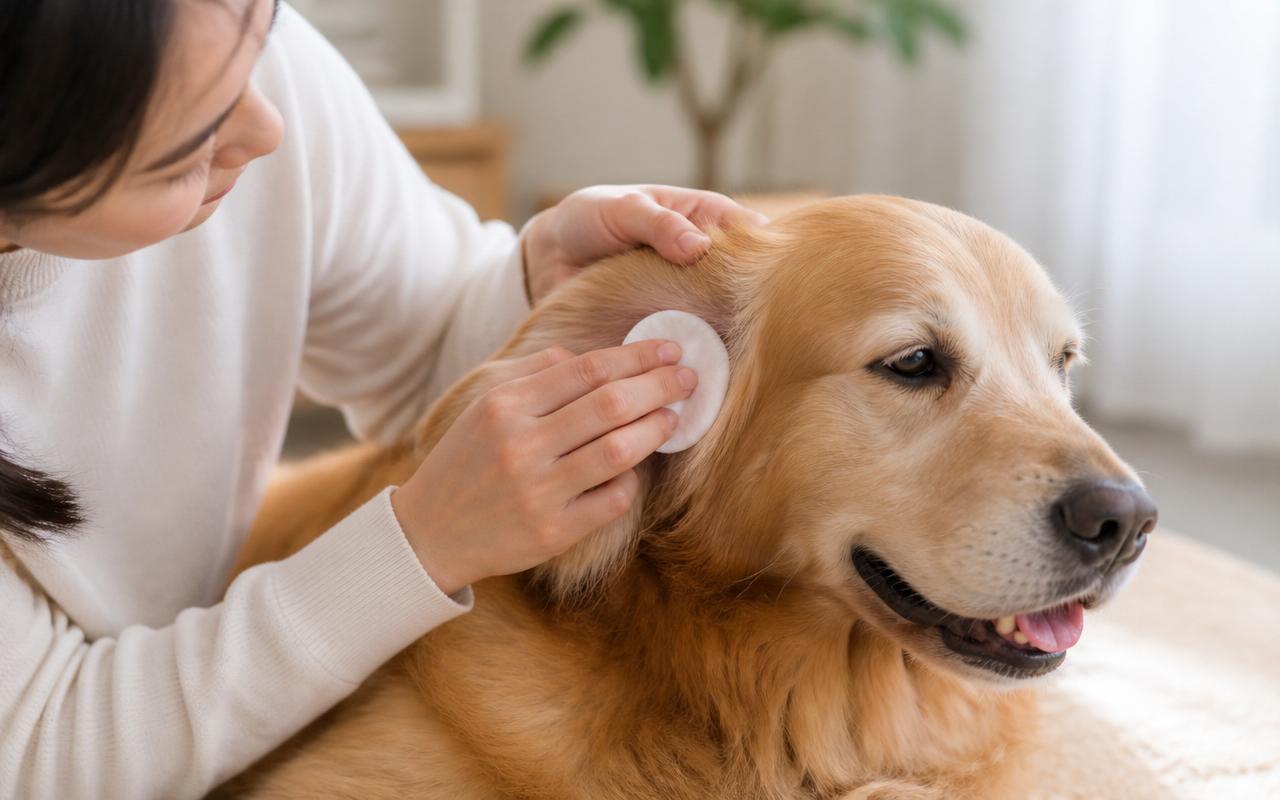
- Wipe the outer flap and canal opening. Use a cotton pad or gauze square. Never insert a cotton swab (Q-tip) into the canal.
- Reward. A treat after every ear session builds tolerance.
Common questions
Can I use one cleaner on both ears if one has an infection?
Use a fresh cotton pad per ear and clean the healthy ear first so you do not spread yeast or bacteria into the infected one. Ideally, do not clean an actively infected ear at home; that ear needs a vet visit and prescription otic.
How often is too often?
Once a week for floppy-eared and swim-happy breeds. Twice a week during high-humidity months or after weekly pool sessions. Daily cleaning strips the natural cerumen barrier and can make issues worse.
Do ear-cleaner wipes work?
Wipes clean the outer flap and canal opening only. They do not reach the L-bend where wax and moisture actually accumulate. Wipes are a supplement, not a replacement for a liquid flush.
Bottom line
The best dog ear-cleaning solution for weekly maintenance is Virbac Epi-Otic Advanced because it dissolves wax, discourages yeast, and dries the L-shaped canal without alcohol sting. Step to Zymox Otic when mild yeast is already brewing, and keep Vetericyn Ear Rinse as a budget backup. Do it weekly on floppy-eared and swim-happy breeds. Any thick discharge or foul smell is a vet visit, not a bottle to buy.