Quick Answer
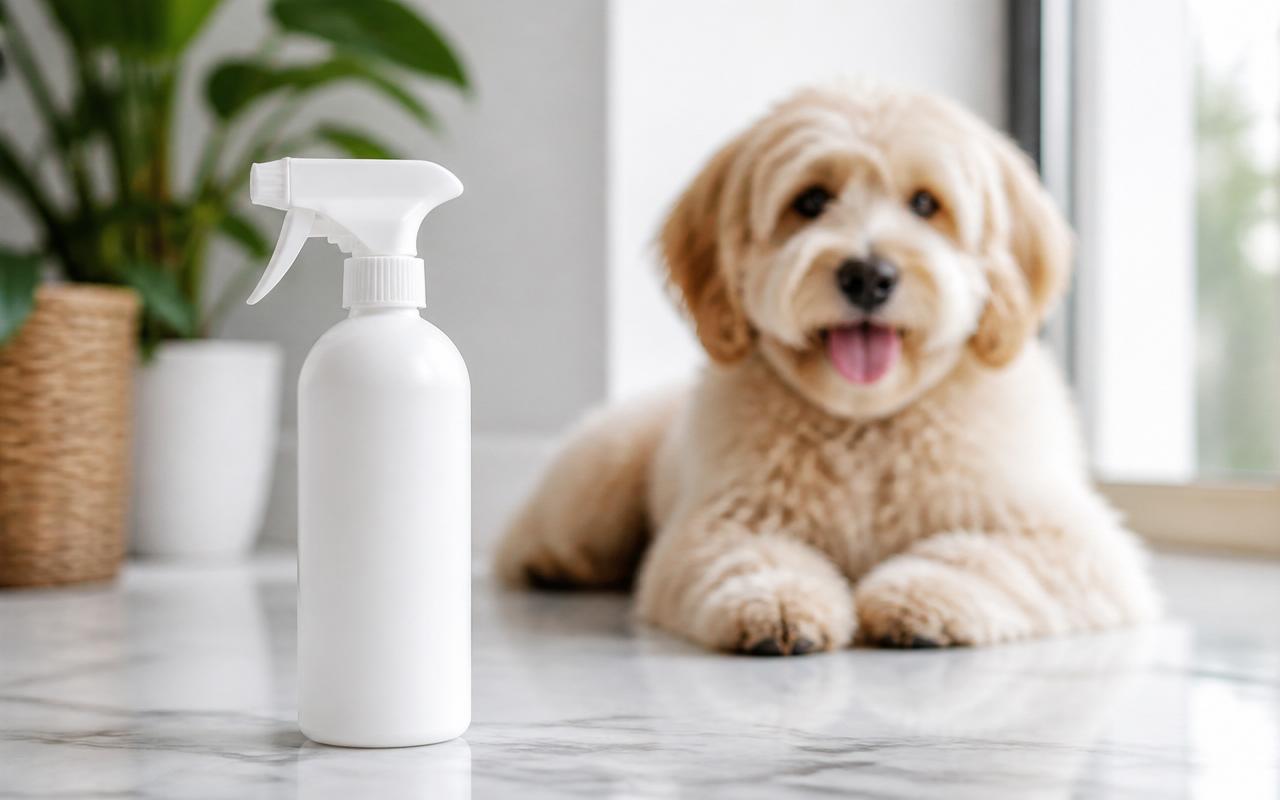
The best deodorizing spray between grooms is TropiClean Fresh Breeze Deodorizing Spray. It uses zinc ricinoleate as an odor binder rather than a heavy perfume, adds colloidal oatmeal and awapuhi to soothe skin, and evaporates cleanly without a sticky film. Safe on dogs 12 weeks and older, alcohol-free, and priced under $12 for a 16 oz bottle.
For fragrance-sensitive dogs, the Bodhi Dog Natural Pet Deodorizer (Fragrance Free) is odor-neutralizing without any scent. For dogs with itchy skin, the Earthbath Deodorizing Spritz (Rosemary) pairs deodorizing enzymes with rosemary and aloe.
Any spray with SLS, high alcohol content, or heavy synthetic perfume should stay on the shelf. They mask smell short-term and irritate skin long-term.
Why frequent baths are the wrong answer
Dogs produce sebum, a natural skin oil that waterproofs the coat and hosts a beneficial microbiome. Frequent baths (more than every 3 to 4 weeks with a normal shampoo) strip sebum faster than the skin can replenish it. Dry, over-stripped skin flakes, itches, and , ironically , becomes more prone to bacterial and yeast overgrowth that smells worse than the original odor.
A well-formulated deodorizing spray extends the space between real baths without stripping. That is its entire job.
The chemistry: bind vs. mask
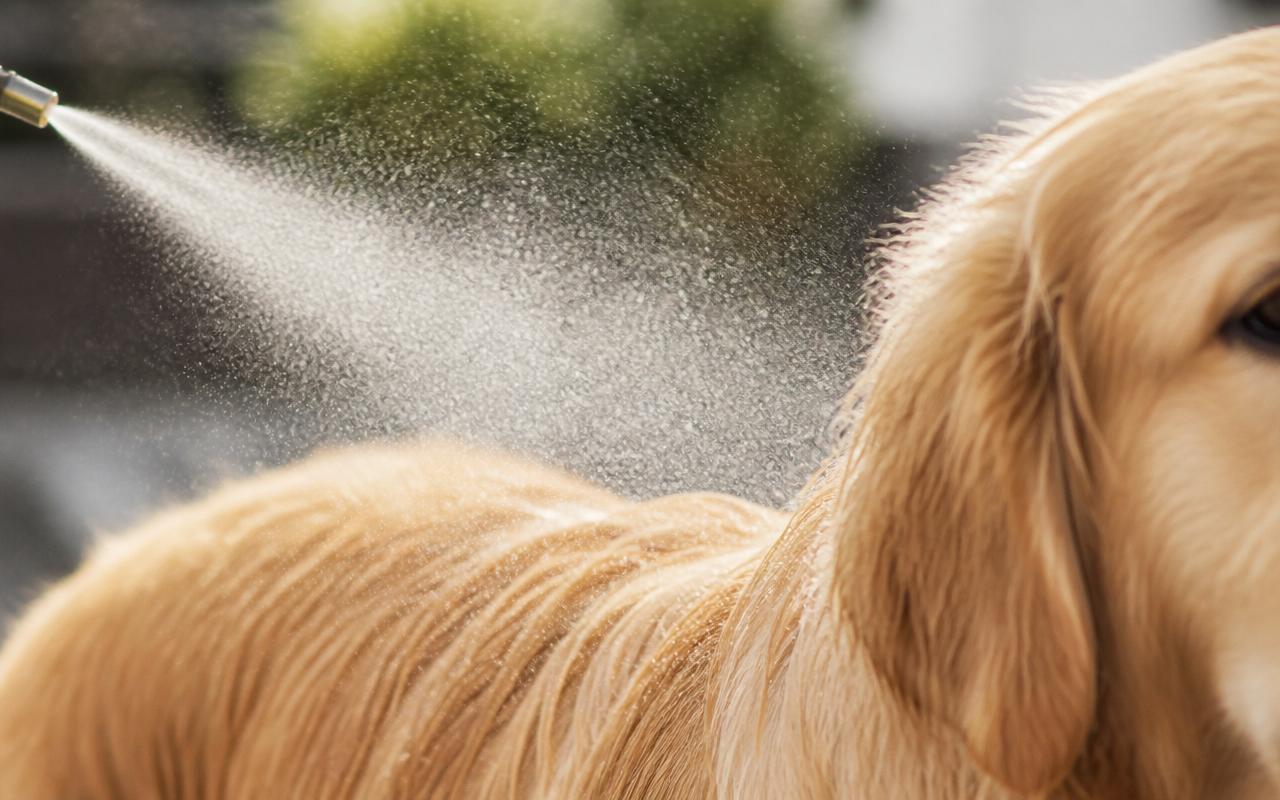
Cheap pet perfumes rely on synthetic fragrance oils to cover odor. When those layer over an actual dirty coat, the fragrance combines with the underlying volatile organic compounds and the result smells worse a few hours later. Good deodorizing sprays use chemical odor binding instead.
- Zinc ricinoleate (from castor oil) chemically binds volatile odor molecules , the ones responsible for "wet dog," sweat, and rolled-in-something smells.
- Saccharomyces ferment (natural yeast enzymes) breaks down odor compounds at the molecular level.
- Baking soda (sodium bicarbonate) at low concentrations neutralizes acidic sulfur compounds that cause the strongest smells.
These are the ingredients that actually eliminate odor. A light natural fragrance (lavender, chamomile, rosemary) on top is fine; heavy synthetic perfume alone is not.
Ingredients that help the coat
A quality spray doubles as a leave-in conditioner. Look for:
- Hydrolyzed silk or oat proteins. Smooth the hair cuticle, reduce static, less environmental dirt clings.
- Panthenol (Pro-Vitamin B5). Draws moisture into the hair shaft; adds elasticity.
- Aloe vera and glycerin. Hydrate the skin barrier without greasiness.
- Colloidal oatmeal. Soothes irritated skin, safe for dogs with allergies.
Ingredients to avoid
- SLS / SLES. Foaming agents that dry skin.
- High isopropyl or ethanol content. Stings on any scratch, dries coat.
- Tea tree, wintergreen, or pennyroyal essential oils. Toxic to dogs at higher concentrations.
- Undisclosed "fragrance" as top ingredient. Common allergy trigger.
Best overall: TropiClean Fresh Breeze Deodorizing Spray
Zinc ricinoleate as the odor binder, colloidal oatmeal and awapuhi as skin soothers, alcohol-free, safe on dogs from 12 weeks. Mild coconut-vanilla scent that most humans and dogs tolerate. About $10 for 16 oz.
Best fragrance-free: Bodhi Dog Natural Pet Deodorizer
Enzyme-based deodorizer with no added scent. Ideal for dogs (or owners) with fragrance sensitivities. Safe on puppies. Popular for post-walk paw and belly mists.
Best for itchy sensitive skin: Earthbath Deodorizing Spritz (Rosemary)
Rosemary and aloe soothe minor irritation while awapuhi and vitamin E condition the coat. Slight herbal scent that fades in an hour.
How to apply the spray correctly
- Shake the bottle. Odor binders and conditioning oils settle; shaking blends them.
- Brush the dog first. Loose hair and dried mud come out easily before you add product.
- Hold 6 to 8 inches away. Mist evenly across the back, flanks, and belly. Never spray the face directly.
- For the face: spray a bit onto a clean cloth and wipe around the muzzle. Avoid eyes, ears, and mouth.
- Massage in. Use your hands or a rubber grooming mitt. Odor lives on the skin, not the hair; getting product to the skin is the whole point.
- Brush through. Finish with a slicker or comb. Distributes the product, aligns the coat, lifts off any remaining dirt.
Common questions
Can I use a deodorizing spray daily?
Yes on the coat body. Skip daily use on the face, belly, and near the genitals; those areas need airflow and daily product exposure will cause irritation on sensitive skin.
Does deodorizing spray help with skunk spray?
No. Skunk oil contains thiols that require specific chemical neutralization, usually a hydrogen peroxide + baking soda + dish soap wash within 24 hours. A deodorizing spray on a skunked dog just layers scent on top of the underlying odor.
Is a scented spray safe near cats in the same house?
Choose fragrance-free or use lightly. Cats are more sensitive than dogs to phenols and some essential oils. Avoid tea tree, peppermint, wintergreen, and pennyroyal in any shared-household spray.
Bottom line
The best deodorizing spray between grooms is TropiClean Fresh Breeze Deodorizing Spray because zinc ricinoleate chemically neutralizes odor without stripping the sebum layer. Reach for Bodhi Dog Fragrance Free for sensitive dogs and Earthbath Rosemary Spritz for itchy coats. Brush first, mist 6 inches away, massage to the skin, and brush through. Your dog stays clean-smelling for 3 to 4 days between real baths without any coat damage.