Quick Answer
The VIOFO A329S is the best dash cam for cars in 2026. It records true 4K at 60 fps on a Sony STARVIS 2 IMX678 sensor, offloads video straight to an external USB-C SSD so you are not chained to a wear-prone microSD card, and streams clips to your phone over 5 GHz Wi-Fi in seconds.
For full three-channel coverage of the front road, rear window, and cabin, the 70mai T800 is the pick. For a discreet single-channel setup that disappears behind the rearview mirror, the Vantrue E1 Pro is compact and quietly excellent. For a plug-and-play voice-controlled option that syncs with Garmin devices, the Garmin Dash Cam Mini 2 still holds up.
Why a dash cam matters more every year
Distracted-driving crashes and staged "brake-check" insurance fraud are both trending up, and the moment a claim goes into arbitration your recall of what happened is worth almost nothing compared to a timestamped video with GPS speed overlay. A dash cam is the cheapest legal insurance you can buy, and the good ones now cost less than one insurance deductible.
What actually matters in a dash cam
Sensor, not just resolution
Two cameras can both say "4K" and produce wildly different footage. What matters is the sensor. The current best-in-class is the Sony STARVIS 2 family (IMX678 and IMX675), which pulls in far more light at night than the generic CMOS chips in $60 dash cams. On a dark rural road the difference is the ability to read a plate versus a smear of white glare.
HDR at 60 fps
You mostly care about clarity of a moving license plate. That needs both HDR (to keep highlights and shadows readable) and 60 fps (to freeze motion). A 4K/30fps cam produces sharper stills of parked scenes but blurrier plates at highway speed than a well-tuned 4K/60fps cam.
Storage that lasts
Microsd cards in a dash cam fail. Full stop. They loop-record 24/7 and even "high-endurance" cards top out around 1 to 2 years of continuous use. The A329S is unusual because it can dump to an external USB-C SSD, which is far more durable and cheaper per terabyte.
Parking mode
Buffered parking mode with a hardwire kit is the feature that catches hit-and-runs in a parking lot. The G-sensor triggers and the camera saves the 10 to 15 seconds before impact from a rolling buffer, which is where the offending plate almost always is.
Best overall: VIOFO A329S
The A329S is the enthusiast pick that also happens to be the mainstream pick because VIOFO stopped compromising. Native 4K at 60 fps on the Sony STARVIS 2 IMX678 gives you plates in low light without pushing ISO into noise. The optional GPS module logs speed and location as a subtitle track. The USB-C SSD output is the standout: pop in a 1 TB portable SSD and you have weeks of loop recording without ever thinking about an SD card. 5 GHz Wi-Fi transfers a 3-minute 4K clip to the phone in about 20 seconds.
Best 3-channel: 70mai T800
Rideshare drivers and parents of new teen drivers want front, rear, and cabin all covered. The T800 does exactly that with a 4K front lens, a 4K rear lens, and a 1080p interior lens with infrared LEDs for pitch-dark cabin coverage. Buffered parking mode is included, and the app is polished enough that you rarely have to touch it.
Best compact: Vantrue E1 Pro
If your priority is a camera that vanishes behind the rearview mirror, the E1 Pro is the tidiest install on the market. It is the size of a matchbox, uses a magnetic mount, and still runs the Sony STARVIS 2 sensor stack for real 4K quality. It is single-channel only, so pair it with a small rear cam if you need bumper coverage.
Best plug-and-play: Garmin Dash Cam Mini 2
1080p only, single channel, no card storage drama. The Mini 2 wins on simplicity: voice commands, instant clip saving, and tight integration with Garmin GPS units. If you refuse to spend a Saturday hardwiring anything, this is the camera you buy at the airport.
How to set the G-sensor without filling your card
Every dash cam ships with the G-sensor cranked to "High" out of the box, which locks a new event file every time you hit a pothole. Set it to Medium for daily driving. Locked event files are protected from the loop-overwrite, so a full card of them means the camera stops recording new footage after a few days. Medium plus a real crash still triggers instantly.
Windshield placement rules
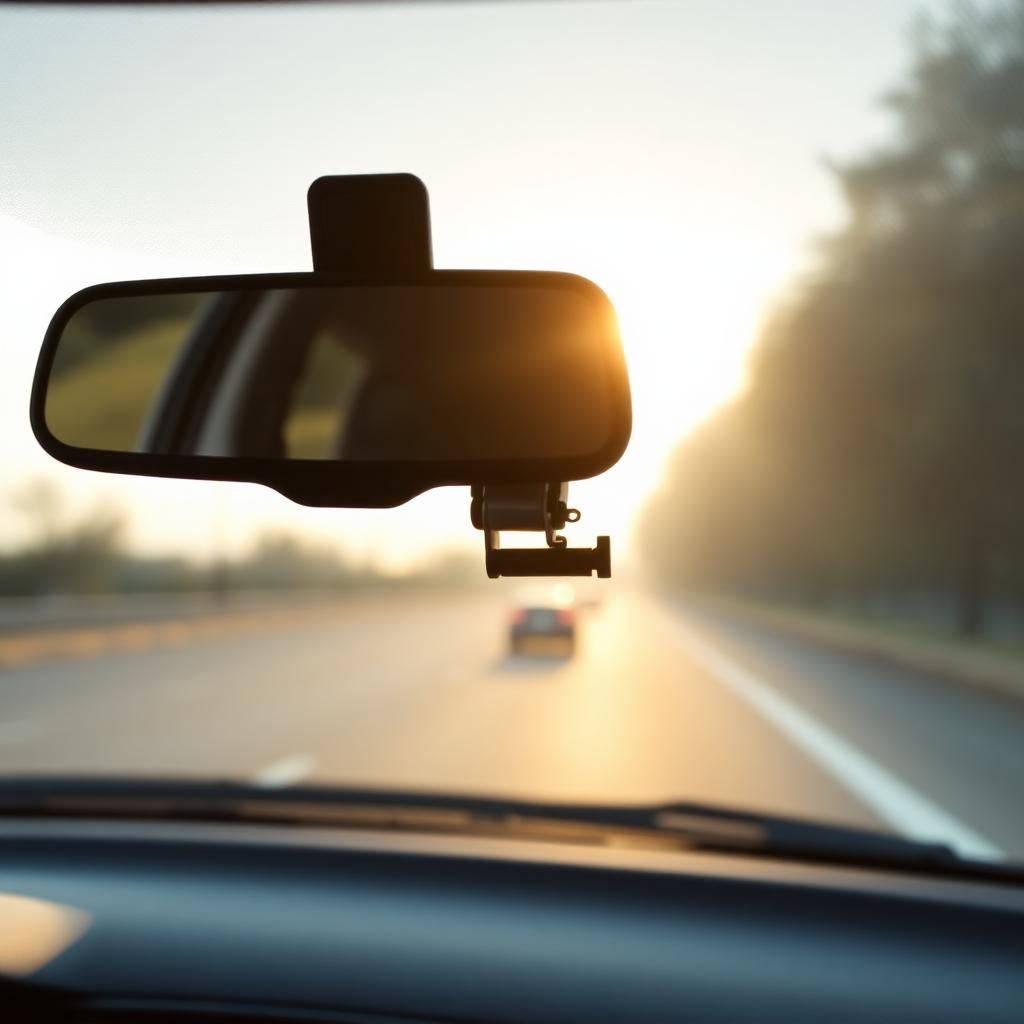
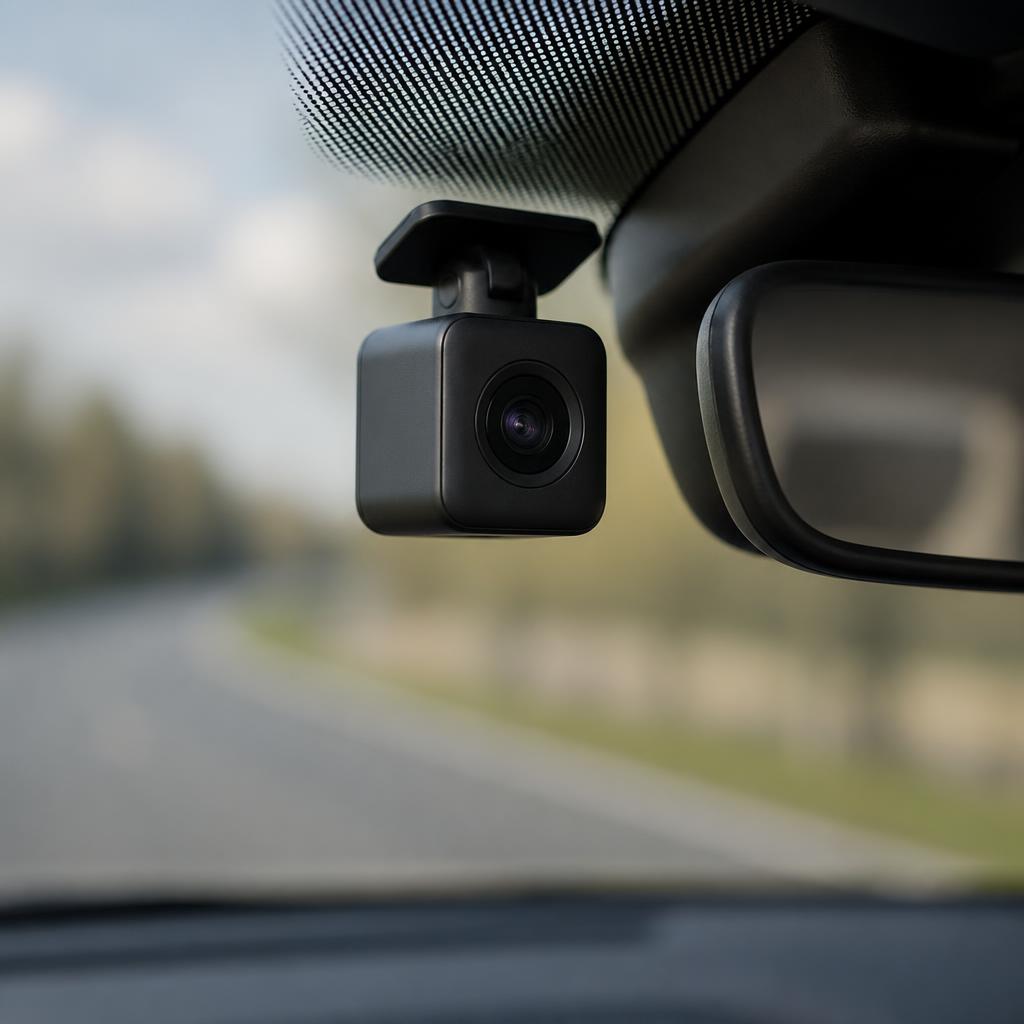
Mount the camera behind the rearview mirror so it does not block your view, and stay inside the top 5 inches of the windshield to comply with most state laws. Route the power cable up the A-pillar and along the headliner using the plastic pry-in clips that come in every hardwire kit. Never point the lens through a tinted strip at the top of the windshield if you can help it, because the film shifts colors and knocks a stop of light off your image.
Bottom line
The VIOFO A329S is the best dash cam for cars because it combines a flagship Sony STARVIS 2 sensor, true 4K/60fps HDR, and a genuinely modern USB-C SSD storage design that other brands still have not matched. Step up to the 70mai T800 if you need three channels, drop to the Vantrue E1 Pro if you want stealth, and grab the Garmin Dash Cam Mini 2 if you want no-thought installation. Any of them beats going into an insurance dispute with nothing but your memory.