Quick Answer
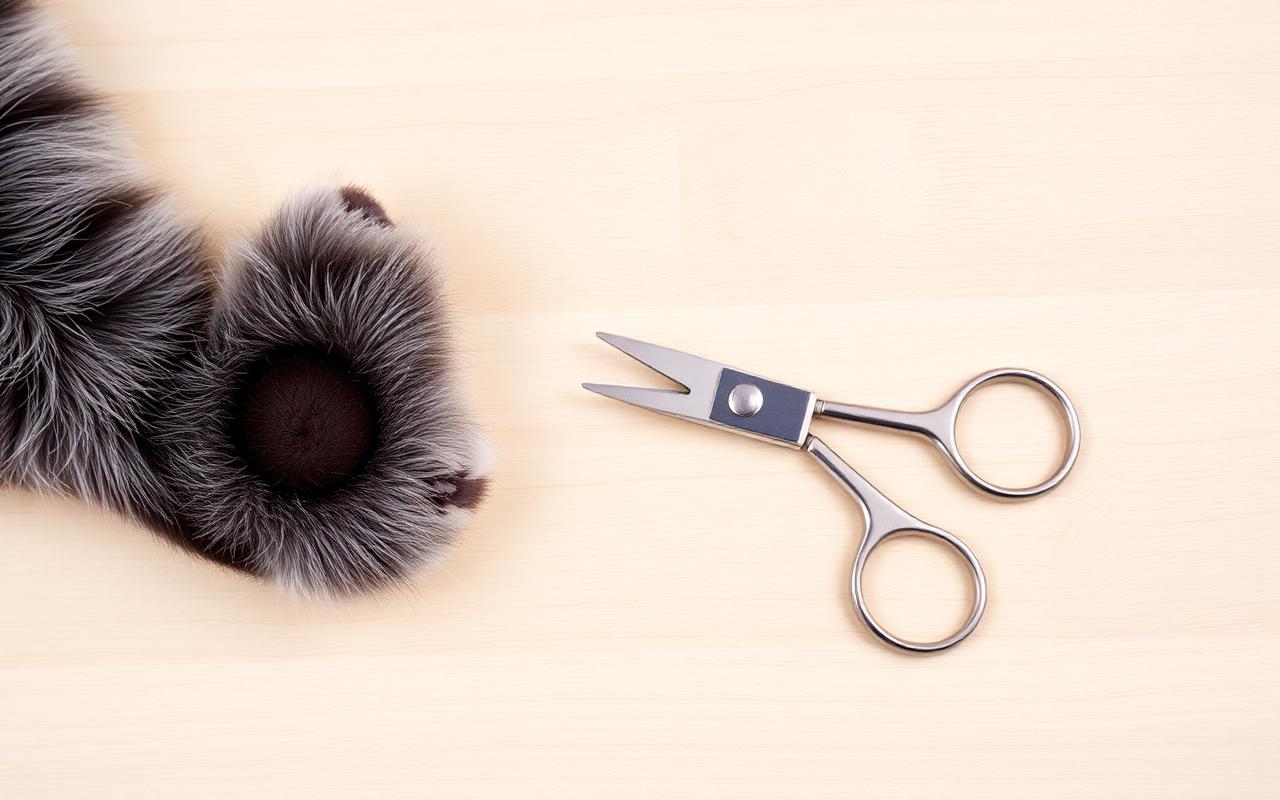
The best cat nail clipper for beginners is a small scissor-style clipper with concave blades. The semi-circular notches encircle the round claw completely, delivering a clean cut without crushing or splintering. Angled blades, rubberized loops, and a small size are the three features to look for.
Skip guillotine-style clippers (fiddly to reload and easier to cut short) and skip human nail clippers entirely; their flat blades split the claw's onion-like layers.
Why cat claws need a different clipper
Cat claws are curved, retractable, and layered in concentric sheaths. Flat blades meet a round object at one point and crush it inward, which is why human clippers make claws split and flake. Concave scissor blades sit around the claw and cut all sides at once. The claw comes off cleanly, and the layers stay intact.
Features a beginner clipper must have
Concave scissor blades
The single most important feature. Two small semi-circular notches meet around the claw so pressure is even.
Angled head at 30 to 45 degrees
Keeps your hand out of the sight line. You can see the pink quick inside the claw clearly.
Rubberized finger loops
Big loops give you stability if the cat flinches. Slim metal-only loops slip and pinch.
Small overall size
A tool sized for a cat, not a labrador. Big plier-style clippers dwarf the paw and force awkward angles.
Optional but useful: safety guard
Some beginner clippers add a small metal guard behind the blade that limits how much claw enters the notch. You can only take a 1 to 2 mm hook off, which is exactly the sharp tip you want to remove. The tradeoff is that the guard can obscure the quick line on pale claws, so many owners flip it back once they are comfortable.
Locating the quick without cutting it
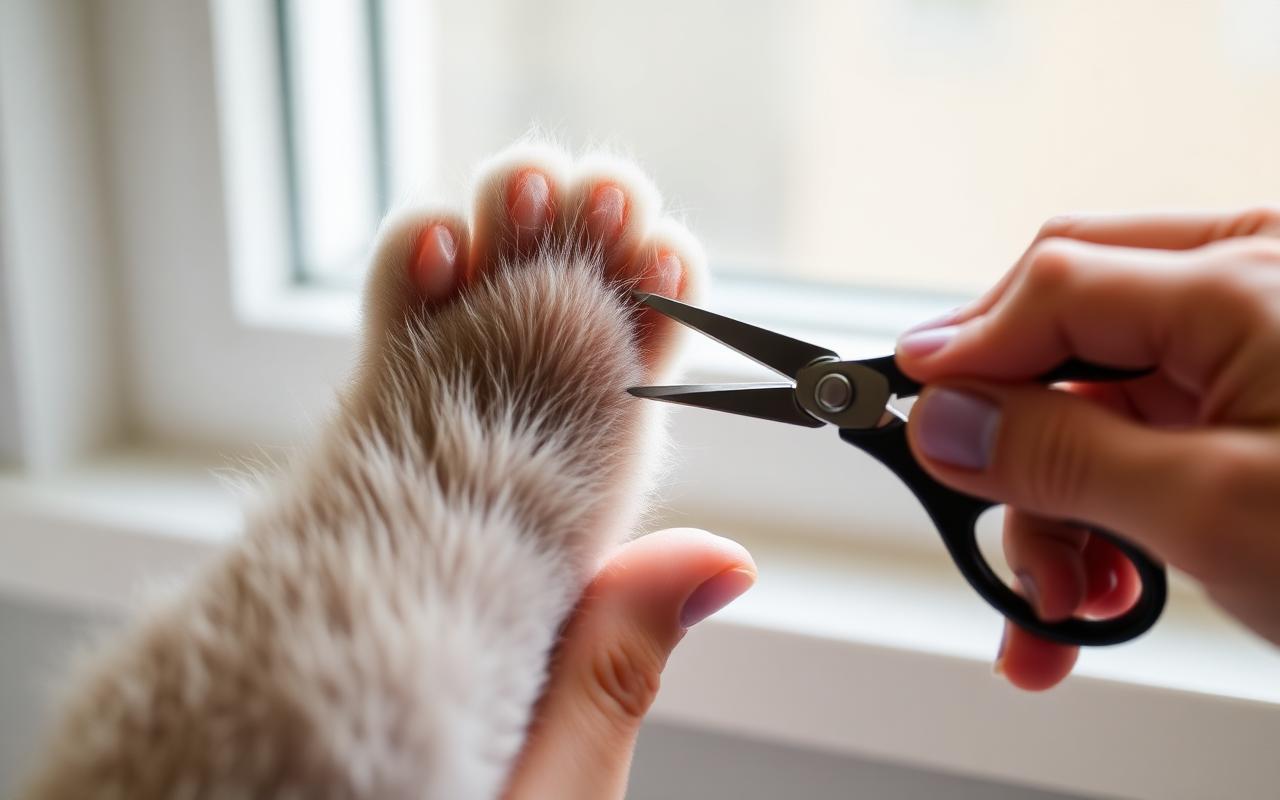
Press the center of the paw pad gently. The claw slides forward. On pale claws, the pink cone inside is the quick. Cut 2 mm ahead of it. On dark claws, do not try to guess; snip only the curved needle tip. A pen flashlight held behind the claw reveals the quick as a shadow through thick claws.
Product picks that work for beginners
Hertzko Scissor-Style Cat Nail Clipper
Compact stainless steel blades, angled head, textured rubber loops. Cheap, sharp, and the size is right.
Shiny Pet Cat Claw Trimmer with Guard
Beginner-friendly guard that only lets 1 to 2 mm of claw through. Ideal for the first month while you learn the anatomy.
Boshel Cat Nail Clipper
Slightly larger loops for adults with big hands. Same concave scissor blade profile, same sharpness.
The step-by-step trim that keeps your cat calm
- Handle the paws when they are not trimming days. Rub each toe pad for two seconds during a nap. This normalizes contact.
- Pick a sleepy time. After a meal, mid-afternoon nap. Never right after play or after a vet visit.
- Wrap the cat in a soft towel. Leave one paw out. Reduces flailing without holding tight.
- Press the toe pad. The claw extends. Locate the quick.
- Snip 2 mm ahead of the quick. One claw. Reward. Two claws. Reward.
- Stop before the cat wants to. Two or three paws today is fine. Finish tomorrow.
If you cut too short
Keep styptic powder or cornstarch on the counter. Press a pinch onto the tip for 10 seconds; the bleeding stops. Do not panic and do not chase the cat around the house apologizing; that trains a lifelong fear of the clipper.
How often to trim
Indoor adult cats: every 2 to 3 weeks. Kittens: every 10 days as claws grow fast. Seniors and outdoor cats: as needed; outdoor cats wear claws down naturally and often need less trimming.
Common questions
Is it OK to only cut the sharp tip?
Yes. Snipping only the curved needle tip is enough to protect furniture, skin, and the cat's own paws from ingrown claws. You do not need to cut close to the quick.
My cat has dark claws. Which clipper is safer?
A clipper with a built-in guard. It physically prevents you from taking too much when you cannot see the quick.
Do nail caps replace trimming?
No. Soft nail caps still need the underlying claw trimmed to fit. They are a supplement, not a substitute.
Bottom line
Start with a small scissor-style clipper with concave blades, an angled head, and rubberized loops. Add a safety guard while you are learning. Handle the paws often, trim in short calm sessions, and always keep styptic powder within reach. That combination turns a stressful chore into a two-minute routine you can do at the kitchen table.