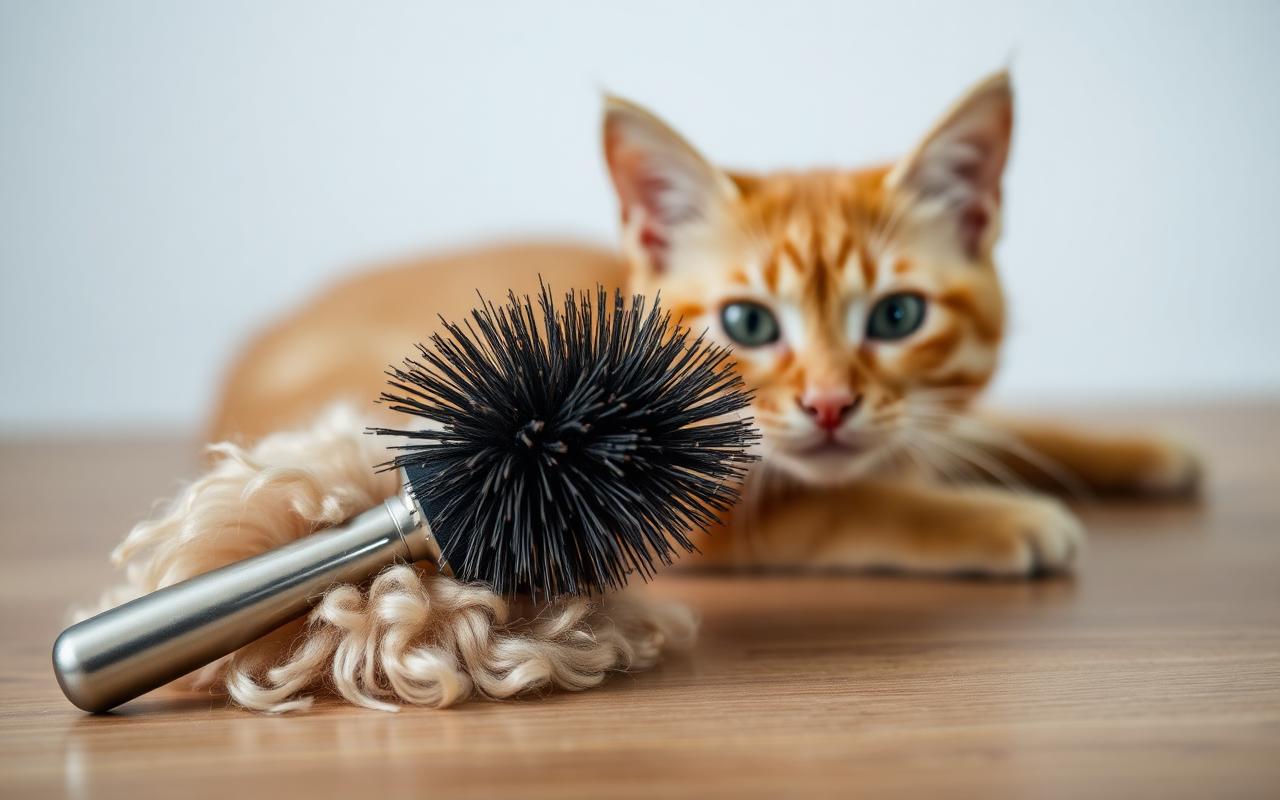
Quick Answer
The best cat hairball control brush uses fine, rounded stainless-steel micro-teeth on a slightly angled edge. The teeth slip under the guard coat, catch dead undercoat fibers, and lift them out before the cat swallows them during self-grooming. A push-button hair release makes the tool practical to use daily.
Plain plastic slickers smooth the surface but miss the underlying loose hair. That is the hair that ends up as a hairball.
Why a specialist brush matters for hairballs
A hairball forms when swallowed dead undercoat collects in the stomach, dries, and becomes too dense to pass. Anything you can pull out with a brush before the cat swallows it is a hairball prevented. Standard pin brushes and generic slickers work the top layer of guard hairs but leave the undercoat, which is where 80% of the shed volume lives.
Design features that separate the best from the rest
Rounded, ground micro-teeth
Teeth must be small enough to slip through the guard coat but rounded at the tips so the tool glides on the skin, not scrapes it.
Angled edge
A slight angle catches loose hair without cutting living coat. A perpendicular blade cuts guard hairs and thins the topcoat over time.
One-touch hair release
Feline fur is fine, static, and clings to steel. A button that ejects the collected wad off the teeth is what makes a daily two-minute session possible.
Lightweight handle with a soft grip
Heavy handles push into the skin. Cats stop cooperating within a week. A light handle lets you float the tool over the coat.
Best overall: FURminator Long Hair deShedding Tool for Cats
Fine, rounded stainless steel edge sized for a cat's back, with the button-eject you actually use. The Long Hair version has slightly longer teeth for Persians, Maine Coons, and Ragdolls; the Short Hair version is right for domestic shorthairs.
Best budget alternative: Pat Your Pet Deshedding Brush
Comparable stainless steel head, spring-loaded eject, half the price. Handle is slightly lighter, which is fine for smaller cats.
Best for fussy cats: Safari Cat Shedding Comb
A comb rather than a deshedder, but the fine tooth spacing catches undercoat and it does not have the slight vibration cats sometimes dislike in a wide-blade tool.
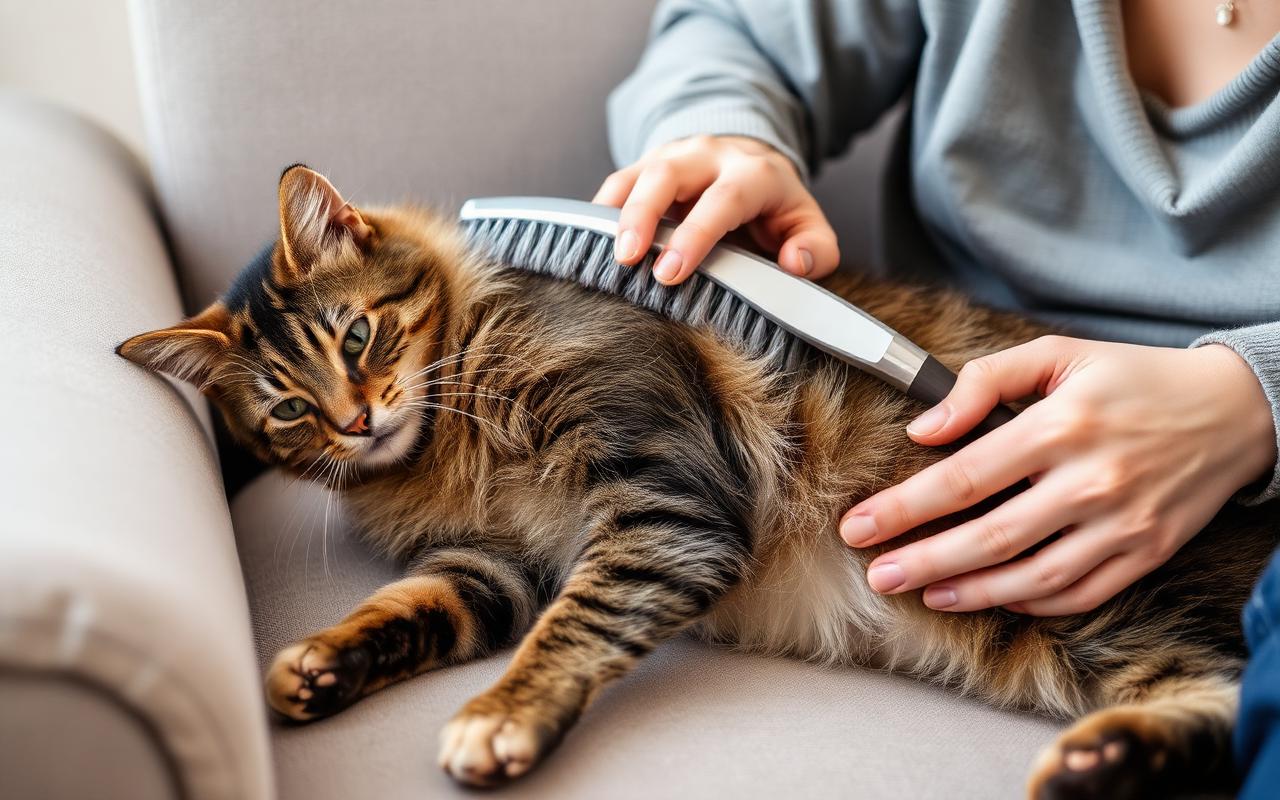
How to use a hairball control brush correctly
- Warm the tool in your hand for a few seconds. Cold metal on skin is a session killer.
- Start where the cat likes to be petted. Cheeks and top of the head. Get pheromone marks on the handle.
- Use light, floating pressure. Do not press. Let the weight of the tool do the work.
- Follow the direction of hair growth. Long, smooth strokes along the back, flanks, and haunches. Skip the belly and legs unless the cat likes it.
- Focus on the shed hotspots. Base of the tail, hips, chest.
- Eject the wad early. A brush overloaded with hair pulls on the skin.
Session frequency by coat
- Short-haired cats: 5 minutes twice a week is enough.
- Medium and semi-long: 5 to 8 minutes three times a week.
- Long-haired breeds: 5 minutes four times a week; brief daily brushes during spring and fall shedding.
Pair with hairball-prevention basics
Brushing catches most, but not all, of the loose hair. Add a hairball-remedy paste once a week and keep fresh water available (dehydrated cats process hair less efficiently). A tablespoon of pumpkin puree added to a meal once a week gives fiber that helps hair move through the tract.
Common questions
Will a hairball brush thin my cat's coat?
Not if you keep the pressure light and use it at the recommended frequency. Overuse or hard pressure can eventually thin the guard coat.
Do these work on kittens?
Wait until 6 months. Kittens have delicate coats and are still learning tolerance for grooming; a soft slicker is a better start.
My cat vomits hair every week even with brushing. What next?
Talk to your vet. Chronic hairballs can point to an underlying condition (IBD, food sensitivity) rather than just excess shedding.
Bottom line
Use a fine-tooth, angled, stainless-steel deshedder with a hair release button. Keep sessions short, pressure light, and frequency matched to the coat. Add a weekly hairball remedy and steady hydration. Together those steps intercept the loose hair before it becomes a problem, without stripping the coat or breaking your cat's trust.