Quick Answer
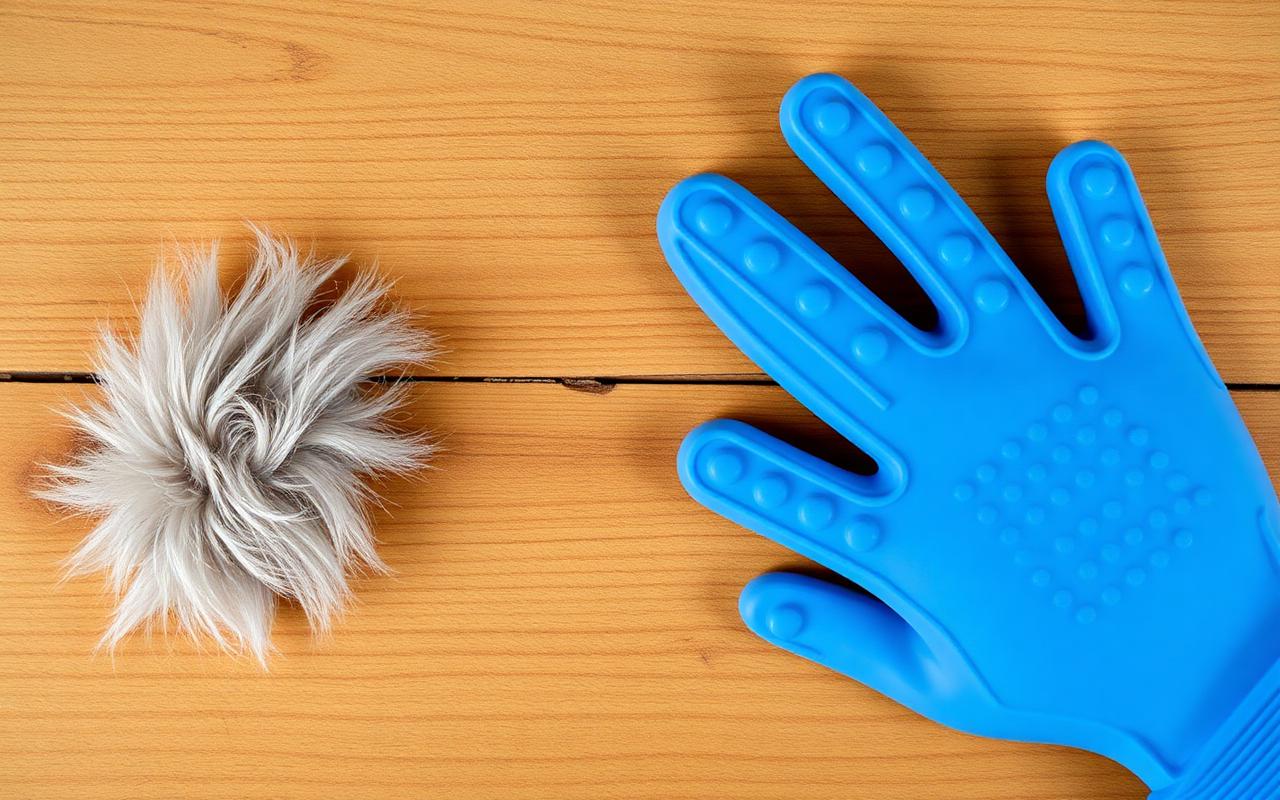
The best cat de-shedding glove uses soft, medical-grade silicone nubs on a breathable mesh backing with an adjustable wrist strap. The design turns grooming into petting, which is exactly what nervous, defensive, or short-haired cats accept. Loose fur peels off the palm in one clean sheet.
Stiff-nub or rubber-only gloves feel scratchy. Cats that dislike traditional slickers will also dislike a hard glove.
Why gloves work when brushes fail
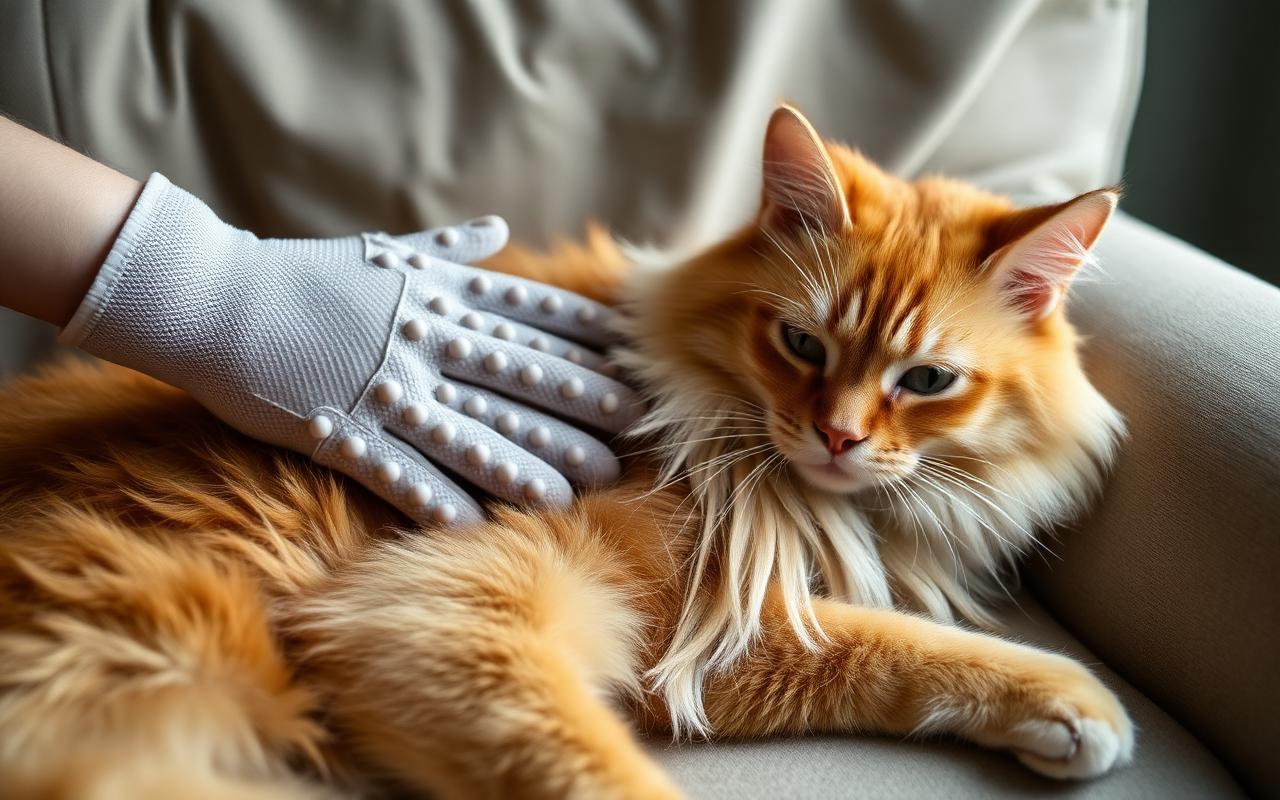
Many cats view a metal slicker as a threat, especially those who were adopted as adults or had rough grooming as kittens. A glove looks and moves like a hand. Cats stay relaxed and let you cover the whole body, including areas they hate for a brush (belly, chest, hips).
The three features that actually matter
Soft silicone nubs, not stiff plastic
Medical-grade silicone bends over sharp bones (spine, hips, shoulders) and springs back. Stiff plastic pins are a slicker in disguise; the cat responds accordingly.
Breathable mesh back
Grooming sessions run five to ten minutes. A sealed rubber back turns your hand into a sweaty mitt. Mesh keeps your hand cool and prevents dropping the glove mid-session.
Adjustable wrist strap
Loose gloves twist. A strap keeps the palm oriented on the cat, so the nubs meet the coat at the right angle.
Best overall: DELOMO Pet Grooming Glove
259 soft silicone nubs, adjustable strap, mesh back. Consistently rated the least scratchy option on the market. Works on short and medium coats.
Best for long coats: Pat Your Pet 2-in-1 Deshedding Glove
Slightly firmer nubs that reach through longer guard hair. Not the pick for a nervous cat, but excellent for a chill Ragdoll or Maine Coon.
Best budget: HandsOn Pet Grooming Gloves (small)
Two-hand set with tapered nubs. Popular with owners who want both hands working at once. Small size fits average adult women's hands.
How to introduce the glove
- Let the cat sniff it first. Rub the glove on your arm to pick up your scent, then present the glove for a sniff.
- Start with the cheeks and chin. Areas the cat wants rubbed. Nubs feel like a slow massage.
- Move to shoulders and back. Long slow strokes in the direction of hair growth.
- Expand to belly and flanks. Only if the cat is relaxed. If the tail flicks, stop.
- Peel the sheet off in one piece. Start at the wrist and pull. Faster than picking hair out of a slicker.
When a glove is not enough
Gloves handle surface fur beautifully. They do not reach the deep undercoat on long-haired breeds, and they do not clear mats. A glove is a great daily maintenance tool alongside a soft slicker and a steel comb used twice a week.
Care and maintenance
Rinse under warm water after each session to clear silicone-clinging fur. Machine wash monthly on cold, air dry. The silicone lasts about a year of heavy use.
Common questions
Will a glove work on a cat that hates being petted on the back?
Sometimes. Because the glove is your hand, some cats accept longer contact than they do with a stiff tool. Others still object; do not force it.
Is the glove safe for kittens?
Yes from about 12 weeks. Use very light pressure and short sessions. Kittens are curious about the nubs and often start biting the glove; end the session before they get overstimulated.
Do gloves reduce hairballs as much as a deshedder?
Not on long coats. For short-coated cats, a glove used four or five times a week captures a meaningful share of shed hair and helps.
Bottom line
Look for medical-grade silicone nubs, a mesh back, and an adjustable strap. Introduce the glove slowly, work with the coat, and peel the collected fur off in one sheet at the end. A glove is the most humane way to deshed a nervous cat and the fastest way to remove surface fur on short-coated breeds.