Quick Answer
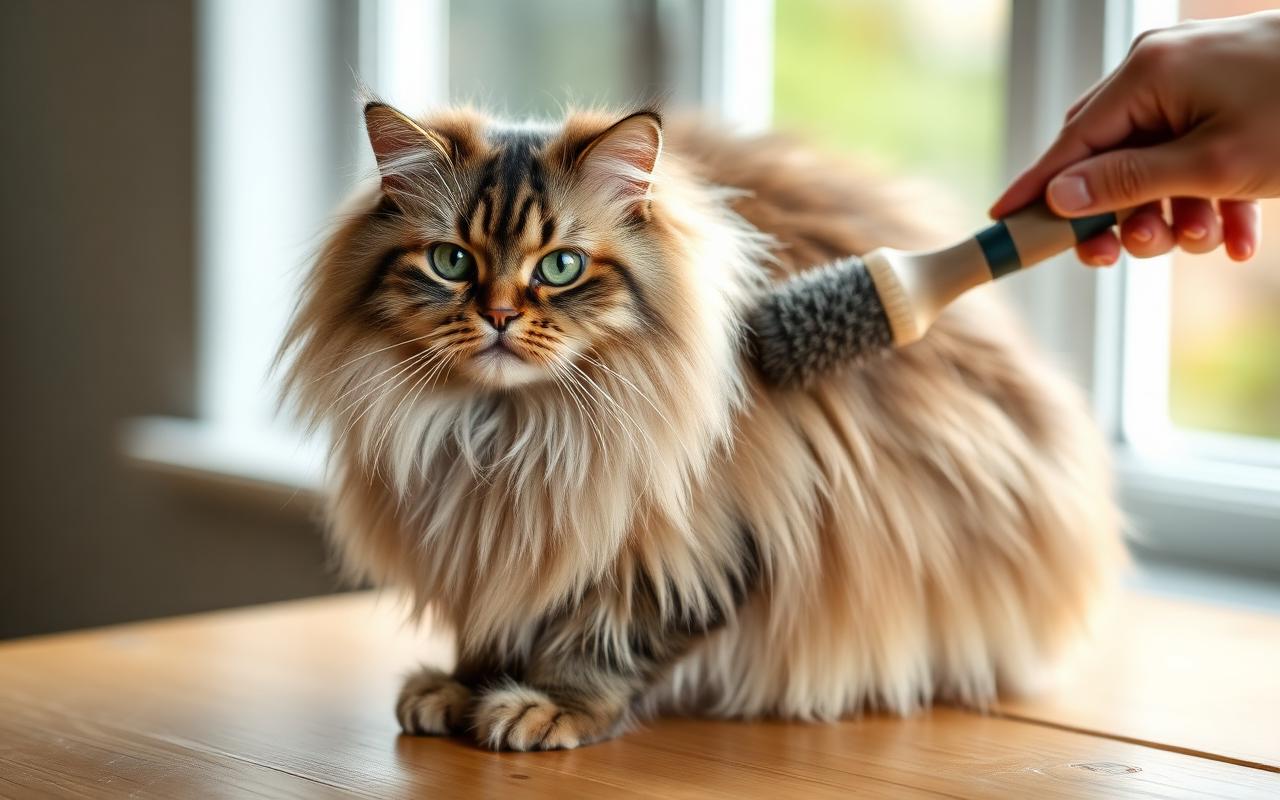
The best brush for a long-haired cat is a soft-pin slicker with flexible wire pins and rubber-coated tips, paired with a stainless-steel greyhound comb for finishing. Together they clear the deep undercoat, prevent mats, and reduce swallowed hair that causes hairballs, without scraping thin feline skin.
For heavy-shed weeks on Maine Coons, Persians and Ragdolls, a retractable de-shedding tool with a spring-loaded push button lifts dense undercoat efficiently.
Skip stiff canine slickers, tight bristle brushes, and generic pet combs. They are engineered for thicker skin and cause micro-scratches on cats.
Why long-haired cats need a different brush
Long-haired breeds carry a triple-layered coat: a coarse guard layer, a wavy awn layer, and a dense down. The tongue's backward-facing papillae are efficient at surface grooming but poor at pulling out the deep undercoat, which is where mats and hairballs start.
Cat skin is roughly half the thickness of canine skin and much more elastic. Rigid pins or aggressive pressure that a big dog absorbs will bruise or nick a cat. The right tool is fine, flexible, and light in the hand.
The three tools that cover every long coat
1. Soft-pin slicker brush
Your daily driver. Look for a slicker with very thin wire pins bent at a shallow angle and rubber or polished tips. It reaches through the guard hairs to sweep loose down before it mats or gets swallowed.
2. Stainless-steel greyhound comb
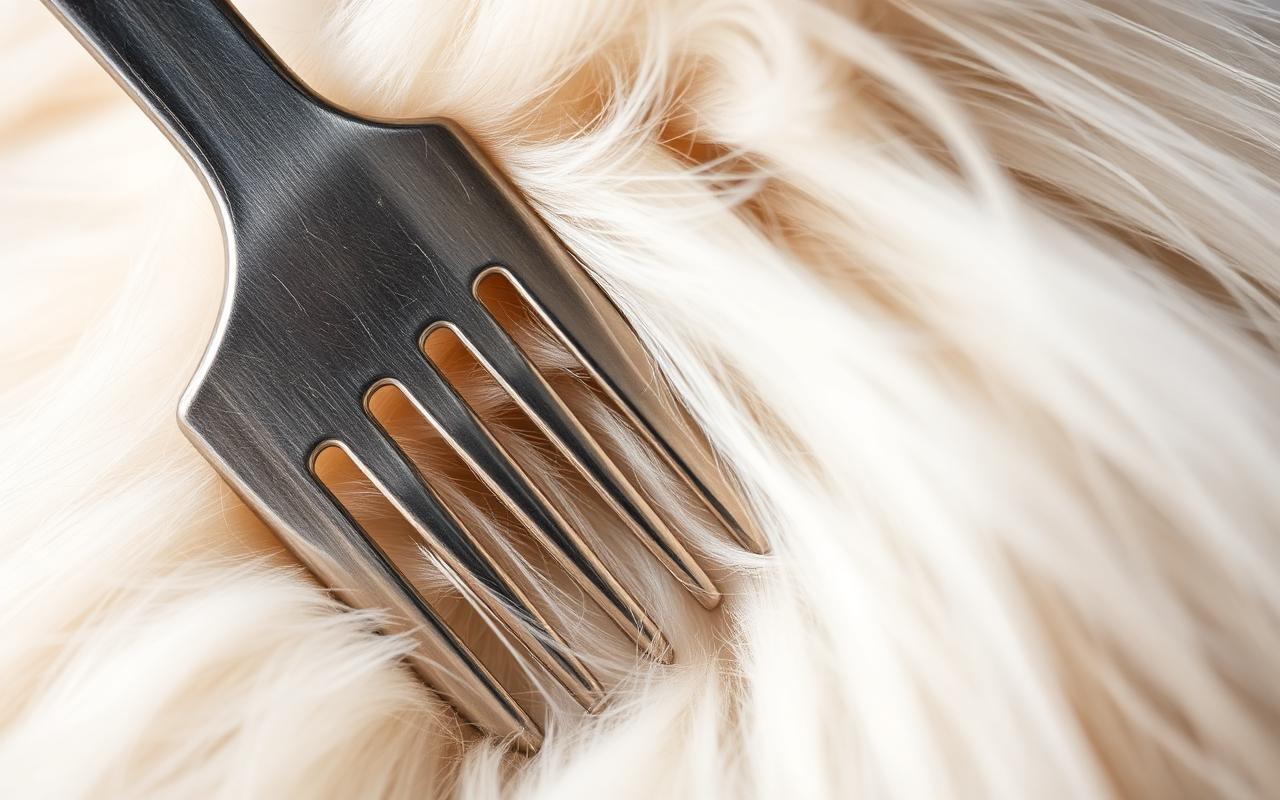
The verification tool. A 6 to 7 inch carbon steel comb with a wide-tooth half and a narrow-tooth half tells you whether the coat is truly tangle-free. Rounded, blunt tips are non-negotiable on a cat.
3. Retractable de-shedding tool
Seasonal only. During spring and fall coat blows, a spring-loaded de-shedder with a self-cleaning button removes bulk in minutes. Use once a week, never daily, and always with a light hand.
How to match tool to body zone
Different areas mat differently. A back only needs long rhythmic slicker strokes. Armpits and groin are friction zones where mats form fast, so use the wide-tooth side of the comb in short lifts. Cheeks, chin and the delicate area near the eyes need the fine-tooth side and tiny passes. Tail plumes want the slicker in slow sweeps to keep the length intact.
Product picks that hold up
Chris Christensen Big G Slicker (small)
The gold standard slicker for long feline coats. Long, flexible pins reach through the outer coat without dragging on the skin. The small size fits a cat's back better than the dog size.
Andis Steel Greyhound Comb (7.5 in)
Two tooth spacings in one handle. Rounded tips. The one comb professional cat groomers reach for.
Safari Cat Self-Cleaning Slicker Brush
A budget pick with a retractable button that pushes collected fur off the pins in one motion, which cats tolerate better than watching you pick fur off between strokes.
Technique: keep the session under 8 minutes
- Warm the tool in your hand. A cold metal comb on skin makes cats bolt.
- Start where the cat likes being touched. Cheeks, chin, top of the head. Get pheromone marks on the tool.
- Follow the direction of hair growth. Slicker in long strokes across the back and flanks. Comb in shorter picks through the armpits, groin, and behind the ears.
- Finish with the comb. If the comb glides through without catching, you are done.
- Reward and stop. Cats do better with two 5-minute sessions a week than one 20-minute session that ends in a bite.
A detangling mist makes a real difference
A quick spritz of an alcohol-free feline detangling mist before you start reduces static, lubricates the shaft, and keeps loose hair from clinging to the brush. Avoid any product with tea tree, wintergreen, or citrus essential oils; they are toxic to cats.
Common questions
How often should I brush a long-haired cat?
Three to four times a week, plus brief daily passes during seasonal shedding in spring and fall. Persians and Himalayans do best with a short daily comb of the armpit, groin, and behind-the-ear friction zones.
Are Furminator-style tools safe for cats?
The dedicated cat version is fine when used weekly with a light hand. Never use the canine version on a cat, and never on already-matted fur; the blade will pull.
What if I find a mat?
Do not yank. Hold the mat at the base near the skin so pressure stays off, then work the wide-tooth comb through the outer edge first. If it does not release in two minutes, book a groomer with a clipper. Scissors near cat skin cause emergency room visits.
Bottom line
Use a soft-pin slicker for daily coat clearing, a rounded-tooth greyhound comb to verify the coat is mat-free, and a retractable de-shedder for seasonal blowouts. Match the tool to the body zone, keep sessions short, and pair with a lick-safe detangling mist. That combination is what keeps a Maine Coon or Persian coat sleek and hairball-free without turning grooming into a fight.