Quick Answer
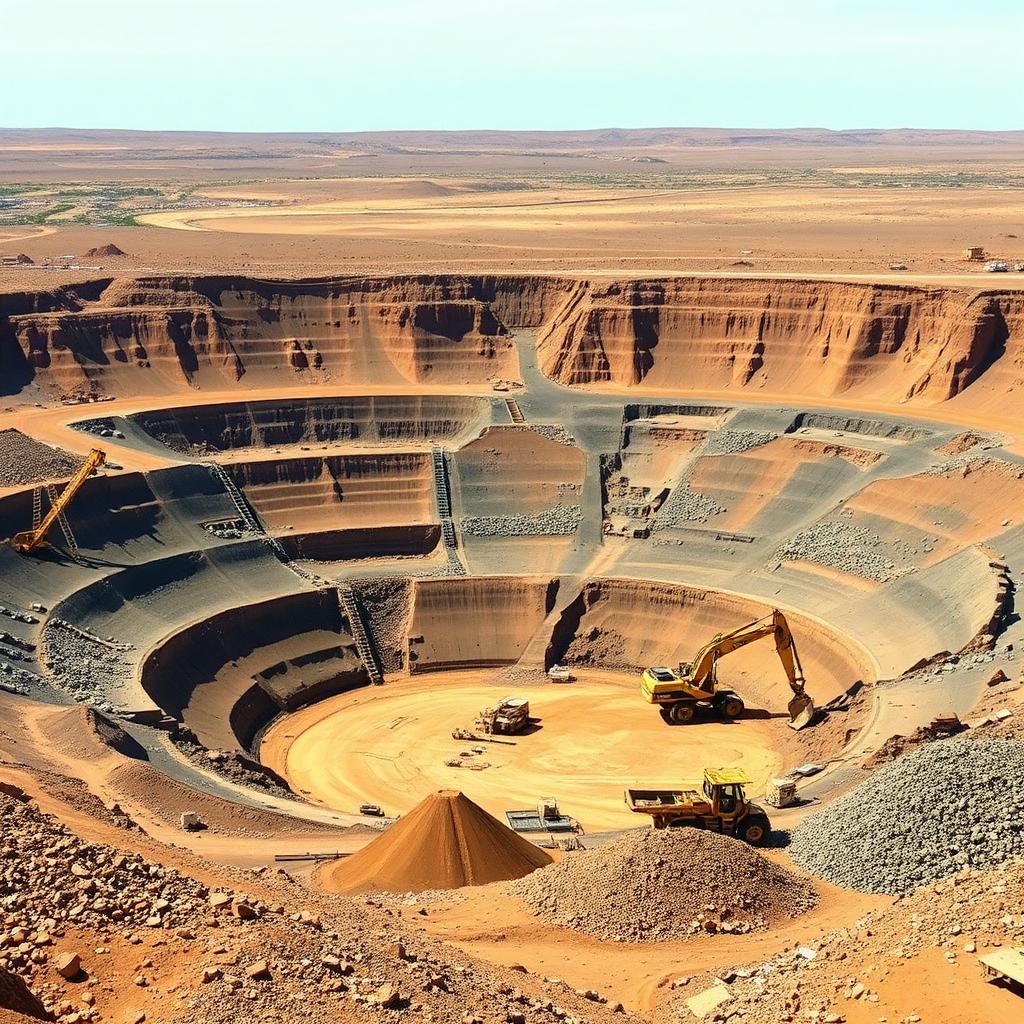
South Africa is mining and beginning to refine rare-earth elements in 2026 to break China's near-monopoly on the supply of critical minerals used in EV motors, wind turbines, smartphones and defence systems. The Phalaborwa project in Limpopo and the Steenkampskraal mine in the Western Cape are the country's two flagship developments, both with U.S. government backing.
News24 reported in June 2026 that South Africa has become the first African country to produce mixed rare-earth products.
What Are Rare Earths and Why Do They Matter?
Rare-earth elements are a group of 17 metals (the lanthanides plus scandium and yttrium) that are essential for permanent magnets in electric motors, wind turbines, MRI machines and guided weapons. They are not actually rare in the earth's crust, but economically viable concentrations are unusual, and refining them is technically difficult and environmentally messy.
China controls roughly 60 percent of global mined supply and over 85 percent of refining capacity. Beijing's 2025 export controls on selected rare-earth processing technologies put the rest of the world on a hunt for new sources, fast.
The Phalaborwa Project
The Phalaborwa rare-earth project in Limpopo province is run by Rainbow Rare Earths and is unusual: instead of digging a new pit, it processes tailings dumps from a defunct phosphate operation. Two enormous sandlike dunes contain enough monazite-bearing material to support years of production without breaking new ground, which keeps both cost and environmental footprint lower than a greenfield mine.
The U.S. International Development Finance Corporation backed the project in 2025, and Associated Press reported that the U.S. has continued investing in the Phalaborwa effort despite recent diplomatic friction with Pretoria. The project is targeting commercial production of separated neodymium-praseodymium oxide, the magnet feedstock that matters most for EV motors.
The Steenkampskraal Mine
Steenkampskraal in the Western Cape is one of the highest-grade rare-earth deposits in the world. The mine has been on and off for decades, originally producing thorium in the 1950s. In 2026, Steenkampskraal Holdings and South Africa's state research agency Mintek announced a breakthrough in monazite beneficiation that allows local production of mixed rare-earth concentrates rather than shipping raw ore overseas for processing.
That single step matters because it captures more of the value chain inside South Africa and reduces dependence on Chinese refiners.
Why the U.S. and EU Are Investing
Western governments have spent the past two years scrambling to diversify away from Chinese rare-earth supply. The list of new investments runs through Australia (Lynas), the United States (Mountain Pass), Greenland, Canada and now southern Africa. South Africa stands out because:
- It has both heavy and light rare-earth resources.
- Mintek has decades of process metallurgy expertise.
- The country already has a deep mining workforce and supply chain.
- It is politically nonaligned, which appeals to both Western and Asian buyers.
What "First in Africa" Actually Means
News24's June 2026 headline that South Africa is the first African country to produce mixed rare-earth products is a reference to making a saleable refined concentrate domestically, not just digging up ore. Several African countries (Burundi, Madagascar, Malawi) have hosted rare-earth mining or exploration, but none had domestic refining at scale. South Africa crossing that line is what positions it as a serious player rather than another raw-material exporter.
The Climate Angle
Rare earths are central to the energy transition. A single 3-megawatt offshore wind turbine uses around 600 kilograms of rare-earth magnets. A modern EV traction motor uses 1 to 2 kilograms. If the world is to electrify transport and decarbonise the grid on the IPCC timeline, supply of neodymium, praseodymium and dysprosium has to roughly triple by 2035. South African production helps the math.
The Risks
Three real risks sit over the projects:
- Power and water. Eskom load shedding has eased but is not gone. Refining is energy intensive and can grind to a halt during deep cuts.
- Permitting and community. Mining projects in South Africa routinely face long approval timelines and community pushback.
- Price volatility. Rare-earth prices swing hard with Chinese policy. A bumper Chinese export year can wipe out the margin of marginal Western producers.
What to Watch in 2026 and 2027
Look for first commercial shipments of separated NdPr oxide from Phalaborwa, the next Mintek update on the Steenkampskraal pilot plant, and any expansion of U.S. Development Finance Corporation lending into adjacent South African critical-minerals projects.
Bottom Line
South Africa is mining rare earths in 2026 because the world needs alternatives to Chinese supply, and the country has the resources, the metallurgical expertise and the geopolitical positioning to deliver them. The Phalaborwa and Steenkampskraal projects, both with U.S. backing, are the ones to watch.
How South African Rare Earths Reach the Global Supply Chain
Mixed rare-earth concentrates leaving the Phalaborwa and Steenkampskraal projects move through specialist offtake partners and end up at separation facilities in North America and Europe. From there the separated oxides feed magnet makers in Estonia, Korea and increasingly the United States, which is investing federal funds to onshore the full magnet supply chain.