Quick Answer
A door knob won't lock in roughly 80 percent of cases because the latch bolt no longer lines up with the hole in the strike plate, usually from a sagging door, loose hinges, or seasonal wood swelling.
The other common causes are a worn or dirty cylinder, a stripped spindle inside the knob, or a privacy or keyed mechanism that has slipped out of its detent. Each takes 5 to 20 minutes to fix without replacing the knob.
Start with the easiest test
Open the door and turn the lock with no resistance from the frame. If the knob locks freely in the open position but jams when the door is closed, the issue is alignment, not the lock itself. If the knob feels stuck or spins loosely in both positions, the mechanism inside the knob is the problem.
Fix 1: realign the strike plate
Look at the latch and the strike plate hole. If you see fresh scratches above, below, or to one side of the hole, the latch is hitting metal instead of sliding in. Loosen the strike plate screws, nudge it 1 to 2 mm in the direction of the scratches, and retighten. For larger misalignment, file the strike plate opening with a small metal file or move the plate entirely by drilling new pilot holes.
Fix 2: tighten the hinges
A sagging door drops the latch below the strike hole. Open the door, support it slightly upward, and tighten the top hinge screws first. If the screws spin without biting, swap one short screw on the top hinge for a 3-inch wood screw that reaches into the wall stud. This single trick lifts most sagging doors back into alignment.
Fix 3: lubricate the cylinder
If the key turns rough or stops halfway, the pin tumblers inside are gummed up. Use a graphite or PTFE dry lubricant (never WD-40 long term, which attracts dust). Spray once into the keyway, work the key in and out 10 times, then wipe the key clean. Locksmiths report this single step solves the majority of stiff cylinder complaints.
Fix 4: check the spindle and set screws
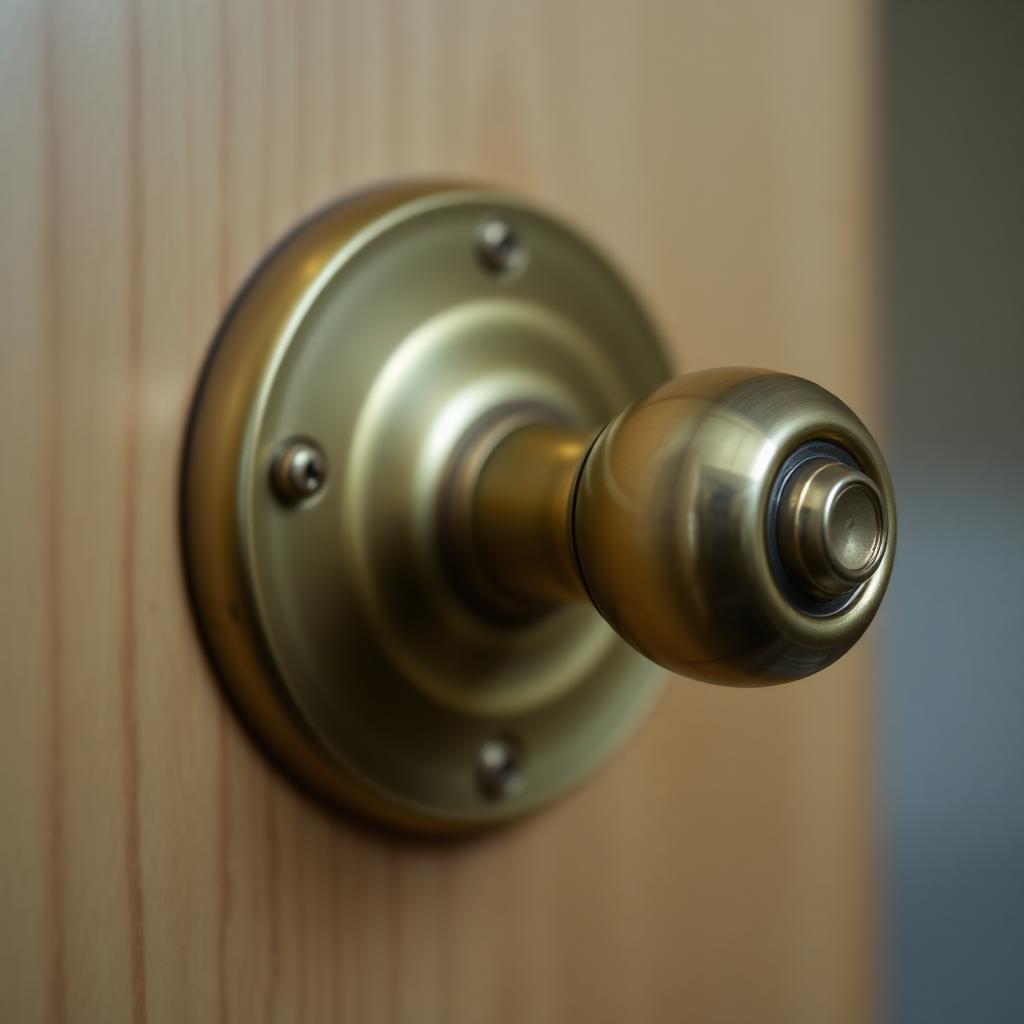
Remove the inside knob (usually a set screw on the rose or a hidden detent button). If the spindle wobbles or the set screws are stripped, the knob cannot transmit the turning motion to the latch. Replace just the knob assembly for $15 to $40, no need to swap the entire lockset.
Fix 5: address seasonal wood swelling
Wood doors expand in humid summers and shrink in dry winters, so a door that locks fine in spring may bind by August. Mark where the door binds with chalk, then plane or sand 1 to 2 mm off the edge. Re-paint or seal the bare wood so it does not absorb more moisture later.
When to replace the whole lockset
Replace the whole knob if the latch bolt does not retract when you turn the knob, if the lock cylinder spins freely without engaging, or if the deadlatch (the little plunger next to the main latch) is broken off. New residential locksets cost $20 to $80 and take 10 minutes to swap with a single screwdriver.
When to call a locksmith
Call a locksmith if the key is stuck inside the cylinder, if the lock has been kicked or tampered with, or if a high-security cylinder (Medeco, Mul-T-Lock, Schlage Primus) is involved. Forcing those mechanisms usually costs more than the service call. Expect $80 to $150 for a standard residential trip.
Prevention
Tighten hinge and strike-plate screws once a year, lubricate cylinders every 6 months, and keep humidity inside the house between 30 and 50 percent. Doors that close cleanly without slamming will keep their locks working for decades.
If you cannot identify the cause after these checks, photograph the latch and strike plate when the door is closed and bring the photos to a hardware store. Most staff can diagnose alignment problems in seconds and sell you the exact part you need.
Tools that make the job easier
A 4-in-1 screwdriver covers nearly all door hardware fasteners. A small metal file shapes strike plates in seconds. A combination square measures the gap between latch and strike. A spirit level confirms whether the door has tilted. Total kit cost is under $30 and pays back on the first repair.
Smart lock conversion as a workaround
If your mechanical lock keeps failing, swapping to a smart deadbolt (August, Yale, Schlage Encode) gives you a fresh keyway, a motor instead of a manual cylinder, and self-aligning bolts that tolerate slight misalignment better than older hardware. Smart locks run $150 to $300 and install in under 30 minutes.
What landlords are responsible for
If you rent, lock and door issues are almost always the landlord's responsibility under habitability laws in most US states. Document the problem in writing, give a reasonable repair window, and follow up. A door that will not lock is a security issue and is usually treated as urgent under tenant law.
How long should a door lock last
A quality residential lockset lasts 7 to 15 years of normal use. Premium commercial-grade locks (Grade 1 ANSI rated) last 25+ years. Cheap big-box locks under $20 often fail in 2 to 5 years. If your knob has been locking poorly for months, replacement is usually cheaper long term than repeated repairs.
Quick test for a sagging door
Close the door slowly and watch the latch approach the strike. If the latch hits below center, the door is sagging at the top hinge. If it hits above center, the bottom hinge is loose. If it hits the strike but will not enter, the latch is misaligned horizontally. Each diagnosis points to a different fix.
Final checklist before calling a pro
Tighten all hinge screws. Lubricate the cylinder with graphite. File or move the strike plate. Replace the lockset if hardware is worn. If none of these solve a stubborn lock that will not engage, then a locksmith visit is justified.
Bottom line
Diagnose alignment first, hardware second. Most lock problems are fixed in 20 minutes with a screwdriver and patience.