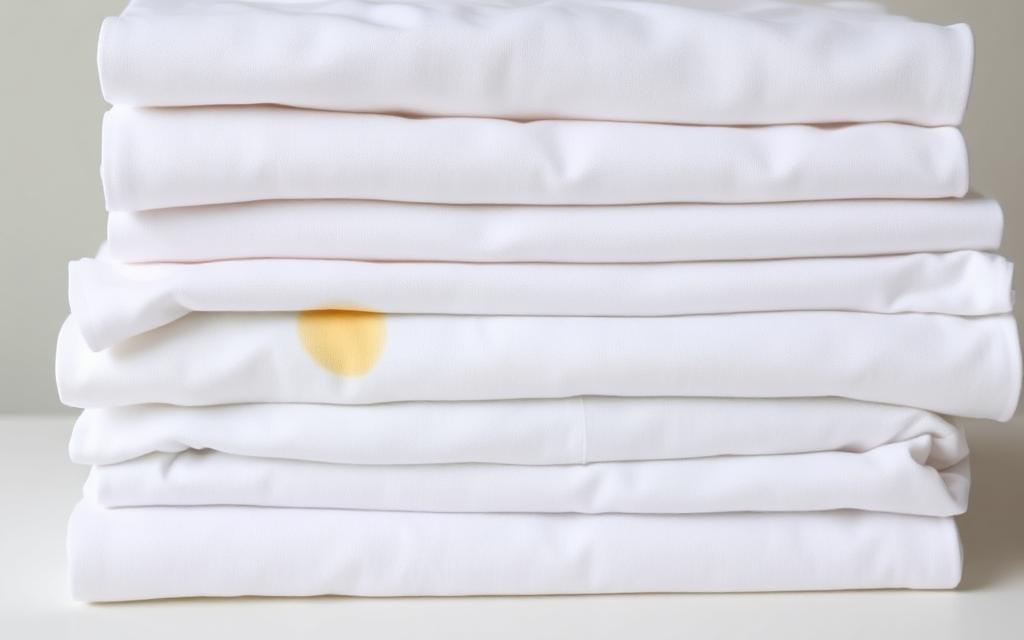
Quick Answer
Yellow underarm stains on white shirts are not caused by sweat alone. They are the result of a chemical reaction between the aluminum compounds in antiperspirants and the proteins and lipids in human sweat, which together bind to fabric fibers and oxidize over time.
Sweat is mostly water, salt and small amounts of urea and protein. By itself, it would mostly evaporate and leave only a faint salty crust.
The short answer
Yellow underarm stains on white shirts are not caused by sweat alone. They are the result of a chemical reaction between the aluminum compounds in antiperspirants and the proteins and lipids in human sweat, which together bind to fabric fibers and oxidize over time.
Sweat is mostly water, salt and small amounts of urea and protein. By itself, it would mostly evaporate and leave only a faint salty crust. The deep yellow color and the stiff, almost cardboard like texture come from what happens when antiperspirant ingredients meet that sweat.
The chemistry of the stain
Antiperspirants use aluminum salts such as aluminum chlorohydrate or aluminum zirconium tetrachlorohydrex glycine to plug sweat ducts and reduce wetness. When the aluminum mixes with the proteins in fresh sweat, it forms a sticky, slightly acidic compound. That compound bonds to cotton fibers and gradually oxidizes when exposed to heat from the dryer or from sunlight, turning the area pale yellow and stiff.
The reaction is similar in spirit to what happens when iron rusts, but with aluminum and organic molecules. The longer the residue sits on the fabric, and the more it is exposed to heat and air, the deeper the yellow tone becomes. Once it has oxidized fully, ordinary detergent struggles to lift it.
Why deodorant alone does not do this?
Pure deodorants without aluminum mostly mask odor with antimicrobial agents, fragrance and absorbent powders. Without the metal salts, there is no protein aluminum reaction, and white shirts stay cleaner for longer. This is why many people who switch to aluminum free formulas notice fewer yellow stains within a few months, even though they may sweat more visibly.
Why some shirts are more vulnerable?
- Cotton and cotton blends: their fibers grip the residue easily.
- Loose weaves: more surface area for the residue to bond with.
- Heavily worn whites: repeated dryer cycles bake the residue in.
- Synthetics like polyester: resist the stain better but trap odor more.
Why hot water and bleach often make it worse?
Many people reach for hot water and chlorine bleach, expecting them to lift the stain. They often do the opposite. Heat sets the protein residue more firmly into the fibers, and chlorine bleach can react with the aluminum compounds to form even darker yellow or grey patches.
Oxygen based bleaches such as sodium percarbonate behave differently. They break down the oxidized compounds without driving them deeper into the fabric, which is why most laundry experts recommend them for set in underarm stains.
How to prevent the stain?
- Let antiperspirant dry completely before getting dressed. Wet residue transfers more easily.
- Apply a thin layer rather than a thick one. More product does not mean more dryness.
- Wash white shirts in cold water and air dry the underarm area when possible.
- Pre treat with an enzyme based stain remover before washing.
- Consider aluminum free deodorant for everyday wear with white clothing.
- Wash workout clothes promptly so the residue does not have hours to oxidize.
How to remove existing stains?
For set in stains, soak the underarm area in a paste of baking soda, hydrogen peroxide and a little water for an hour, then wash normally. The peroxide breaks down the oxidized compounds while the baking soda lifts residue from the fibers. Repeat once or twice for stubborn stains.
An alternative is a soak in oxygen bleach (sodium percarbonate) dissolved in warm water for several hours. This works particularly well on cotton because the gentle bleaching action does not weaken the fibers the way chlorine bleach can.
Avoid the temptation to scrub aggressively. Mechanical action breaks the cotton fibers around the stain and creates a thinner, slightly transparent patch that looks worse than the original yellow.
What about the smell that lingers?
Even after the visible stain is gone, some shirts hold a faint sour smell in the underarm area. That comes from bacteria living deep in the fabric weave, often Corynebacteria. A soak in a diluted vinegar solution before regular washing helps neutralize the odor by lowering the pH of the fabric.
Why dark shirts have a different problem?
Dark fabrics rarely show yellow stains, but they often develop a stiff, white or crusty buildup in the same area. That is the antiperspirant residue itself, accumulated layer by layer because it never reacted visibly with the dye. The fix is the same as for white shirts: thinner application, prompt washing and an occasional pre treatment soak.
The role of laundry detergent
Modern laundry detergents are formulated to handle a wide range of common stains, but underarm residue sits in a category that needs enzymes, specifically protease and lipase, to break down the protein and lipid components. Detergents marketed for sport or active wear usually contain a richer enzyme blend, which is why they tend to outperform basic formulas on antiperspirant stains.
For badly stained shirts, an overnight soak in an enzyme presoak product before the regular wash cycle is far more effective than turning up the wash temperature.
When to give up on a shirt?
- The fabric in the underarm area feels noticeably thinner than the rest of the shirt.
- The stain has set after multiple correct treatments.
- The yellowing has started spreading outside the original armpit zone.
- The shirt smells musty even when freshly washed.
At that point the stain is a sign that the fibers themselves are breaking down, and the shirt is past saving as office wear. Demote it to gym duty or repurpose it as a cleaning rag.
The takeaway
Yellow underarm stains are a chemistry problem, not a hygiene problem. The reaction starts the moment aluminum based antiperspirant meets sweat, and it sets every time you tumble dry. Pre treat early, skip the chlorine bleach, and consider whether an aluminum free deodorant would suit your routine. Your white shirts will last longer, and your laundry day will be much shorter.
Quick recap
Use this as the short version to save or share. The key facts above explain the why and the how, but the practical takeaway is simple: small habits and small ingredient choices compound. Make the change once, and your future routine gets a little easier and a little better every time you repeat it.
If you found this helpful, browse the related answers below for more everyday questions broken down the same way. Every article on dmbio is researched and updated when new evidence comes in, so you can come back to the same page months later and trust that the answer still holds.