Quick Answer
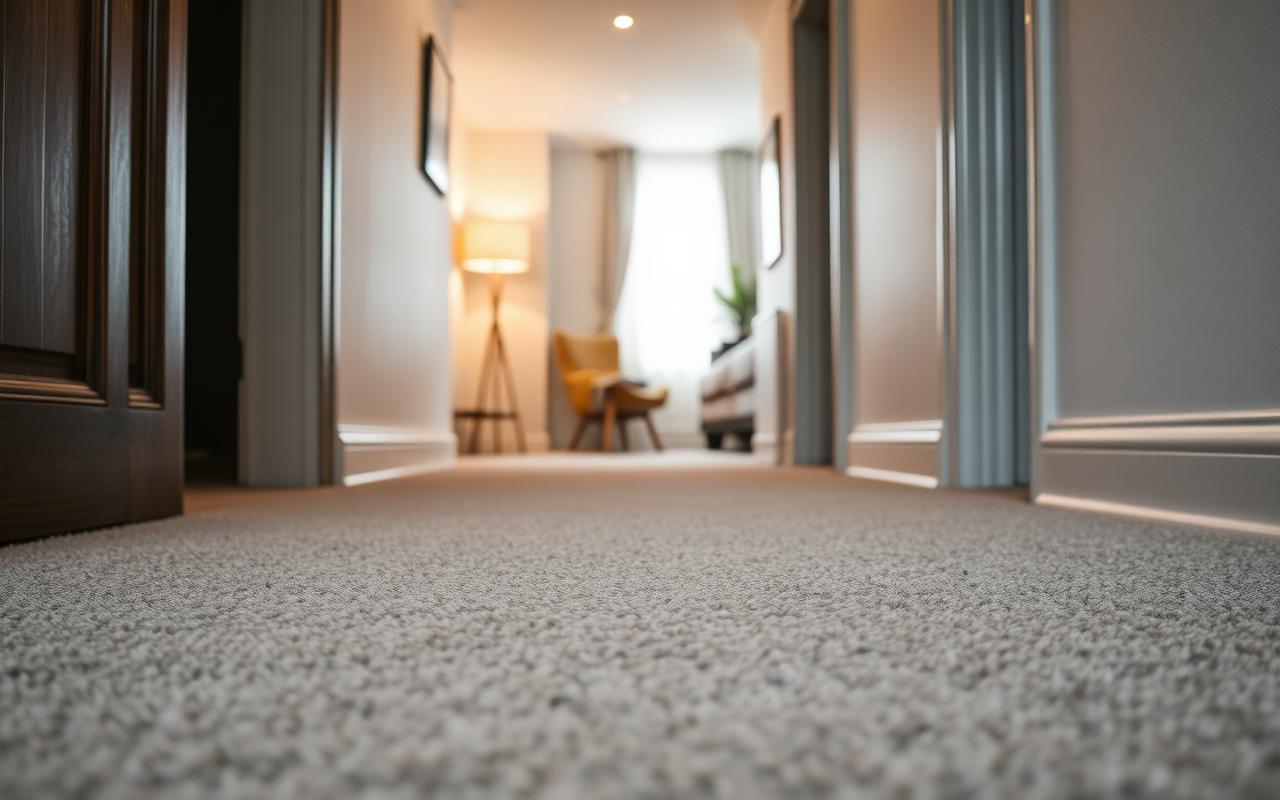
Carpet provides the best slip resistance because its fibrous, textured surface generates a much higher coefficient of friction (COF) than hard flooring, and because the pile compresses under a foot to give extra grip. Typical dry carpet measures a static COF around 0.7 to 0.9, well above the 0.5 minimum most safety codes and the ADA reference for a walking surface.
Hard finishes (polished tile, sealed concrete, glossy vinyl) can drop to 0.3 to 0.5 when wet, which is why hospitals, schools and eldercare corridors often specify low-pile carpet or textured LVT in fall-risk zones.
The Physics
Slips happen when the friction between the shoe and the floor drops below the horizontal force of a walking foot. Fibre surfaces mechanically interlock with shoe treads, so both static and dynamic friction stay high. Hard floors rely only on the shoe compound gripping a smooth surface, which fails the moment liquid, dust or polish reduces contact.
What the ADA and Codes Say
- ADA Chapter 3 (Floor and Ground Surfaces): requires stable, firm, and slip-resistant surfaces on accessible routes. Carpet must be securely attached with a firm cushion or backing, and pile height under 1/2 inch.
- ANSI A326.3: the current US test standard for dynamic COF, with 0.42 wet as the minimum for level walking surfaces.
- UK slip pendulum test: carpet routinely scores in the "low slip risk" band (PTV over 36), even wet.
Carpet vs Hard Flooring: COF Snapshot
- Cut-pile carpet, dry: 0.7 to 0.9 static COF.
- Textured LVT, dry: 0.5 to 0.7.
- Polished porcelain, dry: 0.4 to 0.6; wet can drop below 0.3.
- Sealed hardwood, dry: 0.4 to 0.5.
- Polished concrete, wet: 0.2 to 0.4 (high slip risk).
When Carpet Is Still the Wrong Answer
Wet zones (bathrooms, entryways, commercial kitchens) rule carpet out for hygiene and drying reasons. Wheelchair users often prefer low-pile carpet or hard flooring; deep pile increases push resistance. And loose rugs without gripper backing become trip hazards, which is the opposite of slip resistance.
Frequently Asked Questions
Do these rules apply to DIY installs?
Yes, and more strictly. Manufacturers routinely deny warranty claims when the install failed to follow their spec sheet, even by a fraction of an inch.
Where do I check the manufacturer's exact spec?
The installation PDF on the manufacturer's website, usually filed under "Downloads" or "Trade" for the exact product line. Do not trust generic YouTube guides.
Does the same rule apply in humid climates?
Mostly yes, but expansion gaps and stagger lengths get more conservative. Add 20 percent to the recommended gap in coastal or subtropical homes.
Will an inspector care?
On a resale inspection, obvious install faults (bad staggering, no expansion gap, missing underlay) will land in the report and can knock the offer down.
Pro Tips
- Dry-lay three rows first. Cut, stagger and check the pattern before locking a single plank. It costs nothing and saves a full rip-up.
- Save offcuts. The last plank of one row is often the first plank of the next; this is how pros stay under 8 percent waste.
- Photograph before covering. If a warranty dispute happens, dated photos of the subfloor, underlay and stagger pattern are the strongest evidence you can hand a manufacturer.
- Keep two full planks unused. They are your future repair stock. Nothing frustrates a homeowner more than a discontinued colour.
Bottom Line
Small install details protect the floor for its entire life. Follow the manufacturer spec, do not improvise, and the floor will outlast the average 12 to 20 year warranty.
Why Hospitals and Care Homes Choose Carpet Zones
Fall injuries cost the US healthcare system over 50 billion USD a year, with hip fractures alone driving a third of nursing-home admissions. Facilities lay low-pile carpet or textured cushioned vinyl in bedrooms, day rooms and corridors specifically because the slip-resistance and impact-absorption combination reduces both fall frequency and fall severity. The trade-off is harder cleaning, which is why wet zones stay hard.
How to Read a Slip Resistance Rating
- DCOF (Dynamic Coefficient of Friction): the current US metric under ANSI A326.3. Values 0.42 wet or higher pass for level walking.
- PTV (Pendulum Test Value): the UK/EU standard under HSE guidance. Values 36 or higher are "low slip risk".
- R rating: the German ramp test (R9 through R13). Domestic floors typically need R10; wet commercial spaces R11+.
Carpet almost never needs one of these tests because it is assumed to pass; hard flooring almost always needs to be specified with a rating.
Rugs vs Carpet
Loose rugs are the exception: without grip backing or tape, they slide, curl and become the biggest trip hazard in most homes. If you want carpet's slip resistance in a hard-floor room, use a proper non-slip underlay or double-sided rug tape, and check the edges monthly.