Quick Answer
German automakers are losing the Chinese EV market because Chinese rivals like BYD, Geely, Chery and Nio have built faster, cheaper, more software-rich electric cars than Volkswagen, BMW or Mercedes can match. By mid-2026 German sales in China have fallen for the fourth straight year, and Chinese brands are now exporting aggressively into Europe, with BYD opening factories in Hungary and Turkey.
Volkswagen is reportedly weighing job cuts of up to 100,000 globally as it tries to restructure for the new reality.
How Big Is the German Decline in China?
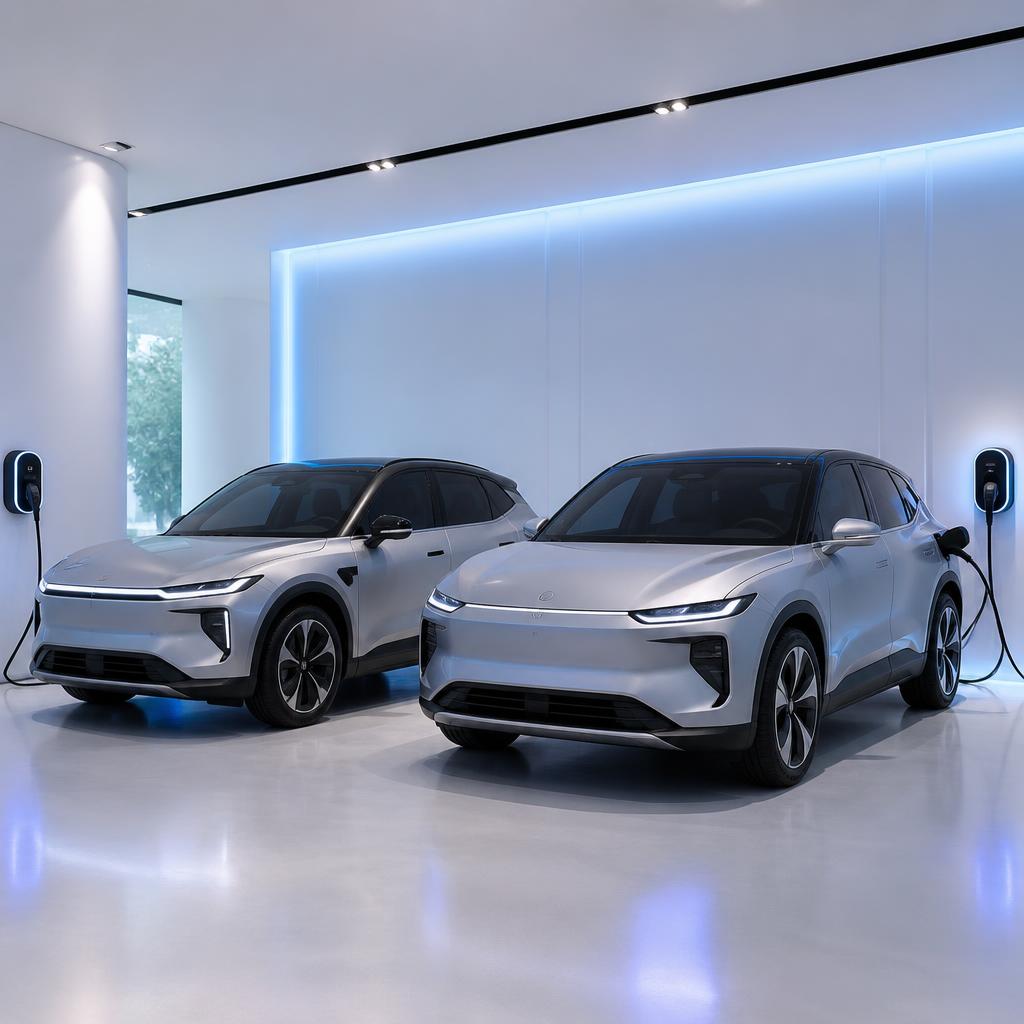
For two decades the Chinese market was the cash cow that funded German engineering. Volkswagen alone sold more cars in China than in Germany. That has flipped. Automotive News reported from the 2026 Beijing auto show that VW, BMW and Mercedes are now "for the parents," with younger Chinese buyers gravitating to BYD's Han, Xiaomi's SU7 and Nio's ET9.
The Australian Financial Review's June 28, 2026 report described German carmakers as "on their knees" as cheap Chinese models flooded the market and undercut on price and on-board tech.
What Chinese EVs Are Doing Better
The competitive gap is no longer about manufacturing cost alone. It is about:
- Software. Chinese brands ship in-cabin AI, voice assistants and over-the-air updates that feel a generation ahead of German infotainment.
- Battery cost. BYD's blade LFP battery and CATL's cells make a 500 km range vehicle cheaper to build than the European equivalent.
- Speed to market. Chinese OEMs go from concept to showroom in 18 to 24 months. German programs routinely take 4 to 5 years.
- LiDAR and ADAS. Lower-cost LiDAR plus aggressive driver-assistance rollouts are now standard on midrange Chinese cars.
The German Response
Each of the big three Germans is trying a different fix. Volkswagen has partnered with Xpeng and with Horizon Robotics through the Carizon joint venture to source LiDAR-based driver assistance for the ID Aura T6 launched at the 2026 Beijing show. BMW is doubling down on its Neue Klasse platform and Chinese local R&D. Mercedes is leaning into ultra-premium with the latest EQS and AMG electric models while quietly trimming volumes in the lower segments where Chinese competition is fiercest.
Volkswagen's 100,000-Job Problem
City AM reported in June 2026 that Volkswagen's China crunch is deepening and that Europe's biggest carmaker is weighing job cuts of up to 100,000 across its global operations. The number is not yet a confirmed plan and is being negotiated with the powerful IG Metall union and the lower-Saxony state government, which together hold significant influence over VW's strategy. Even so, the order of magnitude tells the story: VW's cost base was sized for a much bigger China and a much slower EV transition.
Chinese Carmakers Move Into Europe
The pressure is no longer one-way. Reuters reported on June 2, 2026 that Chinese carmakers including BYD, Geely and Chery are expanding aggressively in Europe. BYD is building factories in Hungary and Turkey to dodge EU tariffs on China-built EVs. The European Commission's countervailing duties on Chinese EVs, imposed in late 2024 and refined in 2025, slow the imports but do not stop the localisation push.
For German workers, the prospect of Chinese-branded EVs being built inside the EU on European wages is both a competitive threat and a potential source of new manufacturing jobs.
What About Tesla?
Tesla sits awkwardly between the two camps. It is still the largest single-brand EV seller in China, but its market share is being squeezed by both BYD on the low end and Nio and Li Auto on the high end. The Cybertruck has had no impact in China, and Tesla's reliance on FSD as a selling point has not translated as well as the company expected.
The BBC's Wider Read
The BBC's May 2026 report titled "The world's carmakers are struggling to compete with China" framed this not as a German story but as a global one. Japanese, Korean and U.S. brands are facing similar pressure, but the German exposure is uniquely severe because the China market historically represented such a large share of profit.
Can the Germans Turn It Around?
Three plausible recovery levers:
- Local R&D in China. Designing for the Chinese consumer from day one rather than adapting global products. Both VW and BMW have visibly pivoted in this direction.
- Software partnerships. Outsourcing the parts where they lag (in-cabin AI, ADAS) to Chinese specialists, as VW is doing with Carizon and Xpeng.
- Premium lock-in. Concede the volume segments and protect Porsche, AMG and BMW M as long as possible.
What This Means for European Buyers
European drivers will see more Chinese-branded EVs in showrooms over the next 18 months at prices the European brands will struggle to match. The European Commission's tariff structure will keep the price gap narrower than it is in China itself, but the choice will widen and the German incumbents will be under genuine retail pressure for the first time.
Bottom Line
German automakers are losing to Chinese EVs because they were slower to electrify, slower on software and locked into a cost base sized for a market that no longer exists. The fightback is underway, but the next three years will be brutal, especially for Volkswagen.