Quick Answer
Match the dog to the house, not the house to the dog. Apartments suit a Cavalier King Charles or Bichon. Suburban homes with kids do well with a Pembroke Welsh Corgi, Beagle, or Cocker Spaniel. Large properties with experienced owners thrive with a Bernese Mountain Dog or Standard Poodle.
Square footage matters less than the energy match, but it does set the practical ceiling on breed size.
Family breeds at a glance
| Breed | Size | Energy | Grooming | Best for |
|---|---|---|---|---|
| Cavalier King Charles | Small (13 to 18 lb) | Low to medium | Medium | Apartments, relaxed homes |
| Bichon Frise | Small (12 to 18 lb) | Medium | High (clipping) | Allergy sensitive families |
| Pembroke Welsh Corgi | Medium (24 to 30 lb) | Medium high | Medium (heavy shed) | Active suburban families with older kids |
| Cocker Spaniel | Medium (20 to 30 lb) | Medium | High | Suburban homes with gentle kids |
| Beagle | Medium (20 to 30 lb) | Medium high | Low | Active families with secure yards |
| Standard Poodle | Large (45 to 70 lb) | High | High (professional groomer) | Active families wanting hypoallergenic |
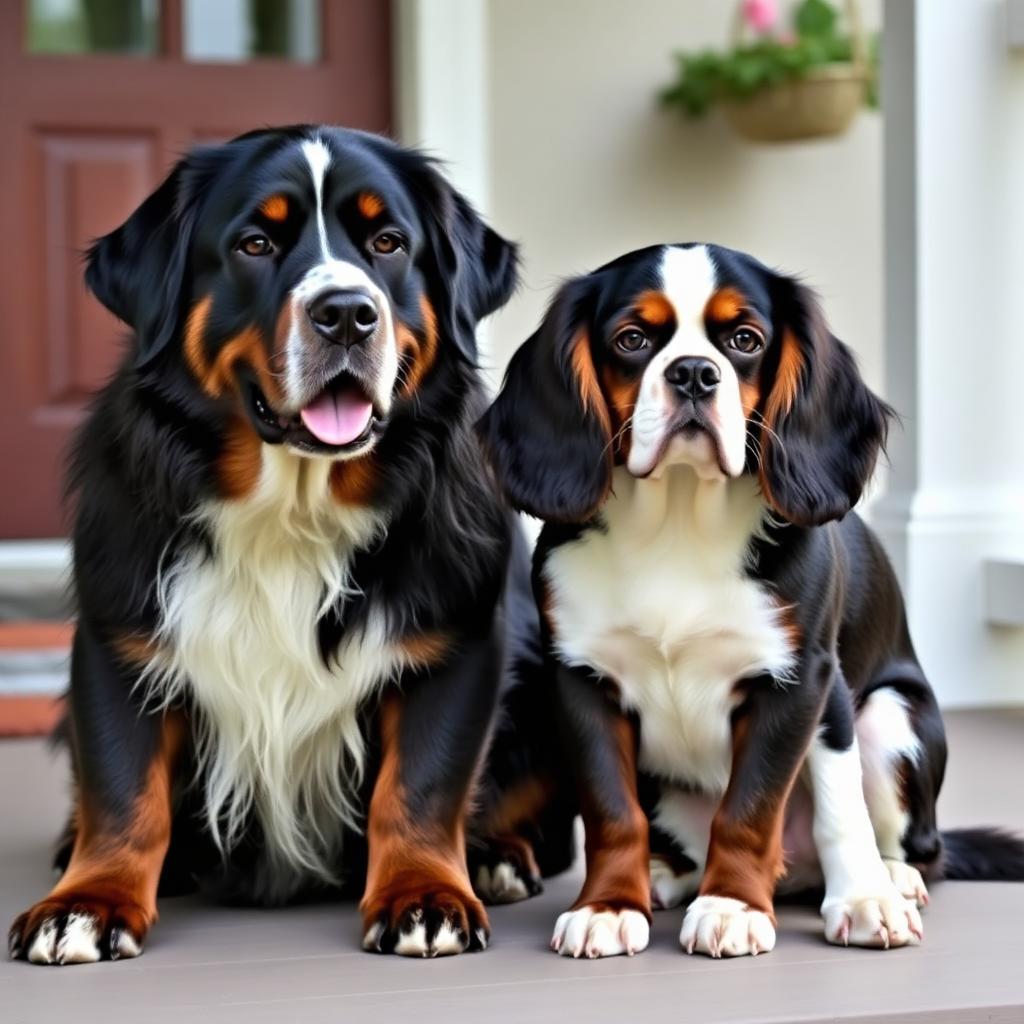
| Bernese Mountain Dog | Giant (70 to 115 lb) | Low to medium | High (double coat) | Spacious homes with experienced owners |
The compact option: Cavalier King Charles
One of the most universally good tempered breeds. Bred to be a lapdog, the Cavalier is content in apartments, gentle with children, and friendly with strangers. Health caveat: the breed is prone to mitral valve disease and syringomyelia, so insurance and a careful breeder matter.
The medium athlete: Pembroke Welsh Corgi
Long body, short legs, big personality. Originally bred to herd cattle, so they have stamina and intelligence. Best matched with kids old enough not to mind a heel nip during play. Heavy shedders: invest in a good vacuum.
The sturdy hunter: Beagle
Small enough for most homes, sturdy enough for kids, social by design. The deal breaker is the nose. A bored Beagle on a scent will dig under fences and tune out recall. Plan for daily walks and a secure yard.
The big gentleman: Bernese Mountain Dog
Calm, devoted, stunning. Best in homes with cool climates, generous space, and adults who can handle a 100 lb teddy bear. The hard truth: lifespan averages just 7 to 8 years and cancer rates are high. Choose a breeder who tests rigorously.
The hypoallergenic pick: Standard Poodle
Smart, athletic, low shedding. Excellent with families that have allergies or simply hate dog hair. The mind needs work as much as the body; plan for training classes and dog sports.
How to choose between two finalists
- Walk both breeds. Borrow from friends, foster, or visit breed meetups.
- Test the grooming time. Brush a Bernese for 20 minutes and decide if you would do it weekly for 10 years.
- Run the budget. Larger breeds cost roughly 2x small breeds in food and vet care over a lifetime.
- Talk to your kids. A child terrified of giant dogs will not bond with a Bernese, no matter how gentle.
FAQs about choosing a family breed
Can a big dog live in an apartment?
Yes if the dog is calm and you commit to two solid walks a day. Great Danes and Greyhounds adapt surprisingly well.
Are designer mixes (Goldendoodle, Cavapoo) good family dogs?
Often yes, but expect Poodle level grooming and Poodle level energy. Check breeder health testing as carefully as for a purebred.
What is the lowest maintenance family breed?
A polite, adult rescue mix. Breed wise, the Beagle, Cavalier, and Pug are on the easier end of grooming and training.
The takeaway
Pick the dog whose size, energy, and grooming load fit the life you actually live. Apartments do not bar you from a great dog, and a giant breed in a tiny home is a problem nobody enjoys. Honest match first, breed loyalty second.