Quick Answer
For most homeowners, a fiberglass entry door is the better long term value. It is more energy efficient, does not rust, does not dent, and can mimic the look of stained wood. A steel door costs less up front and is harder to kick in, but it dents on impact and shows rust where the finish is scratched.
Pick steel for budget security focused projects, rentals or commercial side doors. Pick fiberglass for primary front doors and any door exposed to weather.
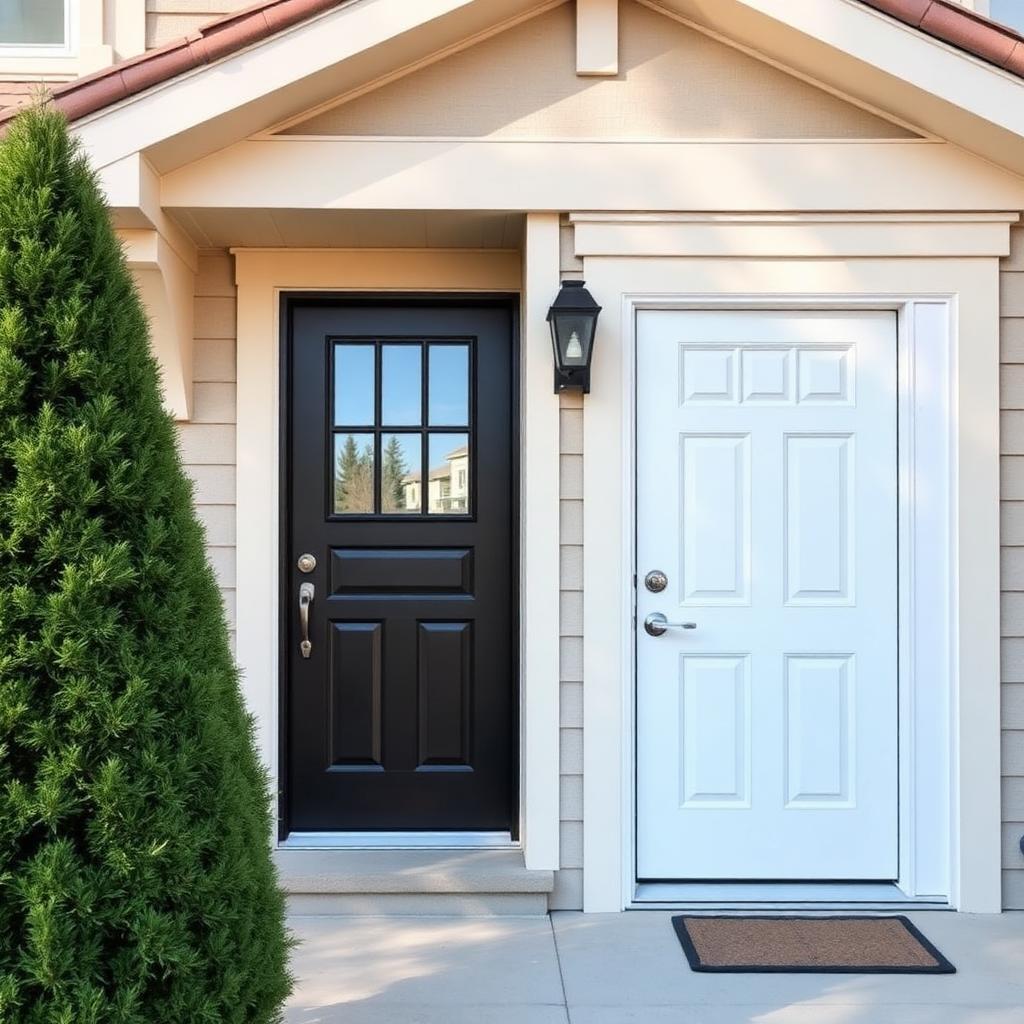
Energy Efficiency
Fiberglass doors are filled with rigid polyurethane foam and almost always carry better insulation ratings than steel. Energy Star rated fiberglass entry doors typically post an R value between 5 and 7, depending on glass area. Steel doors are also foam filled, but the steel skin conducts cold straight through the door frame, so the effective R value falls closer to 5 once the thermal bridging is accounted for. In cold climates the difference is noticeable as a cool draft at the threshold.
Durability and Weather
Fiberglass does not rust, does not warp and does not absorb moisture. A fiberglass door in a coastal or wet climate will outlast a comparable steel door by years.
Steel doors rust where the finish is scratched. They also dent. A grocery cart impact, a kid with a baseball, or a delivery driver dropping a heavy box can leave a permanent dimple that cannot be sanded out. Fiberglass flexes and recovers from most impacts.
Security
This is the one category steel wins outright. A solid steel door with a deadbolt and a reinforced strike plate is the hardest residential door to defeat with a kick or a shoulder. Fiberglass doors are strong, but the door slab itself will crack under repeated heavy impact, while a steel door bends and stays in the frame.
For most homes, the weak point is the strike plate and the door jamb, not the slab. Upgrading those parts on a fiberglass door closes most of the security gap.
Appearance
Modern fiberglass doors are molded with realistic wood grain texture and can be stained to mimic mahogany, oak or cherry. Therma-Tru and Pella both sell premium stained fiberglass lines that are nearly indistinguishable from real wood from arm's length. Steel doors are smooth or have a stamped pattern and must be painted.
Cost
A basic prehung steel entry door costs about 250 to 600 dollars at a home center. A comparable fiberglass entry door costs 600 to 1500 dollars. High end fiberglass with stained finish and decorative glass can run 2000 to 4000 dollars installed.
Over a 20 year ownership window, fiberglass usually wins on total cost because the steel door often needs replacement after dents or rust, while the fiberglass holds up.
Bottom Line
For the main entry of a long term home, choose fiberglass. For a side door, garage entry door, or a rental property where upfront cost matters more than aesthetics, choose steel. Either way, spend the extra few dollars on a reinforced strike plate and a quality deadbolt, because the slab material matters less than the lock hardware once a determined intruder is trying to get in.
More Practical Notes on Which Door Is Better Steel or Fiberglass
Beyond the headline rule, the real question of which door is better usually comes down to the specific room, climate and how the household actually uses the doorway. A guidance that works perfectly in a tight Victorian terrace can backfire in a draughty 1970s build or in a humid coastal home, so treat the answer here as a starting point rather than a final verdict.
If you are renovating, walk the space at different times of day before you commit. Lighting, foot traffic patterns and even the way furniture pushes against the wall all change the calculation. Builders and trim carpenters routinely see homeowners reverse a decision a week after moving in, simply because real life did not match the original sketch.
Common Mistakes Homeowners Make
The most frequent mistake on questions about which door is better is treating one online answer as universal. Codes, climates and finish trends drift, and what looked correct five years ago may already feel dated. Always cross check at least one manufacturer page and one current trade source such as Family Handyman or This Old House before you spend money.
The second mistake is ignoring what the rest of the house already looks like. Consistency across rooms almost always beats a single bold flourish, especially in resale photography. If every other doorway in the home follows one rule, breaking that rule in a single room reads as a mistake rather than an intentional design choice.
Quick Recap
To summarise the practical takeaway on which door is better: lead with the standard convention, check it against your specific room and climate, and only deviate when you have a clear reason and a sample to test. That keeps you safe on resale value and on day to day livability.
More Practical Notes (Part 2) on Which Door Is Better Steel or Fiberglass
Beyond the headline rule, the real question of which door is better usually comes down to the specific room, climate and how the household actually uses the doorway. A guidance that works perfectly in a tight Victorian terrace can backfire in a draughty 1970s build or in a humid coastal home, so treat the answer here as a starting point rather than a final verdict.
If you are renovating, walk the space at different times of day before you commit. Lighting, foot traffic patterns and even the way furniture pushes against the wall all change the calculation. Builders and trim carpenters routinely see homeowners reverse a decision a week after moving in, simply because real life did not match the original sketch.
Common Mistakes (Part 2)
The most frequent mistake on questions about which door is better is treating one online answer as universal. Codes, climates and finish trends drift, and what looked correct five years ago may already feel dated. Always cross check at least one manufacturer page and one current trade source such as Family Handyman or This Old House before you spend money.
The second mistake is ignoring what the rest of the house already looks like. Consistency across rooms almost always beats a single bold flourish, especially in resale photography. If every other doorway in the home follows one rule, breaking that rule in a single room reads as a mistake rather than an intentional design choice.
Quick Recap (Part 2)
To summarise the practical takeaway on which door is better: lead with the standard convention, check it against your specific room and climate, and only deviate when you have a clear reason and a sample to test. That keeps you safe on resale value and on day to day livability.