Quick Answer
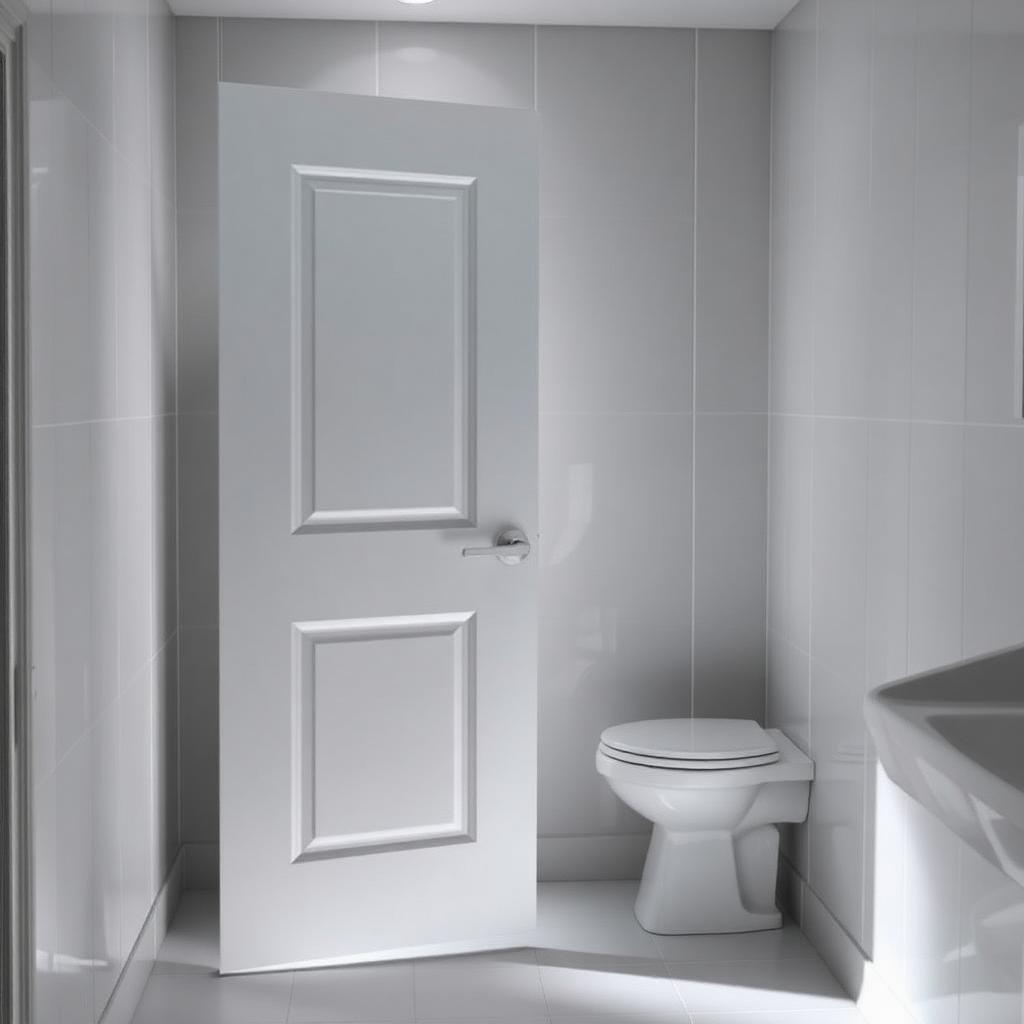
A solid-core PVC, fiberglass, or moisture-resistant MDF door is best for the bathroom. It resists warping, blocks sound, and stays straight even in high-humidity bathrooms with poor ventilation.
Hollow-core wood doors are cheapest but warp within a few years in a steamy bathroom. Glass and louvered doors look great but fail on privacy or sound. Pocket and barn doors save floor space but leak sound badly.
The humidity test
Bathrooms swing from 40 percent relative humidity to over 90 percent during a shower, then back down. Wood and hollow-core doors absorb that moisture, swell, then shrink, eventually warping or peeling. PVC, fiberglass, and properly sealed moisture-resistant MDF do not move with humidity the way natural wood does.
Best overall: solid-core MDF or fiberglass
A primed solid-core MDF door from any big-box store runs $80 to $200, accepts paint cleanly, and resists swelling if you seal all six edges. Fiberglass exterior-grade doors are pricier ($300 to $700) but are essentially impervious to moisture and a smart pick for primary or master bathrooms in humid climates.
Best for tight budgets: PVC
PVC bathroom doors are common in apartments and rental units for a reason: they are waterproof, lightweight, and cost $50 to $150 installed. The downside is a plastic-y feel and limited style options, but they are functionally unbeatable in cheap or rental-grade builds.
Best for small bathrooms: pocket or barn doors
If a swinging door eats half your floor space, a pocket door (slides into the wall) or barn door (slides along an outside track) is worth the trade-off. Both reclaim 8 to 10 square feet of usable floor in a small bathroom. The catch: neither seals at the edges, so sound and odors leak through.
Best for privacy and sound: solid-core with weather seal
If sound matters (master en-suite, shared walls), pick a solid-core door at least 1-3/4 inches thick, add adhesive weather-stripping around the jamb, and install an automatic door sweep at the bottom. This combination drops sound transmission by 8 to 12 decibels, which feels roughly half as loud.
What to avoid
Avoid hollow-core wood for the primary bathroom: cardboard honeycomb cores absorb humidity and the veneer peels in 3 to 7 years. Avoid untreated solid wood without a polyurethane seal on every edge. Avoid full-glass doors unless they are frosted, textured, or paired with a privacy film.
Hardware that matters
Use a privacy-lock knob or lever (the little turn button on the inside, plus an emergency unlock slot on the outside) rather than a keyed lock. Stainless or chrome hinges and hardware resist rust better than brass or nickel finishes in humid conditions.
Ventilation matters more than door choice
Even the best door fails if the bathroom has no working exhaust fan. Run the fan during showers and for 20 minutes after to keep humidity below 60 percent. Without that, any door eventually shows water damage at the bottom edge.
Installation tips
Seal the bottom edge with two coats of polyurethane before hanging. Leave a 1 to 1.5 cm gap at the floor for airflow back into the bathroom (helps the exhaust fan work). Use rust-resistant screws and a corrosion-proof strike plate. Check alignment after the first humid season and shim hinges if needed.
The right door for the bathroom is the one that handles humidity without complaining and gives you the privacy you actually need. Solid-core MDF is the safe default for almost every home.
Half bath vs primary bath needs
Half baths used by guests prioritize sound privacy and clean looks; spend on a solid-core door with good seals. Primary bathrooms behind a bedroom prioritize moisture resistance and sound privacy; fiberglass or sealed solid-core MDF wins. Kids' bathrooms can tolerate a hollow-core with weather seals to save budget.
Door size and clearance
Standard bathroom doors are 24 to 32 inches wide. Codes (IRC, ADA) require at least 32 inches clear for accessible bathrooms. Check that the door swing does not block the toilet, vanity, or shower entry. A pocket door is the answer when swing clearance is impossible.
Glass options that still give privacy
If you want light without exposure, frosted, reeded, or acid-etched glass panels in a solid frame offer 60 to 80 percent privacy. Smart glass that switches from clear to opaque costs $500+ but works dramatically in modern primary bathrooms.
How to seal a bathroom door bottom
Apply two coats of polyurethane to the bottom edge before installation. Add a vinyl door sweep or automatic drop seal to block water and steam from migrating under the door. Inspect the bottom edge annually for swelling and reseal as needed.
Quietest bathroom door upgrades
A solid-core door with adhesive perimeter weather-stripping and a bottom drop seal can cut bathroom noise transmission by 12 to 15 decibels. Add a soft-close hinge to eliminate the slam that startles other rooms.
Final pick for most homes
For most US homes, a primed solid-core MDF door with weather-stripping, a quiet hinge, and a privacy-lock lever is the safe, durable, mid-budget bathroom door choice. Spend more on fiberglass only for primary baths or in coastal humid climates.
Bottom line
Pick a solid-core MDF or fiberglass door, seal the bottom edge, and use a privacy lever. That combination beats fancier doors that ignore moisture and sound.