Quick Answer
Costco has rolled out a wave of price reductions across hundreds of Kirkland Signature private label products in 2026, with the deepest cuts concentrated on high volume grocery staples, household paper goods, packaged proteins and pantry basics. The cuts are built directly into shelf pricing, which means members do not have to clip coupons or load digital offers to capture the savings.
The strategic motive is straightforward: protect membership renewal rates and widen the price gap against traditional supermarkets and the warehouse club competition by reinvesting recent supply chain savings into shelf prices rather than into margin.
Where the cuts are landing
The category mix matters more than any single SKU. The reductions are heaviest in the parts of the basket members buy on autopilot, which is exactly where small per unit cuts compound into meaningful annual savings.
- Grocery staples: Kirkland Signature extra virgin olive oil, organic cooking oils, pasta, rice and canned beans.
- Household paper and cleaning: bath tissue, paper towels, laundry detergent and dishwasher pods.
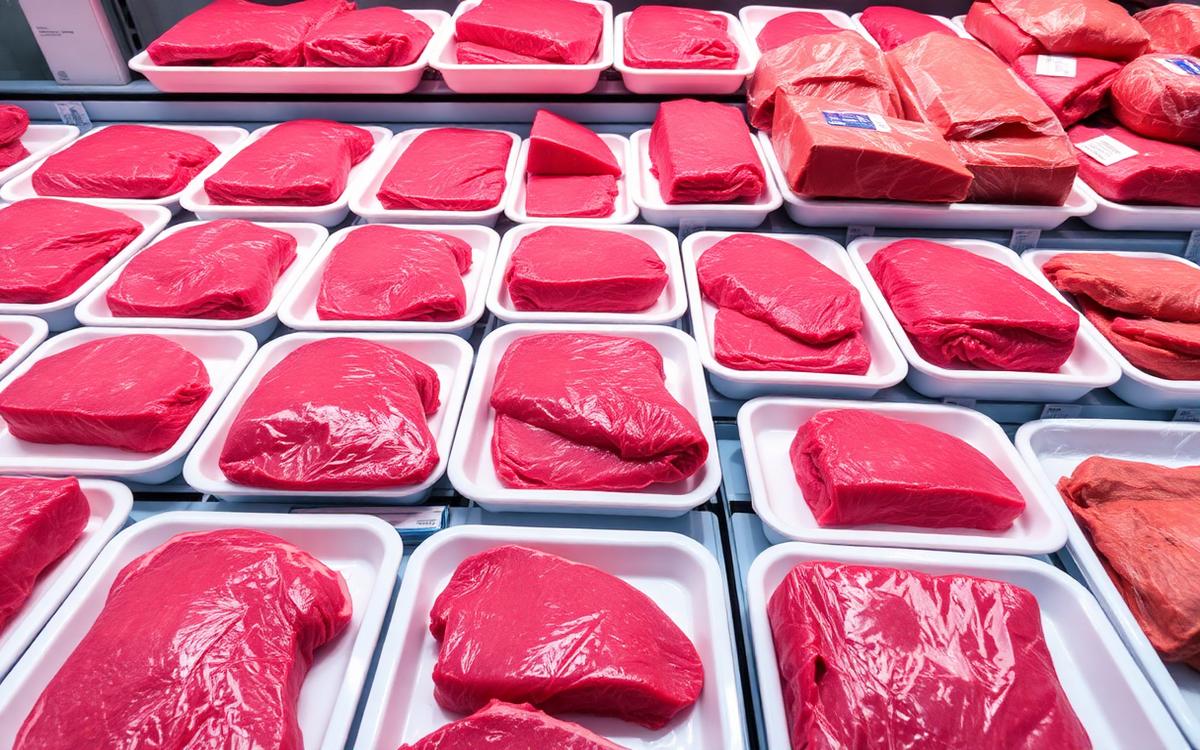
- Refrigerated and frozen proteins: packaged Atlantic salmon fillets, frozen chicken breasts, ground beef and shrimp.
- Snacking and pantry: mixed nuts, almonds, cashews, trail mix and organic peanut butter.
- Beverages: bottled water, sparkling water multipacks and Kirkland Signature coffee.
The per unit reductions vary by item, but the pattern across publicly visible examples sits in the single digit to mid teen percentage range. Olive oil and large pack bath tissue have drawn the most attention because they are bellwether items shoppers actively use to compare warehouse pricing across chains.
Why now
Two forces line up to make 2026 the right moment for Costco to push price reductions through the Kirkland line.
The first is supply chain normalization. Ocean freight rates, packaging costs and several key commodity inputs have moved well off their 2022 to 2023 highs. Costco's vertically integrated buying model captures those input savings faster than a typical grocery wholesaler, and the company has been signaling for several quarters that it would route a portion of those savings back into shelf prices rather than absorb all of it into margin.
The second is the membership renewal math. Costco's business is fundamentally a subscription business that happens to run a retail floor as customer acquisition. Renewal rates in the high 90s for paid members are the single most important number on the company's scorecard, and visible Kirkland price cuts are one of the most effective levers the company has to defend that figure during periods when households are paying more attention to grocery costs.
How the executive membership reward stacks on top
Executive members earn a 2 percent annual reward on most purchases up to an annual cap. That reward applies to the new lower shelf prices, which is the part most members miss when they hear about price cuts.
The practical effect is a small but compounding stack: a Kirkland item that dropped 10 percent on the shelf and earned a 2 percent reward on top represents a roughly 12 percent effective discount versus the old price for an executive member, before any other manufacturer instant rebates that may be running on the same SKU. Across a year of routine grocery and household spending, that stack is the clearest argument for the executive tier over the basic tier for high volume households.
What the cuts do not change
A few realities sit underneath the headline savings story and are worth being honest about.
- Pack sizes are still warehouse pack sizes. A lower per unit price on a 30 roll bath tissue case is only useful if a household actually uses that volume before quality degrades.
- Not every Kirkland item received a cut. Some categories saw price holds rather than reductions, which is itself a meaningful outcome in an inflationary environment but is not the same as a discount.
- Brand name products co located on the same shelf are governed by separate vendor pricing and are not part of this Kirkland focused reduction wave.
- Regional pricing variations still exist. Members in different metropolitan areas may see slightly different shelf prices on the same SKU based on local cost structure.
The right frame is that the cuts make the Kirkland basket more competitive, not that they turn Costco into a discount store across every aisle.
How to capture the most value as a member
A few practical habits get the most out of this round of cuts without requiring a spreadsheet.
- Compare the new Kirkland shelf price per ounce or per unit against the equivalent name brand on the same shelf before assuming the private label is the right pick. The gap has widened in some categories and narrowed in others.
- If you carry the executive tier, treat the 2 percent reward as a real number and run the math on whether your annual Kirkland spend now clears the upgrade cost on its own.
- Watch the warehouse signage for the small price tag indicators that flag manager markdowns and final price reductions. Those still stack on top of the new baseline Kirkland prices for clearance items.
- Use the Costco app to confirm current shelf pricing before driving for a single item. The app pricing is the same shelf pricing in most cases, which avoids any surprise on the floor.
How the cuts compare against other warehouse and grocery chains
The price cut story does not exist in isolation. Sam's Club, BJ's and the mainstream grocery chains all run their own private label strategies, and the gap between Kirkland and the competition matters more than the absolute change in any single Kirkland price. In the categories most affected by this round (olive oil, bath tissue, packaged proteins, mixed nuts), the new Kirkland shelf prices generally widen the gap rather than just match the competition.
For households that split shopping across multiple chains, the practical exercise is to update the per unit price comparison on the half dozen items you actually buy on repeat, rather than to assume the warehouse run is automatically the cheapest option on every aisle.
The takeaway
The 2026 round of Kirkland Signature price reductions is a deliberate move by Costco to convert recent supply chain savings into visible shelf level value, with the cuts concentrated in the high frequency parts of the basket where members feel the difference week to week. The executive tier reward stacks on top of the new lower prices, the pricing changes show up automatically at the register, and the strategic payoff for Costco is a stronger renewal story rather than a flashy one off promotion.