Quick Answer
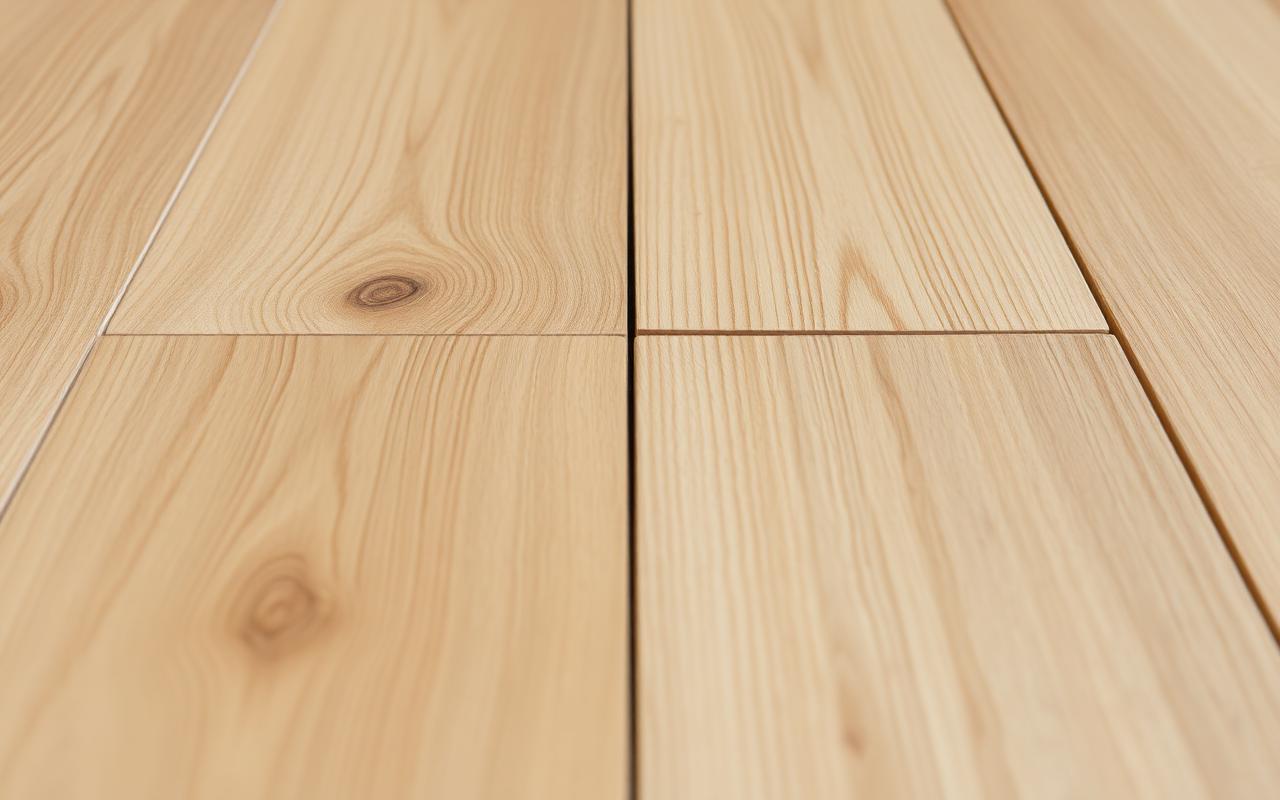
The tongue-and-groove joint itself is ancient, found in Egyptian furniture and medieval European cabinetry. As a flooring product, it became widespread in the 1860s and 1870s, when steam-powered planing mills could mill the matching tongue and groove profile cheaply enough for floorboards.
Before then, most wood floors were butt-jointed plank-on-joist, which moved, gapped and squeaked far more than T&G floors did.
A Quick Timeline
- Ancient Egypt and Rome: tongue-and-groove joints in furniture and wall panelling, hand-cut by craftsmen.
- Medieval Europe: shipbuilders used T&G planking for hull cladding.
- 1820s United States: Andrew Gear of Pennsylvania receives one of the earliest US patents related to powered planing of T&G boards.
- 1828: William Woodworth's planing machine patent revolutionises wood milling and makes the matched-profile floorboard commercially viable.
- 1860s to 1870s: T&G strip flooring becomes the standard in American Victorian housing.
- 1900s onward: standard 2 1/4 inch oak strip flooring with T&G edges dominates US new-build construction.
Why T&G Replaced Square-Edge Plank
Square-edge plank floors gap as wood expands and contracts seasonally. The gaps trap dust, telegraph subfloor squeaks and let cold air through. T&G locks each board to its neighbour on the long edges, so seasonal movement is shared across the entire field instead of opening up at random seams.
It also lets installers blind-nail through the tongue, hiding every fastener. That was a huge aesthetic win versus face-nailing, which left visible nail heads down every board.
Modern T&G Beyond Solid Wood
Today the same profile lives on in:
- Engineered hardwood
- Bamboo flooring
- Click-lock laminate (a refined T&G with angled engagement)
- Click-lock luxury vinyl plank
- Pine porch decking and ceiling planks
Each of these inherits the original idea: shape one edge to fit the opposite edge of the next plank, eliminate gaps, and share seasonal movement across the entire field.
Where to See Original 1870s T&G
Original tongue-and-groove pine and oak floors are still visible in well-preserved Victorian houses across the US Midwest and East Coast. National Park Service historic structure reports for buildings like the National Park Service heritage sites often document the original T&G floor profile, board width and fastener pattern as part of their preservation records.
Why This Matters in 2026
Flooring buyers in 2026 face a tighter renovation budget and a wider product range than ever before. Understanding the question above (when did tongue and groove flooring start) lets you skip several wrong products on the showroom floor and zero in on the one or two that actually fit your room, climate, and lifestyle. The half hour spent on this kind of background reading saves hours of back-and-forth at the retailer.
What the Industry Consensus Says
The National Wood Flooring Association (NWFA), Resilient Floor Covering Institute (RFCI) and World Floor Covering Association (WFCA) all publish free consumer guides on the topics covered here. When in doubt, cross-check anything you read on a manufacturer marketing page against one of these trade association resources. They have no SKU to sell, so the advice is generally more even-handed.
When to Call a Professional
If your project involves moisture, asbestos, structural subfloor work, or radiant heat, hire a professional for at least the consultation. A short site visit from a certified installer routinely saves multiples of its fee in avoided mistakes. DIY is great for click-lock floating floors in dry rooms; it is a poor fit for tile setting, hardwood refinishing or any glue-down install.
Frequently Asked Questions
Will this answer change in 5 years?
Pricing and product lines drift, but the underlying physics of flooring (moisture, expansion, wear layer) does not. The buying principles in this guide hold long-term.
Is the answer different in the UK and Europe?
Mostly the same. Retailers like B&Q, Wickes and Carpetright sell equivalent product categories, and EU EN standards mirror North American ASTM tests closely.
What about commercial settings?
Commercial floors use the same materials but higher wear ratings (AC5 laminate, 28 mil vinyl, commercial-grade epoxy). Spec sheets state the heaviest foot traffic the product is rated for.
Where can I get a second opinion?
The National Wood Flooring Association (NWFA), Resilient Floor Covering Institute (RFCI), and World Floor Covering Association (WFCA) all publish free consumer guidance and certified-installer locators.
Pro Tips From the Trade
- Order 10 percent extra. Cuts, mistakes and future repairs add up. One spare carton stashed in the basement is cheap insurance.
- Photograph every layer. Subfloor, vapour barrier, expansion gap, transitions. Warranty claims hinge on documentation.
- Save the lot number. Replacement planks must match the production run or the colour will not line up.
- Acclimate before installing. 48 hours minimum in the room of installation for click-lock products; 7 to 14 days for engineered or solid hardwood.
Bottom Line
Flooring decisions are part budget, part lifestyle, part long-term resale. Prep the subfloor properly, match the product to the room, and follow the manufacturer's install spec, and even a mid-tier material will outperform a premium one that was rushed in. Cut corners on prep and even a top-shelf plank will telegraph every flaw underneath.