Quick Answer
Vinyl plank flooring is what you reach for when you want the look of wood without the maintenance. It belongs in kitchens, bathrooms, basements, laundry rooms, mudrooms and any high-traffic main living area where spills, pets or kids would punish real hardwood.
You would not use it on stairs without nosing pieces, in unconditioned sunrooms, or directly over a damaged subfloor. The plank is only as flat as what is underneath it.
The Rooms Vinyl Plank Was Built For
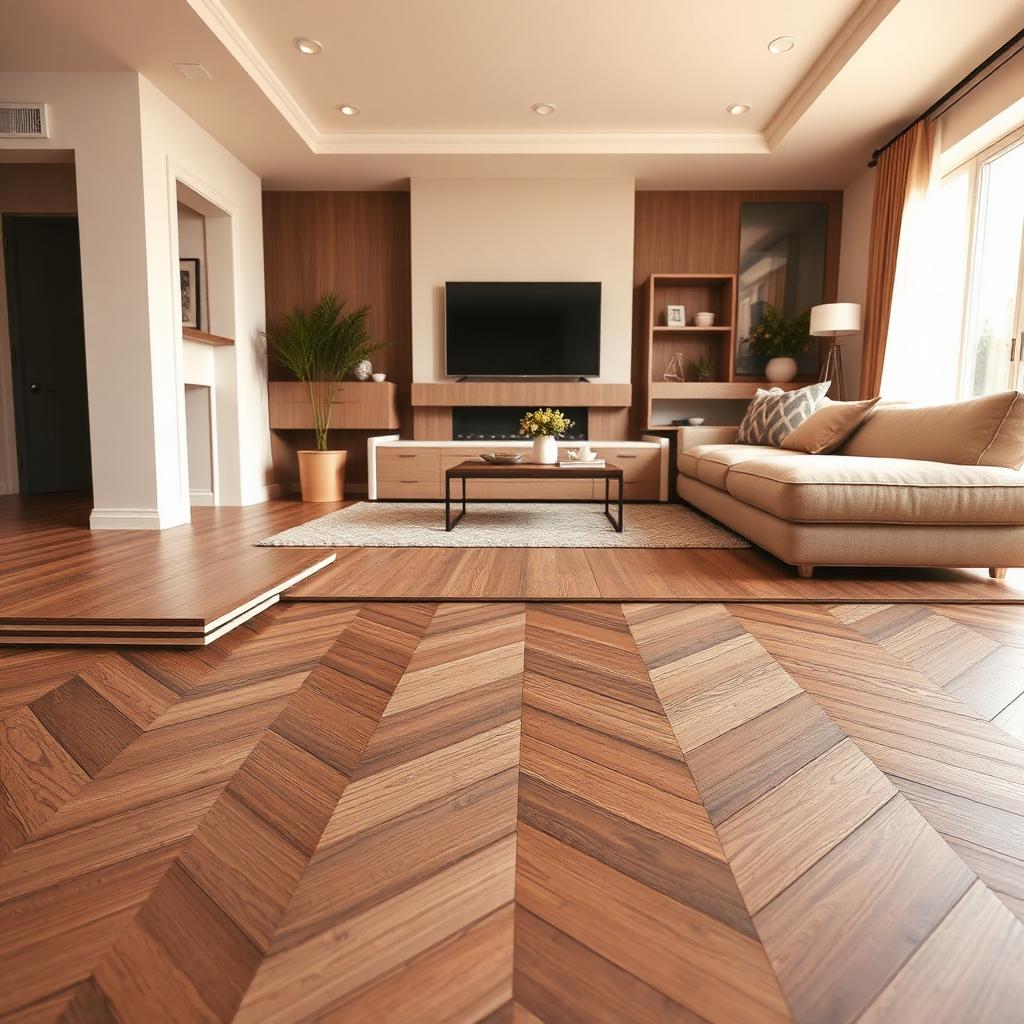
Modern luxury vinyl plank (LVP) is 100 percent waterproof on the wear surface, which is why it dominates kitchens and bathrooms in 2026. Unlike laminate it does not swell when water sits on a seam for an afternoon, and unlike hardwood it does not cup after a dishwasher leak.
Basements are the other classic use. Concrete slabs give off moisture vapor year-round, and vinyl is one of the few plank products that can sit directly on a slab with just a thin underlayment.
Where to Pick Vinyl Over Laminate
- Any room with a plumbing fixture (kitchen, bath, laundry, mudroom).
- Below grade (basements).
- Homes with dogs that drink sloppily.
- Anywhere a humidifier or steam mop is in the picture.
Where to Skip It
- Sunrooms with no climate control. Direct sun expands vinyl, and the planks can buckle at the seams.
- Outdoor or three-season porches.
- On stairs without a manufacturer-approved nosing system.
- Over a subfloor that deflects more than L/360, the click joints will work apart.
Pick the Right Construction
There are three families on the shelf, and they are not interchangeable.
- SPC (stone plastic composite). Rigid core, the most dimensionally stable, the best pick for sunny rooms and large open layouts. Most 2026 mid-tier products are SPC.
- WPC (wood plastic composite). Slightly softer underfoot, warmer feel, good for kitchens you stand in for hours.
- Flexible LVT. Glue-down or loose-lay. The choice for commercial spaces or perfectly flat slabs.
Thickness and Wear Layer
Plank thickness controls how forgiving the floor is over minor subfloor flaws. Wear-layer thickness controls how long the floor lasts. For a busy home:
- Plank: 5 mm or thicker.
- Wear layer: 20 mil minimum for households with pets, 12 mil for adults only.
Anything less than 12 mil is rental-grade and will scuff within two years.
Installation Method by Room
For the average home, click-lock floating install is the right pick everywhere except commercial settings and very large open spaces over 40 feet long. Commercial spaces use glue-down for permanence. Bathrooms with floor drains need glue-down with seam sealer.
Cost and Lifespan
Materials run 2 to 5 dollars per square foot for residential SPC in 2026, plus 0.30 dollars for underlayment if not pre-attached. Pro install adds 2 to 4 dollars per square foot. A well-installed 20-mil floor lasts 20 to 25 years in a residential setting.
What Vinyl Plank Cannot Do
It cannot be refinished. When the wear layer is gone, the floor is gone. It also dents under sharp loads, fridge wheels, piano casters, narrow chair legs, so use felt pads under heavy furniture.
Bottom Line
Use vinyl plank anywhere you want the look of wood plus the durability of a commercial floor. Match the wear layer to your household, pick SPC for sunny rooms, and skip it on uncontrolled exterior spaces.
FAQ: What Would You Use a Vinyl Plank for Flooring?
Can I use vinyl plank in a sunroom?
Only if the room is climate-controlled year-round. Direct sun and big temperature swings can buckle the seams on most click-lock SPC planks. Glue-down vinyl is more tolerant but still not recommended for true three-season rooms.
Can vinyl plank go in a garage?
Not the kind you would use a vinyl plank for flooring a living room. Garages need an epoxy-coated concrete floor or a thicker commercial-grade tile, residential SPC is not rated for vehicle loads or for the temperature range of an unheated space.
Is vinyl plank good for rentals?
Yes. It is the single most popular landlord pick in 2026 because spot replacement is cheap and a tenant's standard wear and tear cannot trash it the way carpet or laminate would.
Does vinyl plank work over radiant heat?
Yes, as long as the surface temperature stays at or below 85 F. Check the manufacturer's spec sheet, almost every major brand publishes a heated-floor compatibility note.
What about commercial use?
Commercial-grade LVP (28 to 40 mil wear layer) is rated for retail and office traffic. Residential 12 to 20 mil wear layers are not.
How long does a vinyl plank installation last in a busy kitchen?
Expect 15 to 20 years on a 20 mil wear layer with normal traffic, less if you have unfelted chair legs and a refrigerator on bare wheels. Felt pads under every furniture leg add years to the floor.