Quick Answer
For most overlanders running a 12V fridge, phone chargers, and LED lights, a 100Ah lithium (LiFePO4) auxiliary battery paired with a 25A to 40A DC-to-DC charger is the sweet spot. It handles roughly two days of typical camp draw with no engine or solar input. Choose 100Ah AGM only on a tight budget, or step up to 200Ah lithium for a 12V oven, inverter, or CPAP.
The math matters more than the marketing.
The core concept: two batteries, two jobs
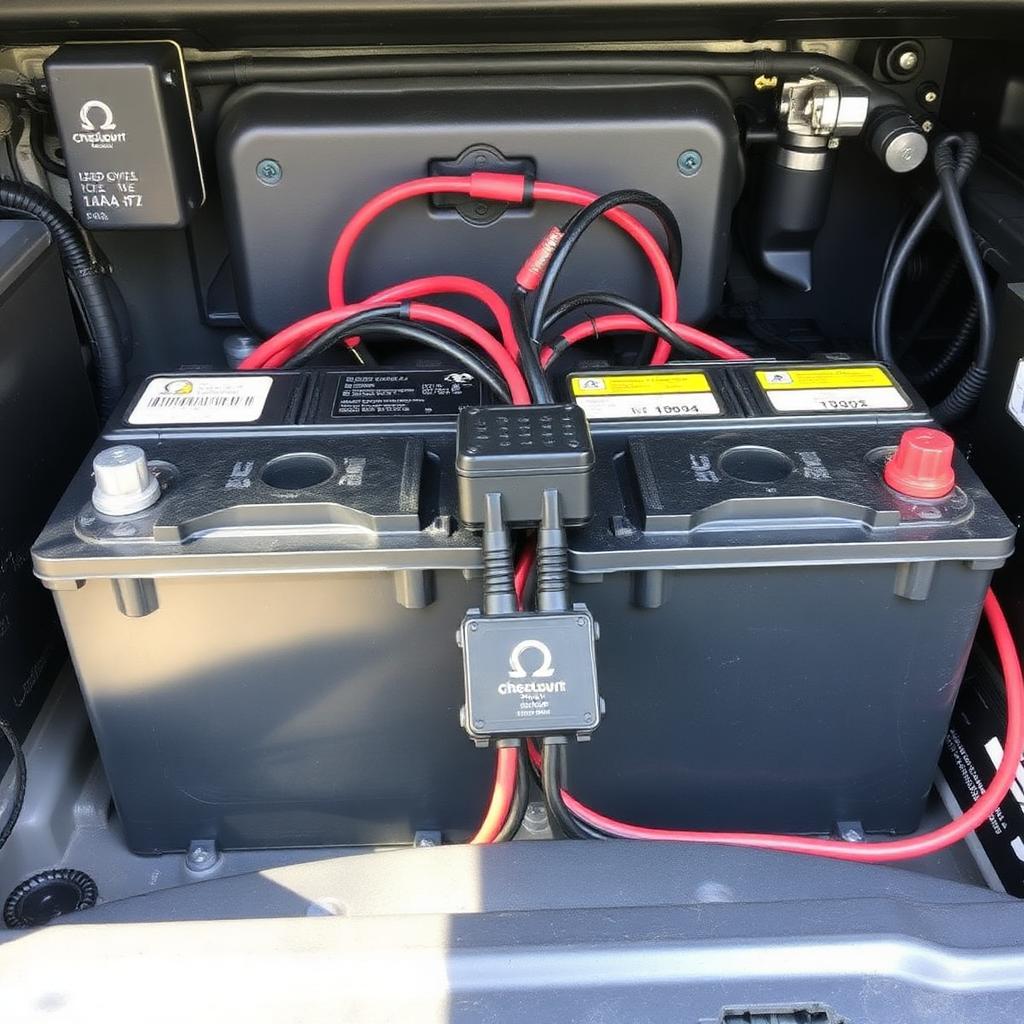
A dual-battery system splits my vehicle's electrical world into two isolated circuits:
- Starter battery. Locked to the engine. High cranking amps, always kept full.
- Auxiliary (house) battery. Deep-cycle chemistry (AGM or LiFePO4). Powers camp accessories and can be drained deeply without harm.
A smart isolator or a DC-to-DC charger connects them. When the engine runs, the alternator charges both. The moment the engine stops, the isolator cuts the link. Camp draws pull only from the aux battery, so the starter stays pristine and cranks the engine in the morning.
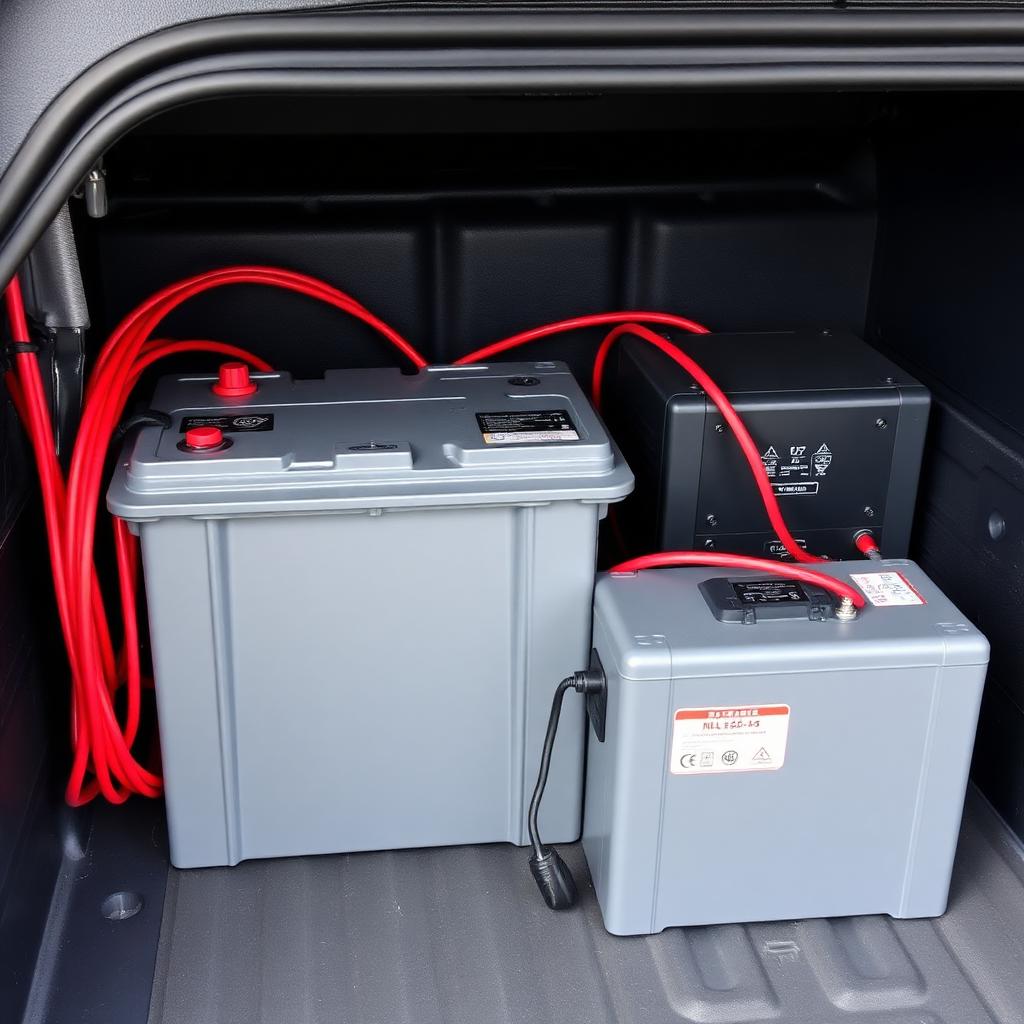
Step 1: calculate your daily amp-hour load
Battery capacity is measured in amp-hours (Ah). Before I buy anything I add up my daily draw for a 24-hour camp cycle.
- 12V compressor fridge (50L, 85°F ambient): averages 1.5 amps per hour, cycling on and off. 1.5 × 24 = 36 Ah.
- Phone, camera, and small device charging: around 10 Ah.
- LED camp lights, 4 hours at 1 amp: 4 Ah.
- Total baseline: roughly 50 Ah per day.
Step 2: match battery chemistry to that load
Absorbent Glass Mat (AGM) lead-acid
AGM batteries cannot be drained past 50 percent of rated capacity without permanent damage. To safely deliver 50 Ah of usable power I need a 100 Ah AGM. That battery weighs 60 to 70 pounds and takes real cargo space. AGM is cheaper up front (roughly $200 to $350) and tolerates the heat of an engine bay, but you effectively lose half the capacity you paid for.
Lithium Iron Phosphate (LiFePO4)
Lithium batteries can be safely discharged to nearly 100 percent, weigh half as much as AGM, and hold a flat voltage curve until they are almost empty. A 100 Ah LiFePO4 gives me the full 50 Ah of daily draw with headroom to spare (roughly two days of camp autonomy). They cost more up front ($700 to ,000 for a quality 100Ah unit) but they last 3,000 to 5,000 cycles versus 300 to 500 for AGM.
Step 3: pick the right DC-to-DC charger
Modern alternators output "smart charge" voltages that lithium batteries do not like on their own. A DC-to-DC charger (Redarc, Victron Orion, Renogy) sits between the starter and the aux battery, converts the alternator voltage into the correct lithium or AGM charge profile, and prevents the alternator from being overloaded.
Rule of thumb: pick a DC-to-DC charger sized to 20 to 40 percent of the aux battery's Ah rating.
- 100Ah aux battery: 25A charger for daily drivers, 40A for short driving days.
- 200Ah aux bank: 40A to 50A charger.
Sizing matrix by setup type
| Overland setup | Daily Ah draw | Recommended aux battery | Recharge strategy |
|---|---|---|---|
| Minimalist (phones, LED lantern) | 10 to 15 Ah | 300 to 500Wh portable power station | Alternator via cigarette port or a 100W solar panel |
| Standard (fridge, devices, lights) | 40 to 60 Ah | 100Ah LiFePO4 or 100Ah dual-purpose AGM | 25 to 40A DC-to-DC charger |
| Expedition (fridge, inverter, CPAP, 12V oven) | 100 to 150 Ah | 200 to 300Ah LiFePO4 | 40A DC-to-DC charger plus 200W+ solar array |
Common sizing mistakes
- Buying a giant AGM without a DC-to-DC charger. The stock alternator will never fully charge it, so effective capacity is far lower than the sticker.
- Undersizing for a fridge. A fridge is on 24/7 and dominates daily draw. Plan for it as line item one.
- Mounting lithium in a hot engine bay. Most LiFePO4 batteries are rated for cabin or cargo temperatures. Engine-bay mounts should be AGM.
Frequently asked questions about dual battery sizing
Can I run a fridge off a single starter battery?
Overnight, maybe. For two nights, no. A modern 12V fridge will drain a standard starter battery to a no-start condition inside 24 to 36 hours, and repeatedly deep-cycling a starter battery destroys it within a season. A dedicated auxiliary battery exists exactly to solve this problem.
Is lithium always better than AGM?
For most overland use cases lithium is better on weight, usable capacity, cycle life, and voltage stability. AGM still wins on up-front cost and on tolerance for engine-bay heat. If your budget is tight or your only mounting spot is under the hood, a quality dual-purpose AGM is a legitimate choice.
Do I need solar panels if I have a DC-to-DC charger?
Not if you drive at least an hour or two most days. The alternator charges the aux battery quickly enough that you rarely need solar for regular travel. Solar becomes essential when you plan to sit in one camp for several days without driving, because otherwise the aux battery slowly discharges under the fridge load.
Bottom line
A 100Ah lithium (LiFePO4) auxiliary battery paired with a 25A to 40A DC-to-DC charger covers the vast majority of modern overland setups. It handles a fridge and daily electronics with a two-day buffer, charges quickly off the alternator while driving trails, and does not eat your payload with lead-acid weight. Do the amp-hour math first, then buy the battery, not the other way around.