Quick Answer
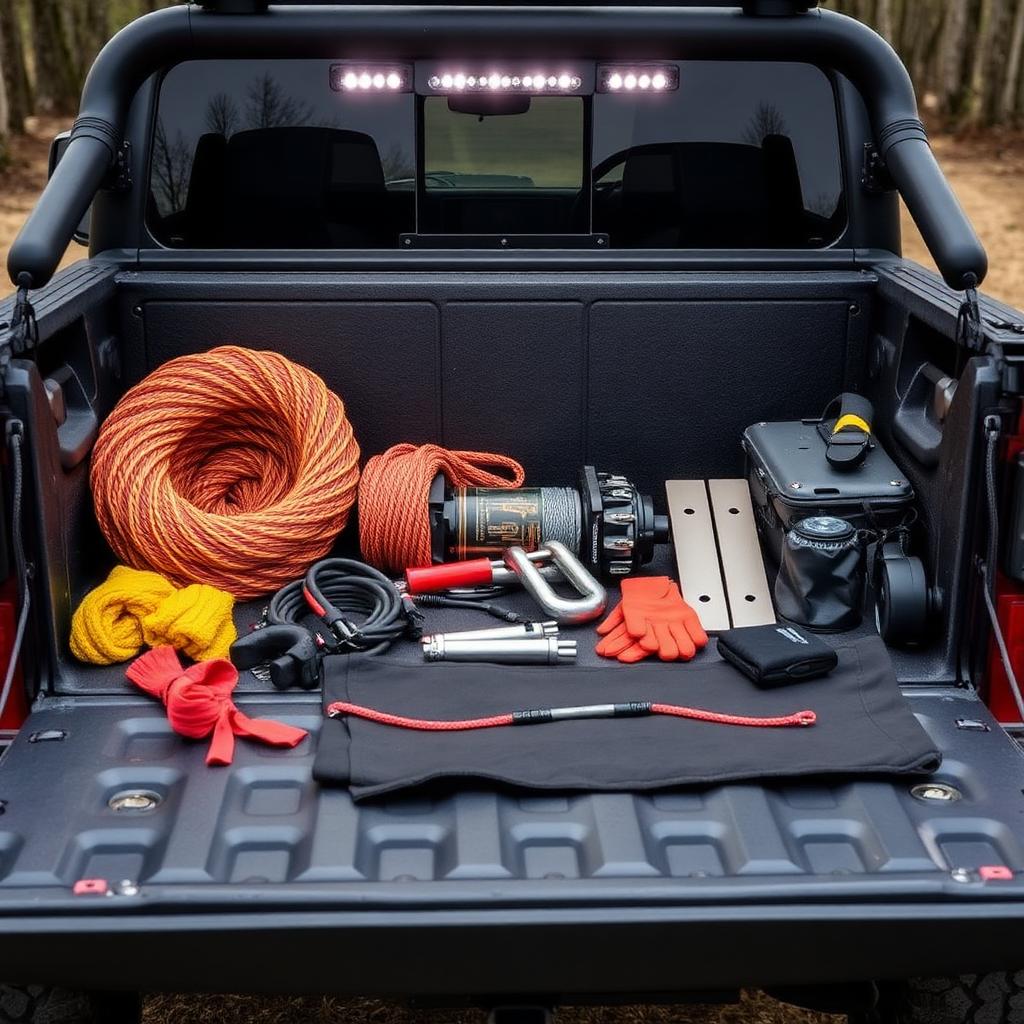
Every off-roader should carry, at minimum, a kinetic snatch rope rated to 3x their vehicle weight, two soft shackles, a pair of traction boards, a wide tree saver strap, a line dampener, and heavy leather gloves. Add a 12V compressor and tire deflators for airing down. Skip cheap unrated hardware entirely.
I do not leave the pavement without this kit. Getting stuck is a matter of when, not if.
The three tiers of a real recovery kit
A serious recovery kit is not a random pile of hardware. I think about it in three mechanical tiers: traction (self-recovery), kinetic (buddy recovery), and static rigging (winch or come-along).
Tier 1: Traction essentials
Before I lean on another rig or a winch, I try to drive out under my own power. Two tools cover 80 percent of that job: tire deflators and traction boards.
- Tire deflators and a 12V compressor. Dropping to 15 psi doubles my contact patch. I use a rapid deflator tool and a compressor that clamps directly to the battery, not a cigarette-lighter plug (those blow fuses under load).
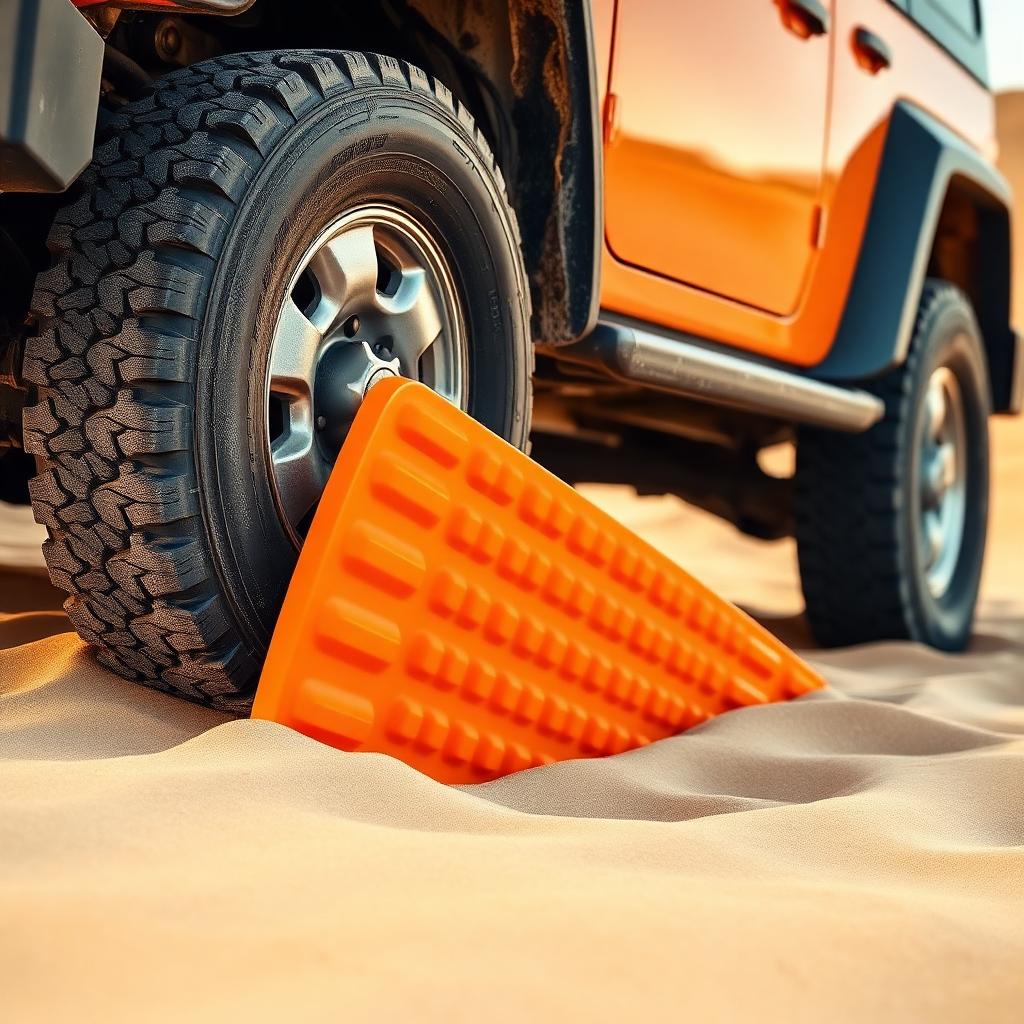
- Traction boards. A pair of high-impact plastic boards with aggressive cleats gives me an instant ramp under a spinning tire in mud, sand, or snow.
Tier 2: Kinetic extraction
If self-recovery fails, a companion vehicle helps with a dynamic pull.
- Kinetic snatch rope. A real kinetic rope is Nylon 66 double-braid and stretches up to 30 percent. That stretch stores energy and cleanly pops the stuck rig out without shock-loading either frame. Minimum breaking strength should be at least 3x the heavier vehicle's gross weight.
- Soft shackles. UHMWPE plasma-fiber shackles are as strong as steel bow shackles, weigh almost nothing, float in water, and cannot become a lethal projectile if the rope fails. I have mostly retired my steel D-rings.
Tier 3: Static rigging and winch support
Even if I do not run an electric winch, I carry the rigging parts because a friend might.
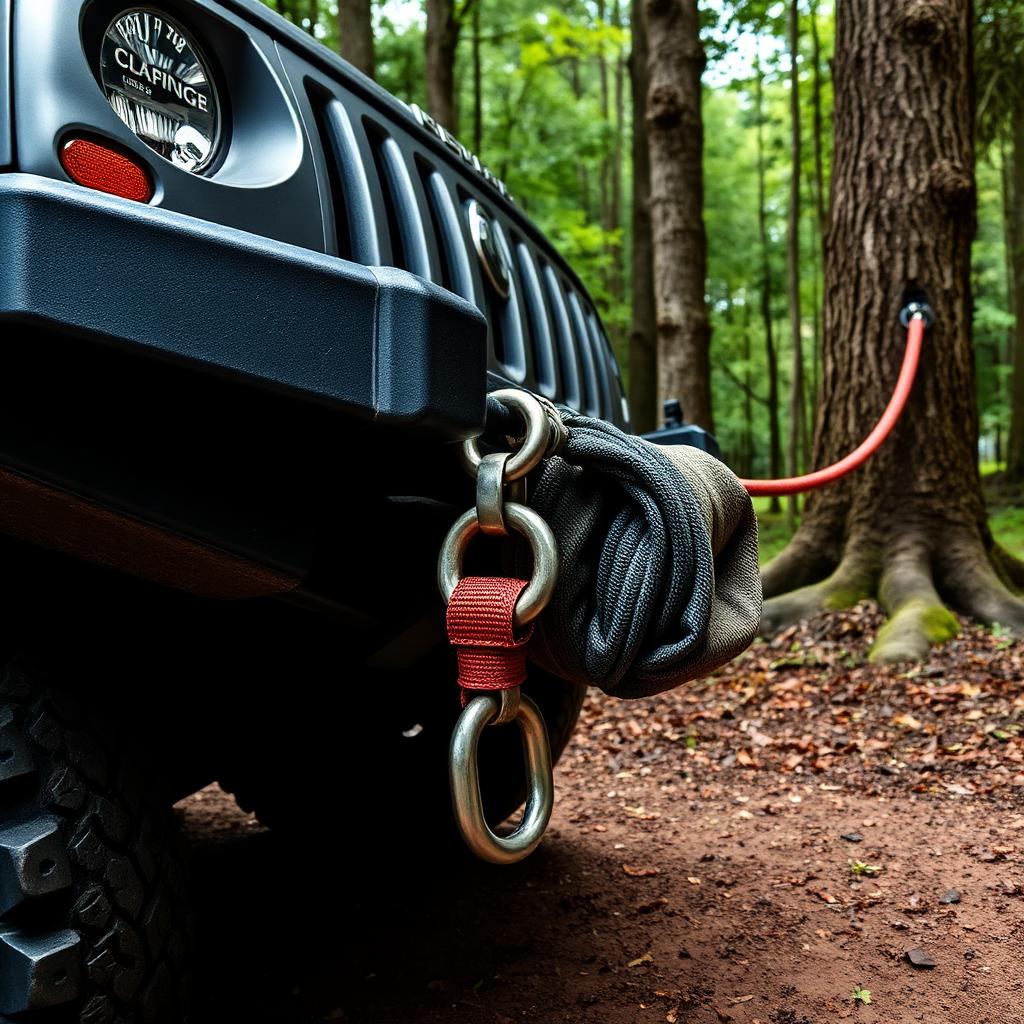
- Tree saver strap. A wide, non-stretch polyester strap that wraps a trunk without cutting bark. Never loop a winch line directly around a tree.
- Line dampener. A weighted blanket draped across a loaded winch line. If the line fails it drops into the dirt instead of whipping through the cab.
- Heavy leather gloves. Steel winch cable develops sharp burrs. Synthetic line still burns skin. Gloves are non-negotiable.
Ratings and safety checklist
| Component | Required rating or material | Primary safety rule |
|---|---|---|
| Kinetic rope | Nylon 66, 20,000 to 30,000 lbs MBS | Retire if frayed, sun-bleached, or heavily knotted. |
| Soft shackles | UHMWPE plasma fiber | Never wrap over a sharp bumper edge. |
| Static tow strap | Polyester, non-stretch | Flat towing only, never dynamic jerks. |
| Attachment points | Frame-welded or through-bolted rated iron | Never rig to a tie rod, axle tube, or tow ball. |
What most beginners get wrong
The single most common mistake I see on the trail is a tow ball being used as a recovery point. A tow ball can shear off under kinetic load and become a cannonball through the recovery vehicle's rear window. The second most common mistake is buying an unrated tow strap from a hardware store and using it as a kinetic strap. Static polyester straps do not stretch, so all the load transfers as instant shock into your frame, your friend's frame, or the shackle pin.
Frequently asked questions about recovery gear
What is the recovery gear every off-roader must carry, at minimum?
The recovery gear every off-roader must carry starts with a properly rated kinetic snatch rope, two soft shackles, a pair of traction boards, a wide tree saver strap, a line dampener, and heavy leather gloves. Add a 12V compressor and tire deflators the moment you plan to leave graded roads. That kit fits in a duffel bag, costs under $500 for solid entry-level pieces, and covers the vast majority of realistic trail scenarios.
Is a winch essential for solo off-roading?
No. A winch is genuinely useful for solo work in remote terrain, but I have watched plenty of solo trips run for years with just traction boards, a come-along puller, and a proper snatch rope. The winch matters most when there is no companion vehicle and no natural anchor within reach.
How often should I inspect my recovery kit?
I check my ropes and shackles every trip. Sun exposure and grit destroy synthetic fibers faster than most people realize. A kinetic rope that lives in a hot back seat all summer can lose meaningful strength in a single season, so I store mine in a dark, dry gear tub and retire it after visible fraying or after a hard event that shock-loaded the rope past its rated stretch.
Bottom line
A complete recovery kit is a hard requirement for responsible off-roading. Skip the unrated hardware, invest in tire management tools, a rated kinetic rope, soft shackles, and a dampener, and you can handle almost any trail trap safely and drive home without a tow truck bill.