Quick Answer
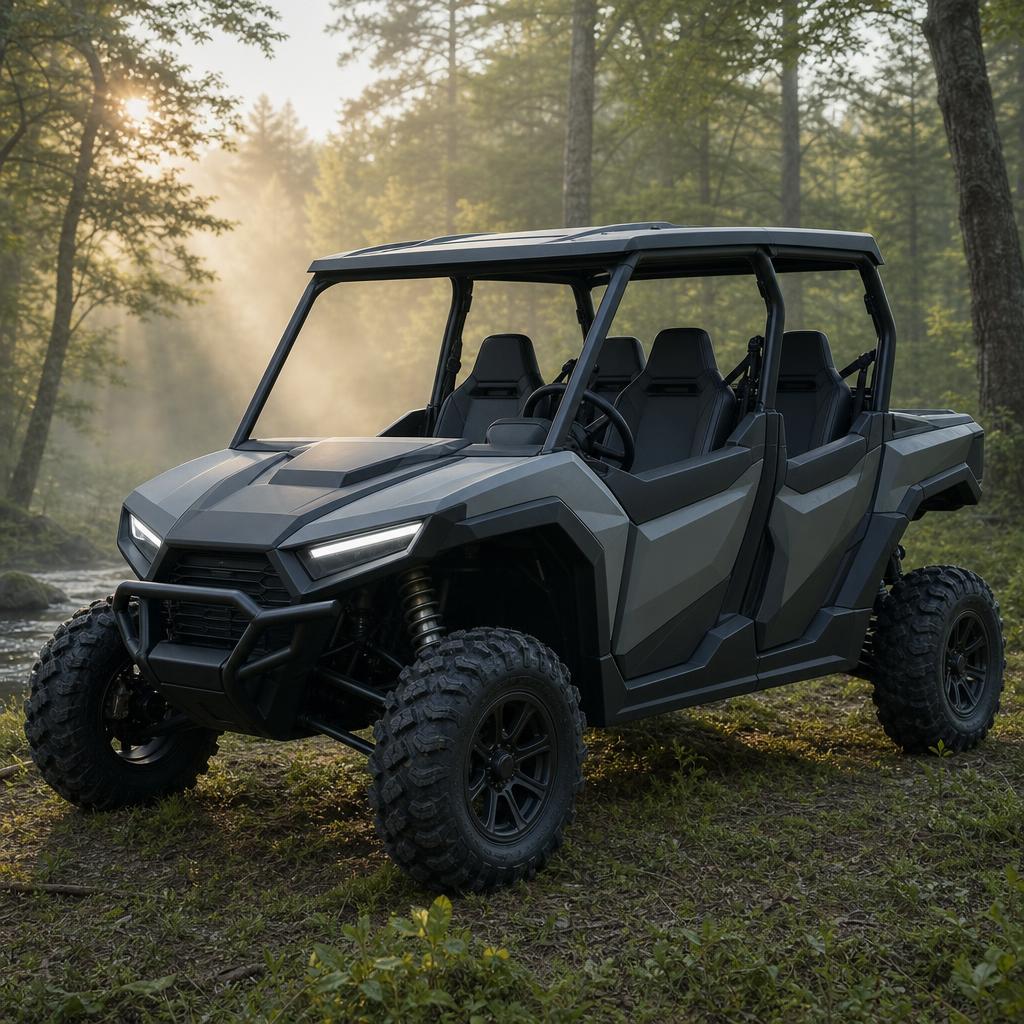
The quietest gas side-by-sides are the Honda Pioneer 1000 series (thanks to its 6-speed dual-clutch transmission) and the Kawasaki Mule Pro-FXT series (thanks to its smooth 812cc three-cylinder engine). The quietest side-by-side of any kind is the fully electric Polaris Ranger XP Kinetic, which is nearly silent.
If you hunt, work at first light, or just hate wearing comms headsets to talk to your passenger, this matters.
Why most side-by-sides are loud
A typical gas UTV uses a high-revving single or twin engine paired with a CVT belt drive. That combination keeps engine RPM high across the entire speed range and turns the belt housing into a whining resonator. Owner-reported sound levels usually land in the 75 to 85 dB range at the driver's ear under load, roughly like sitting next to a running lawnmower.
The quietest gas-powered picks
Honda Pioneer 1000 (DCT is the secret)
Instead of a CVT belt, the Pioneer 1000 uses a genuine automotive-style 6-speed dual-clutch transmission. Mechanical gears let the engine upshift early and cruise at low RPM, which is the single biggest reason it sounds like a small SUV instead of a screaming ATV. Add Honda's factory acoustic insulation around the engine bay and you get one of the calmest cabins in the class.
Kawasaki Mule Pro-FXT series (a 3-cylinder engine)
The Mule Pro-FXT is powered by a liquid-cooled 812cc inline-triple. A three-cylinder configuration inherently balances its firing pulses better than a buzzy single or twin, so vibration transmitted into the chassis drops noticeably. Paired with a high-volume factory muffler, the exhaust note settles into a low, unobtrusive purr.
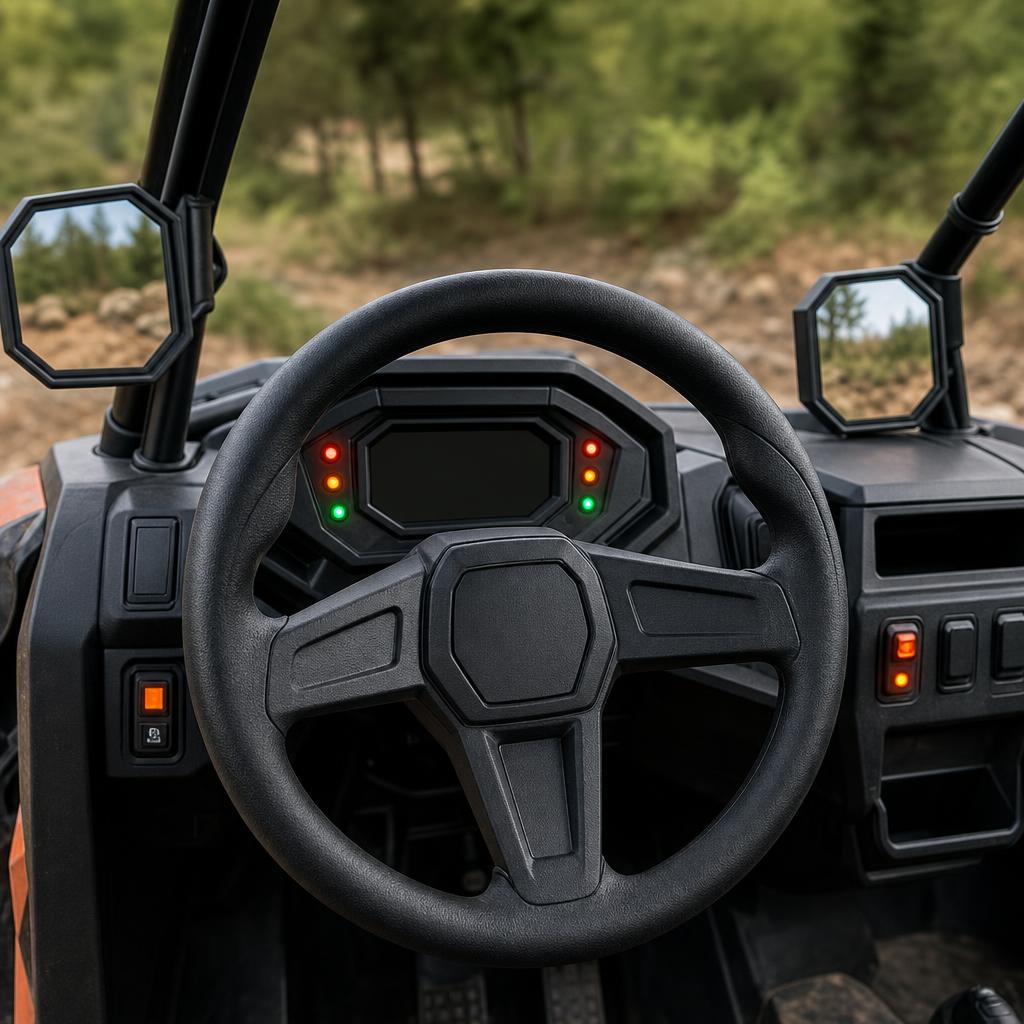
The absolute quietest: Polaris Ranger XP Kinetic
The Polaris Ranger XP Kinetic, developed in partnership with Zero Motorcycles, replaces the gas engine with a high-torque electric motor. There is no exhaust, no combustion, no belt slip. In real-world use it produces only faint tire noise and a low hum from the drivetrain gears.
Polaris publishes an estimated range of roughly 45 to 80 miles per charge depending on trim and terrain. That is plenty for a hunting morning, a workday on the property, or a scouting loop.
Comparison at a glance
| Model | Powertrain | Why it is quiet |
|---|---|---|
| Honda Pioneer 1000 | 6-speed DCT gas | Gear-driven; low cruising RPM; no belt whine |
| Kawasaki Mule Pro-FXT | 812cc inline-triple gas | Smooth firing; high-volume muffler |
| Polaris Ranger XP Kinetic | Electric motor | No engine, no exhaust, no CVT belt |
Frequently asked questions about quiet UTVs
How much quieter is electric compared to gas?
Owner and reviewer measurements consistently put a running gas UTV around 75 to 85 dB at the driver's ear. An electric Ranger XP Kinetic at the same speed measures well below 40 dB in most conditions, which is closer to a quiet office than a lawnmower.
Can I make my existing gas UTV quieter?
To an extent, yes. A quality aftermarket muffler, sound-deadening panels behind the seats, and switching to a rubber-isolated CVT clutch cover can knock several dB off the cabin experience. You will not reach Honda DCT levels of calm, but the improvement is real.
Are electric UTVs practical for hunting camps without shore power?
Yes, if you plan around a Level 1 or Level 2 charger back at camp powered by a generator or a large solar setup. For remote camps with no power at all, gas still wins on refuel convenience.
Sound-deadening upgrades that actually work on any UTV
Even if you already own a loud gas UTV, targeted sound-deadening upgrades can drop cabin noise by 5 to 10 dB, which is a genuinely noticeable improvement. The cheapest and most effective changes are behind the seats and inside the engine bay.
Butyl or closed-cell foam behind the seats
A single roll of automotive-grade butyl mat like Dynamat or Kilmat installed on the sheet metal or plastic panels directly behind the seats absorbs the mechanical whine of the CVT belt and the exhaust drone. Cost is under $100 and installation takes an afternoon.
Aftermarket quiet-core muffler
A quiet-core aftermarket muffler replaces the factory unit with a longer, more restrictive baffle stack that trades a couple of horsepower for a much lower exhaust note. Not every model has a good aftermarket option, but Yamaha and Polaris platforms are well covered.
Where quiet operation matters most
Bow hunters who use a UTV to reach a stand know that even a distant CVT whine can spook deer 30 minutes before shooting light. Working ranches with livestock benefit too: quiet machines do not stress cattle the way a screaming ATV does. And if you camp with a UTV parked next to a tent, a quieter idle at generator hours is a genuine quality-of-life improvement.
What quiet does not fix
Even the quietest gas UTV still emits recognizable exhaust and CVT sound signatures. If your goal is to sneak up on wildlife, an electric platform is the only true answer. For humans in the same cab, gas insulation is usually enough.
Bottom line
For quiet with unlimited range, pick a Honda Pioneer 1000 or Kawasaki Mule Pro-FXT. For absolute silence, the Polaris Ranger XP Kinetic is in a class of its own.