Quick Answer
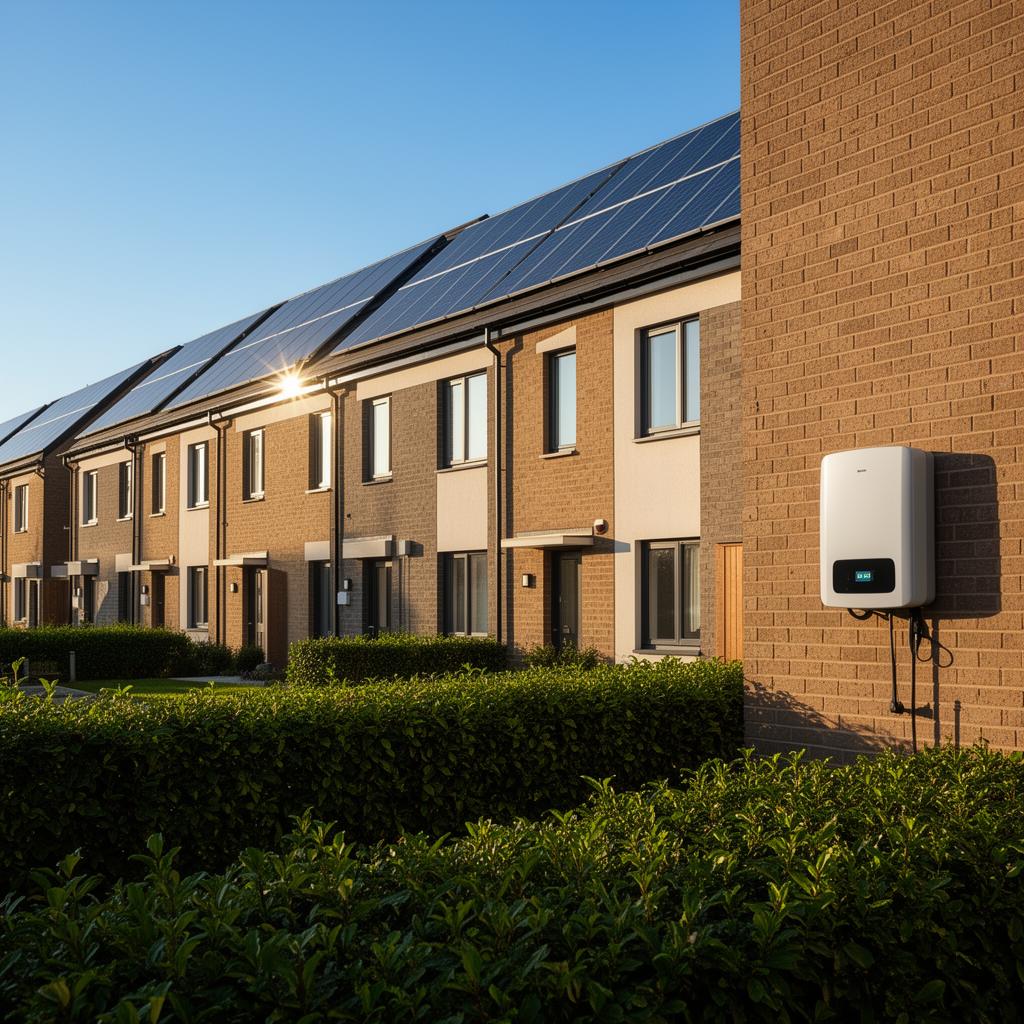
Tenant Power is a new smart electricity tariff from Octopus Energy, launched and expanded on May 28, 2026, that is designed specifically for social housing properties fitted with rooftop solar panels and a home battery. Tenants placed on the tariff pay about 30 percent less for their electricity than the standard variable tariff, which works out to roughly 200 pounds of annual savings per household.
The landlord, in turn, earns a steady revenue stream by selling excess solar power and battery flexibility back to the grid through Octopus's Kraken platform. That shared upside is what finally breaks the long standing split incentive that has held back green retrofits in rental housing.
Why Social Housing Has Been Stuck
For more than a decade, the rooftop solar and home battery story has run into the same wall in the rental sector. Whoever pays for the panels is not usually the person who benefits from the cheaper electricity. In owner occupied homes the maths is simple, but in social housing the landlord pays the upfront capital cost while the tenant gets the lower bill. From the landlord's side, that looked like spending capital with no return.
The result was predictable. Solar deployment in private and social rental properties lagged badly behind owner occupied homes, even though rental tenants are often the households most exposed to fuel poverty. Tenant Power is built to flip that equation.
How Tenant Power Actually Works
The tariff sits on top of a standard solar plus battery retrofit installed by the housing association. The clever part is in how Octopus's Kraken platform orchestrates the system across thousands of homes at once.
- On site consumption first. When the sun is up, the household uses the free zero carbon electricity its own panels are producing.
- Battery storage second. Any excess solar generation is diverted into the home battery rather than exported to the grid at low prices.
- Grid flexing third. During peak national demand windows, Kraken aggregates the stored energy from thousands of homes and discharges it back to the grid at premium prices.
The tenant sees a single, simplified bill that reflects the 30 percent discount versus the standard variable tariff. The landlord sees the wholesale revenue from grid export and flexibility services flowing back as a separate income stream that helps fund the next wave of retrofits.
The Numbers Octopus Is Quoting
Octopus has put hard figures on the launch:
- Tenant savings. About 30 percent off the standard variable tariff, equivalent to roughly 200 pounds a year for a typical household.
- Landlord return. A predictable revenue stream from grid export and flexibility services, designed to make the underlying solar and battery investment financially viable over its lifetime.
- Rollout target. 10,000 UK homes connected to Tenant Power by the end of December 2026.
The Wales rollout is the first formal regional launch, delivered in partnership with progressive housing association United Welsh. The initial pilot covers four properties where the full solar and battery system is already live, with rapid expansion across the United Welsh estate scheduled through the rest of the year.
What Nigel Banks Said at Launch
Nigel Banks, Zero Bills Director at Octopus Energy, framed the launch in plain language: "Solar panels and batteries should be a no brainer for social housing, but until now the economics haven't worked well enough." That is the core problem Tenant Power exists to solve. The technology has been ready for years. The pricing model is what was missing.
Why This Matters Beyond the Headline Savings
The 200 pound household saving is the easy headline, but the structural impact is bigger than that. Three knock on effects are worth flagging:
- Fuel poverty relief at scale. Social housing tenants are disproportionately represented among UK households in fuel poverty. A 30 percent cut to the electricity bill, locked in by tariff design rather than seasonal promotion, is a meaningful intervention.
- A repeatable financing template. If housing associations can underwrite solar and battery retrofits against predictable Kraken revenue, the same model can be extended into private rental, mixed tenure estates, and even council owned blocks.
- Grid flexibility at the edge. Aggregating thousands of small home batteries into a virtual power plant is one of the cheapest ways to add flexibility to a grid that is absorbing more renewables every quarter. Tenant Power turns social housing into part of the national energy infrastructure.
Where Tenant Power Sits in the Octopus Lineup
Octopus has been building toward this moment for several years through adjacent products like Zero Bills, Octopus Go, and its various smart export tariffs. Tenant Power is the first product specifically designed for the social housing tenure, with the landlord economics built directly into the tariff design rather than bolted on as a side deal.
It is also the first Octopus tariff where Kraken's orchestration is the core value proposition rather than a behind the scenes optimisation. The platform's ability to balance thousands of distributed assets in real time is what makes the 30 percent tenant discount and the landlord revenue line possible at the same time.
What to Watch as the Rollout Scales
The 10,000 home target by the end of 2026 is ambitious but credible given Octopus's installation partnerships and Kraken's existing scale. Three signals will tell you whether the model is working:
- Geographic spread. Watch for partnerships with English and Scottish housing associations following the Welsh launch.
- Average annual savings. If real world data confirms the 200 pound figure across a representative sample, the model is robust. If savings vary wildly by region or property type, the design will need tuning.
- Landlord retention. The clearest sign of success is housing associations signing follow on tranches of properties after their initial pilots conclude.
The Takeaway
Tenant Power is one of the more strategically important utility products to launch in the UK this year. It does not invent new hardware, but it does fix the economic plumbing that has kept rooftop solar and home batteries out of social housing for a decade. If the rollout hits its 10,000 home target by the end of 2026 and the savings hold up in the wild, the model becomes a template for the rest of the rental sector and a serious building block of the wider net zero transition.