Quick Answer
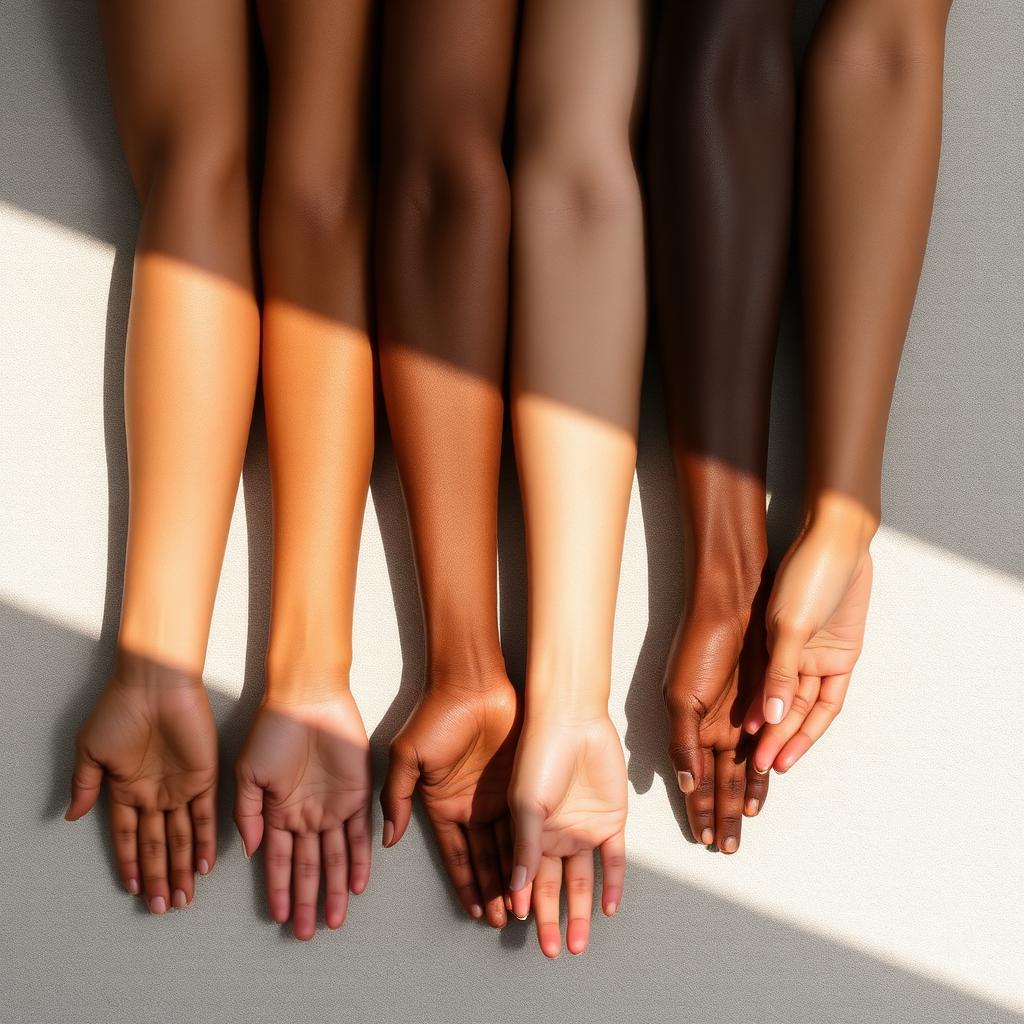
The Fitzpatrick scale classifies skin into six types based on how it responds to ultraviolet light. Type I always burns and never tans; Type VI is deeply pigmented and rarely burns. The scale was developed in 1975 by Harvard dermatologist Thomas B. Fitzpatrick to standardise dosing for UV phototherapy.
Knowing your type guides sunscreen choice, laser hair removal safety, melanoma screening frequency, and treatment selection for conditions like acne and melasma.
Your type is determined by genetics, not by your current tan. A Type II person who tans deeply on holiday is still Type II.
Why the Fitzpatrick scale exists
Before the Fitzpatrick scale, dermatologists used vague descriptors like "fair" or "olive" that meant different things in different clinics. The 1975 scale gave doctors a single shared vocabulary to predict burn risk, tan response, and complication rates for laser and chemical procedures.
Today the scale is the global standard for:
- Setting laser fluences for hair removal, tattoo removal, and skin resurfacing.
- Calculating minimal erythema dose (MED) for UV phototherapy of psoriasis or vitiligo.
- Recommending sunscreen SPF and reapplication frequency.
- Estimating risk for sun related skin cancers.
The six Fitzpatrick types
Type I: pale white
Features: very fair skin, often with freckles, blue or green eyes, red or blond hair, Celtic or Northern European ancestry.
UV response: always burns, never tans.
Cancer risk: highest. Strict sun protection required; annual full body skin exams recommended starting in your 20s.
Type II: fair white
Features: fair skin, light eyes, blond to light brown hair, common in Northern European populations.
UV response: burns easily, tans minimally and slowly.
Cancer risk: high. Daily broad spectrum SPF 30 plus is essential.
Type III: medium white to light brown
Features: light to medium skin, darker hair and eyes, common in Mediterranean, Hispanic, and some Asian populations.
UV response: occasionally burns, gradually tans to a light brown.
Cancer risk: moderate. Regular sun protection plus annual skin exams.
Type IV: olive or moderate brown
Features: olive or light brown skin, dark hair, dark eyes, common in Mediterranean, Middle Eastern, South Asian, and Latin American populations.
UV response: burns minimally, tans easily and well.
Cancer risk: lower than Types I to III, but not zero. Sunscreen still matters for hyperpigmentation control.
Type V: brown
Features: medium to dark brown skin, dark hair and eyes, common in Middle Eastern, South Asian, and Latin American populations.
UV response: rarely burns, tans deeply.
Cancer risk: lower for sun related cancers but higher for acral melanoma (palms, soles, nail beds), which is often missed.
Type VI: deeply pigmented brown to black
Features: dark brown to black skin, common in African and African diaspora populations.
UV response: never burns, deeply pigmented.
Cancer risk: lowest for sun related cancers, but acral and mucosal melanomas are disproportionately fatal because they are diagnosed late. Annual full body skin exams should include palms, soles, and nail beds.
How to find your type
Doctors use a short questionnaire that scores your genetic colouring (eye colour, natural hair colour, ethnic ancestry) and your reaction to one hour of midday summer sun without protection. Each question scores 0 to 4 points.
- 0 to 7 points: Type I
- 8 to 16: Type II
- 17 to 25: Type III
- 25 to 30: Type IV
- over 30: Types V or VI based on baseline pigmentation
Many dermatology clinics and online tools (American Academy of Dermatology, Skin Cancer Foundation) host free versions of the questionnaire.
What your type means for sunscreen
- Types I and II: SPF 50 plus daily, reapply every 90 minutes outdoors, mineral (zinc or titanium) sunscreens work well.
- Types III and IV: SPF 30 to 50 daily, reapply every two hours outdoors, both chemical and mineral options work.
- Types V and VI: SPF 30 plus daily even though burns are rare. Sunscreen protects against post inflammatory hyperpigmentation, melasma, and photoaging. Look for tinted mineral or modern chemical formulas that do not leave a white cast.
What your type means for laser and procedures
- Laser hair removal: diode and alexandrite lasers are safe and effective for Types I to IV. Types V and VI need long pulse Nd:YAG to avoid pigment damage.
- Chemical peels: deeper peels (TCA, phenol) carry hyperpigmentation risk in Types IV to VI; superficial glycolic and salicylic acid are safer.
- Microdermabrasion and microneedling: generally safe across all types when done by trained providers, but post procedure sun protection is critical for darker types.
Limitations of the scale
The Fitzpatrick scale was originally built on patients of European descent. Types V and VI were added later but still under represent the diversity of darker skin tones. Researchers are working on newer scales (Roberts Skin Type Classification, individual typology angle) that consider more variables, but Fitzpatrick remains the global default.
Self assessment is also imperfect. Two people of the same ancestry can have different types depending on freckling, photo history, and genetic mix.
FAQs
Does my Fitzpatrick type change with age?
No. Your type is set by genetics. What changes is your accumulated UV damage, which is why skin cancer risk rises with age regardless of type.
What if I am between two types?
Default to the lower number (more sensitive) when choosing sunscreen or laser settings. The cost of overprotection is zero; the cost of underprotection is a burn or pigment change.
Can I be different types in different seasons?
Your underlying type stays the same, but a winter pale Type III may burn more easily after months indoors than the same person in late summer.
Why do darker skin types still need sunscreen?
UV exposure causes hyperpigmentation, melasma, premature aging, and acral melanoma even in skin that does not burn. Daily SPF 30 plus is a long term anti aging and cancer prevention investment for every type.
The takeaway
Six types, one consistent scale, decades of clinical evidence. Knowing your Fitzpatrick type changes the SPF you buy, the laser settings your dermatologist uses, and how often you should book a skin check. Find your type once, then bake the protection plan into your daily routine.