Quick Answer
For most small SUVs the sweet spot is a 35 to 45 liter single-zone 12V compressor fridge. The Dometic CFX3 35 and ARB Classic Series II 37L are the two best all-around picks. If space is truly tight, the Iceco GO20 gives you a real compressor fridge in a 20 liter footprint.
A 12V fridge changes overland trips the way suspension changed off-road driving. No more melting ice, no more soggy sandwiches.
Why 35 to 45 liters is the compact-SUV sweet spot
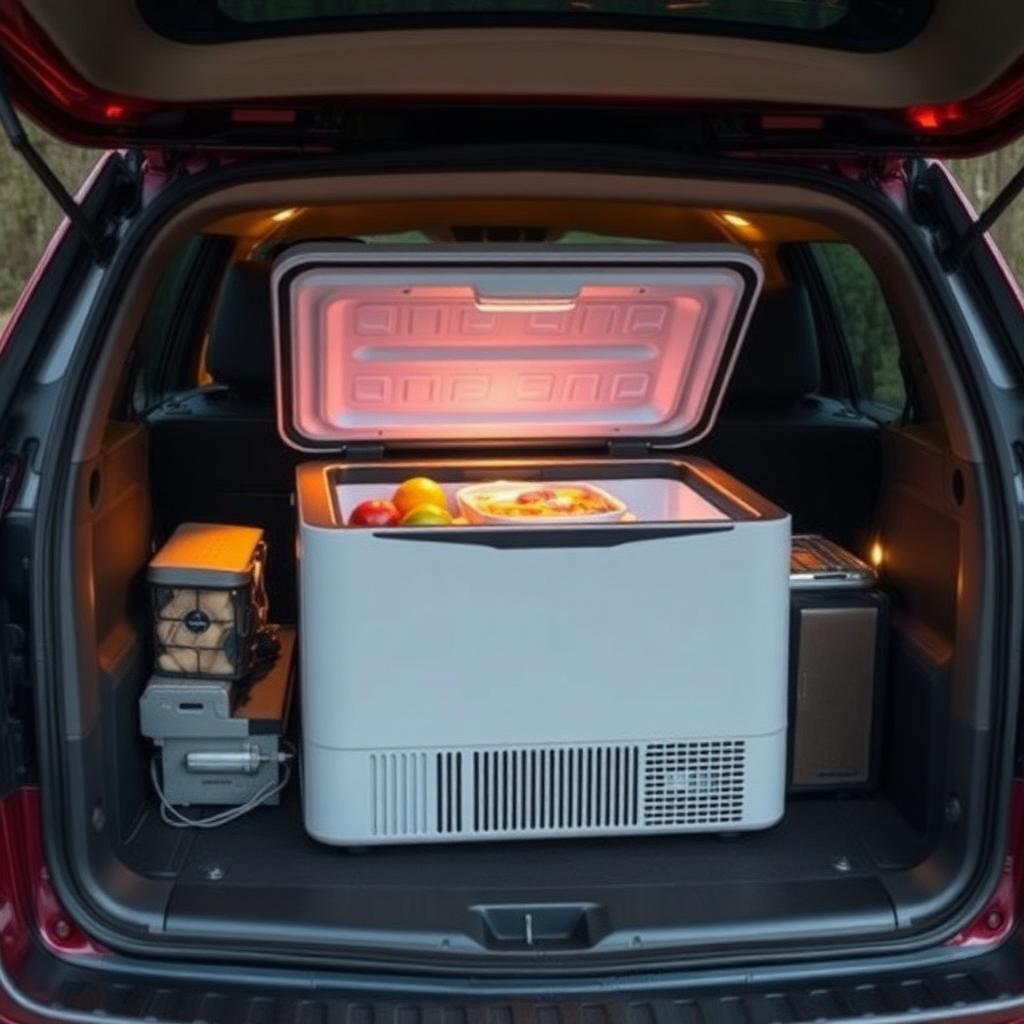
Small SUVs like the RAV4, CR-V, Outback, Bronco Sport, and 2-door Wrangler live and die by cargo geometry. A 35 to 45 liter fridge holds 4 to 5 days of food for two adults and still tucks under the factory cargo cover on most models, keeping the load hidden from view.
Jumping to a 55L or 65L fridge sounds smart until you realize it blocks rear visibility and forces you to fold a rear seat down. That trade is fine in a full-size truck. It is a mistake in a compact.
The three fridges I keep recommending
Dometic CFX3 35 (premium efficiency pick)
The CFX3 35 has fold-flat aluminum handles that stop the unit from snagging soft gear, a strong app-based temperature monitor, and Dometic's variable-speed compressor. In moderate ambient temps a CFX3-class 35L unit typically pulls around 0.8 to 1.1 amps per hour at fridge temperature. That is easy on a small dual-battery or a mid-sized power station.
ARB Classic Series II 37L (rugged trail pick)
ARB's Classic Series II is built for corrugated dirt roads. Its lift-off lid solves a real problem in tight SUV trunks where a hinged lid hits the headliner before it opens fully. Internal wire baskets stop food from bruising during rough drives.
Iceco GO20 (compact / budget pick)
The GO20 uses a genuine Secop (Danfoss) compressor, the same industrial-grade unit found in premium marine coolers, in a 20 liter footprint that fits between front seats or on a rear footwell. It is the answer when the trunk is already full of a rooftop tent, a dog crate, or child seats.
Comparison at a glance
| Model | Capacity | Typical draw | Best trait |
|---|---|---|---|
| Dometic CFX3 35 | 36 L | ~0.9 Ah | Fold-flat handles, app monitoring |
| ARB Classic II 37L | 37 L | ~1.0 Ah | Removable lift-off lid, drain plug |
| Iceco GO20 | 20 L | ~0.6 Ah | Secop compressor in a tiny box |
Ventilation is the install detail people miss
A 12V compressor fridge dumps heat through side vents. If you stuff a duffel bag or a sleeping bag against those vents, the compressor runs longer, power draw climbs, and internal temps rise. Leave at least a 2 inch clear air gap on every ventilated side and never mount the fridge inside a fully sealed drawer without cutout fans.
Frequently asked questions about overland fridges
Do I really need a dual battery to run a fridge?
Not for a weekend. A well-insulated 35L fridge will run about 24 to 36 hours on a healthy starter battery before it risks a no-start condition. For anything longer than a single night, a small auxiliary battery or a 500 to 700 Wh portable power station is the smart move.
Can I run a fridge as a freezer instead?
Yes. All three units above hit true freezer temperatures. Expect roughly double the power draw when running as a freezer compared to fridge mode, and plan your electrical budget accordingly.
Is it worth a dual-zone fridge on a small SUV?
Only if you genuinely need frozen protein for more than 3 days. For most weekend and week-long trips a single-zone unit plus a small soft cooler for a few frozen items is lighter, cheaper, and easier to pack.
Mounting and tie-down details that separate good installs from bad
The best overland fridge for a small SUV is only as good as the way you mount it. A fridge that slides around under braking will crack its case, damage the compressor mount, and wear its lid hinges out in a single season. Every install I trust uses a proper slide with rated tie-downs, or at minimum a set of ratchet straps anchored to factory D-rings in the cargo floor.
Sliding drawers vs fixed platforms
A lockable fridge slide is worth the money if you use the fridge every trip. Sliding the unit out gives you full access to the lid without unloading gear on top of it, and rotating slides let you access the fridge from the tailgate or the rear passenger door. Fixed platforms are cheaper and lighter, but you will end up unloading half your cargo to grab a sandwich.
Insulated covers earn their keep in heat
An insulated transit bag over your fridge cuts power draw by roughly 15 to 25 percent in hot ambient conditions. It also protects the lid from direct sunlight through rear glass, which otherwise turns the top of the unit into a heat sink and forces the compressor to run non-stop.
Power budgeting for a small SUV fridge setup
A 35 to 45 liter fridge pulling roughly 1 amp-hour in moderate temps draws about 24 Ah per day. A 100 Ah AGM auxiliary battery gives you two safe days before you approach the 50 percent depth-of-discharge floor. A 100 Ah LiFePO4 gives you closer to four days at the same load thanks to deeper usable capacity. Add a small 100W solar panel or an hour of daily driving with a DC-to-DC charger and the math extends indefinitely.
Bottom line
Pick the CFX3 35 for premium efficiency, the ARB 37L for trail toughness, or the Iceco GO20 when space is the constraint. Any of the three, mounted with proper ventilation, ends the ice-and-water misery for good.