Quick Answer
The best homemade fertilizers cover the three macronutrients on every bagged blend. Dried coffee grounds supply nitrogen for leafy growth, crushed eggshells deliver calcium for cell walls, and banana peel tea adds potassium for flowers and fruit.
Used together every few weeks, those three kitchen leftovers feed almost any vegetable or houseplant without spending a cent on bottled fertilizer. An Epsom salt spray fills in the magnesium gap when leaves start yellowing.
Why Bother Making Your Own
Bagged synthetic fertilizer is fast acting, but the salts can scorch tender roots and slowly degrade soil biology. Homemade options release nutrients slowly, feed earthworms and microbes, and reuse waste that would otherwise end up in landfill.
You also gain control. You can dial in nitrogen for leafy greens, calcium for tomatoes, or potassium for flowering plants without buying four separate products.
Nitrogen From Used Coffee Grounds
Coffee grounds carry roughly 2 percent nitrogen by weight along with traces of phosphorus, potassium, and micronutrients. Nitrogen powers leaf growth, so grounds are perfect for spinach, lettuce, kale, and any leafy houseplant.
Never dump wet clumps straight onto soil. A thick mat traps moisture and grows mold. Spread the grounds on a baking sheet, let them dry in the sun for a day, then scratch a thin layer into the top inch of soil or toss them into your compost bin.
Acid lovers like blueberries, azaleas, and hydrangeas appreciate a heavier dose because the grounds are mildly acidic.
Calcium From Crushed Eggshells
Calcium builds strong cell walls. Without it, tomatoes and peppers develop blossom end rot, the leathery black patch on the bottom of an otherwise perfect fruit.
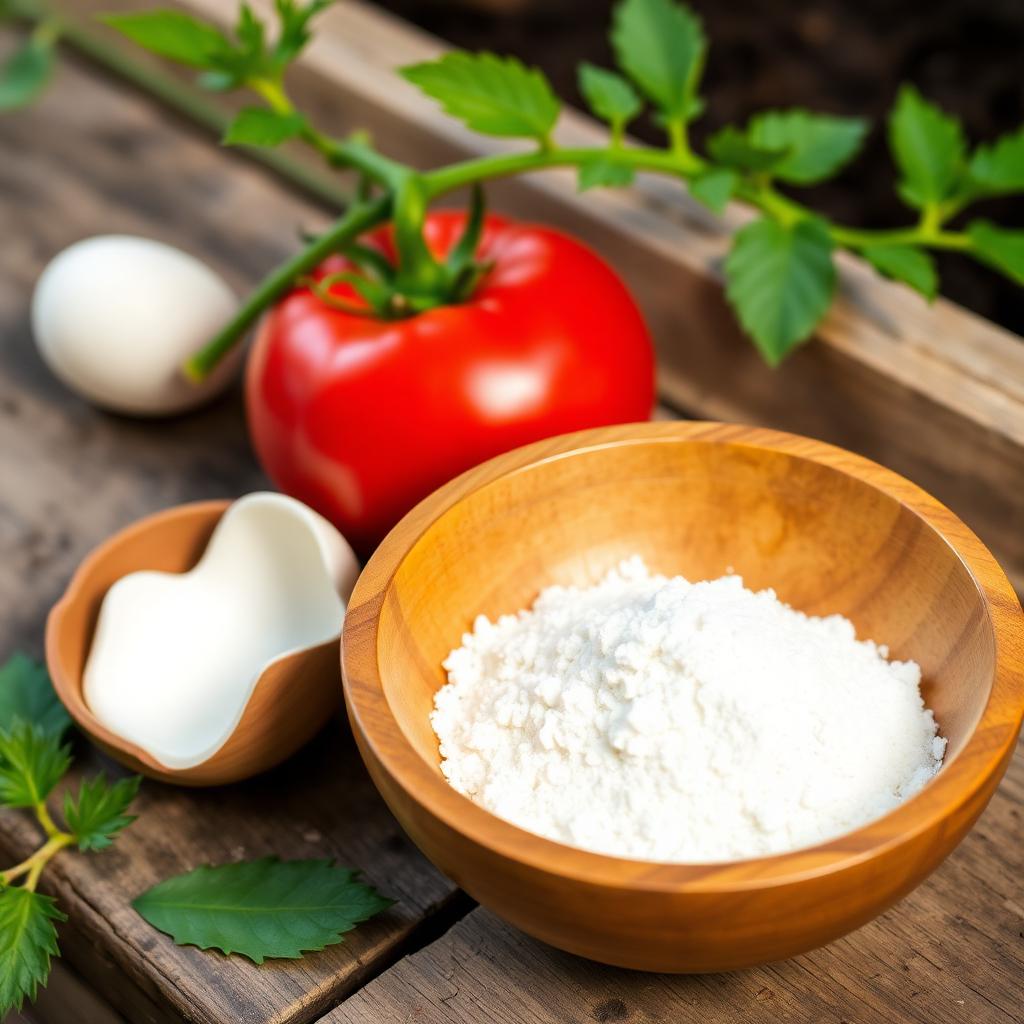
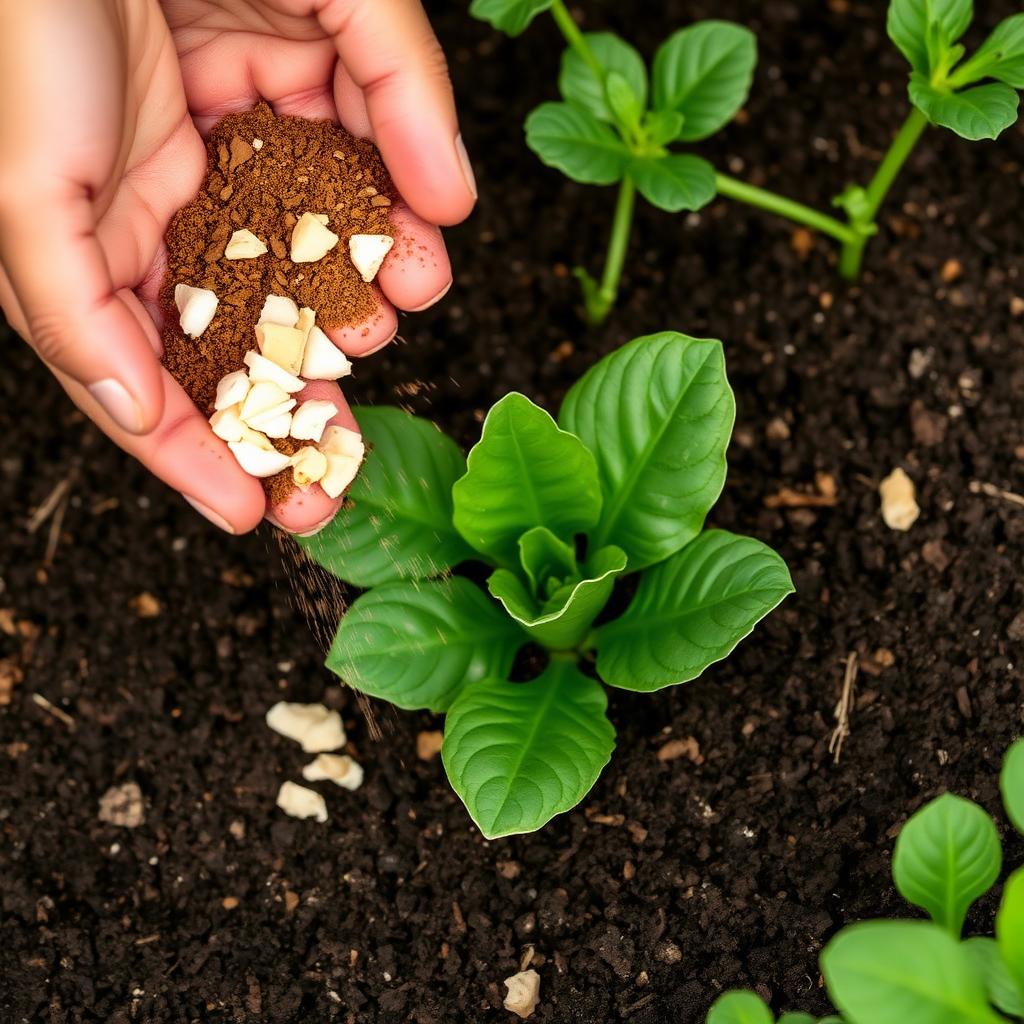
Rinse your shells, bake them at 90 degrees Celsius for 15 minutes to sterilize, then pulverize them in a blender or coffee grinder. Toss a tablespoon of the powder into each planting hole when you transplant tomatoes, peppers, or eggplants. The finer the grind, the faster calcium becomes available.
Potassium From Banana Peel Tea
Potassium regulates water movement, drives photosynthesis, and feeds flower and fruit production. Banana peels are loaded with it.
Drop three or four peels into a quart jar of water and leave it on the counter for 3 to 5 days. The water turns a tea brown color as potassium and trace minerals leach out. Strain, compost the soggy peels, and use the liquid to water rose bushes, tomatoes, peppers, and flowering houseplants once every two weeks.
Magnesium From Epsom Salt
Epsom salt is magnesium sulfate. Magnesium sits at the very center of every chlorophyll molecule, so a deficiency shows up as pale yellow leaves with green veins still showing.
Dissolve one tablespoon in a gallon of warm water, pour into a sprayer, and mist the leaves of pepper plants, roses, and tomatoes once a month. The magnesium absorbs directly through the leaf surface and greens the plant up within days. A soil drench works too.
Bonus Recipes Worth Trying
- Wood ash: A handful from a clean wood fire adds potassium and raises soil pH. Skip it around blueberries and other acid lovers.
- Aquarium water: Old fish tank water is mild fertilizer ready to pour straight onto houseplants.
- Compost tea: Steep a shovel of finished compost in a 5 gallon bucket of water overnight, strain, and use as a foliar spray.
- Grass clipping mulch: A thin layer of fresh clippings around vegetables breaks down into nitrogen and shades out weeds.
What to Avoid
Not every kitchen scrap helps. Citrus peels and onion skins can repel earthworms in containers. Meat, dairy, and oily food rot and attract pests rather than feeding plants. Coal ash contains heavy metals and should never touch a vegetable bed.
Also avoid pet or human waste, which carries pathogens that survive in raw form. Stick with plant based scraps and properly aged compost.
The Takeaway: A Simple Year Round Schedule
- At planting time, mix in finished compost and a tablespoon of eggshell powder per hole.
- Every two weeks during the growing season, water with banana peel tea.
- Once a month, scratch a thin layer of dried coffee grounds around heavy feeders.
- If leaves yellow, mist with the Epsom salt solution.
- In autumn, mulch the bed with shredded leaves and let the worms do the rest.
Follow that loop and your garden will outperform anything you could pour from a bottle, with zero cost and a lot less plastic in the bin.