Quick Answer
The best garden gazebo depends on how long you want it to stay up. Hardtop aluminum with a galvanised steel roof is the gold standard for year-round outdoor living and handles wind plus snow. Soft-top fabric gazebos give you 80 percent of the look for half the price but need to come down before winter. Pop-ups are strictly for day parties.
Whatever you pick, the single most important step is anchoring it properly. An un-anchored gazebo can be lifted and thrown by a summer thunderstorm.
The four main classes, side by side
| Class | Frame | Roof | Best for | Typical price |
|---|---|---|---|---|
| Hardtop aluminum | Powder-coated aluminum | Galvanised steel | Permanent year-round shelter | £1,500 to £4,500 |
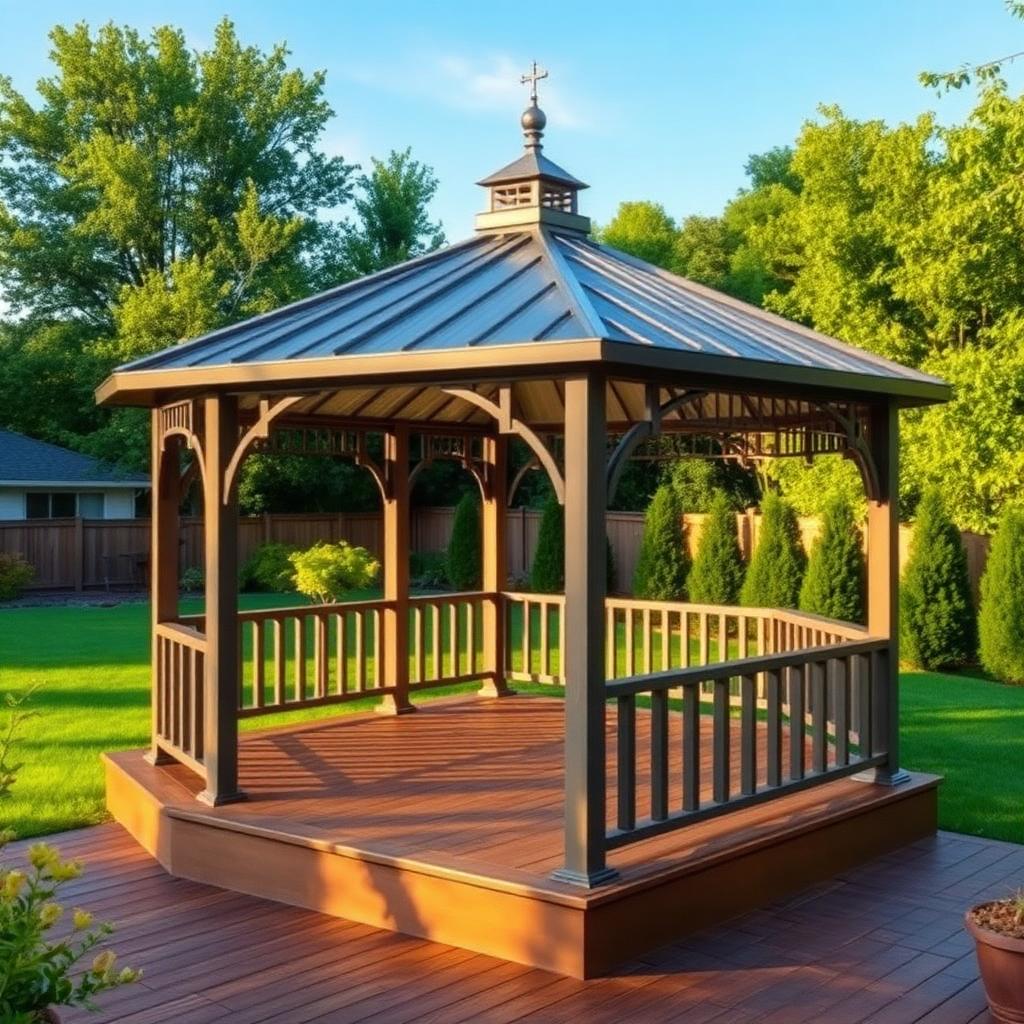
| Cedar pavilion | Treated cedar timber | Asphalt shingles | Classic look on a permanent deck | £3,000 to £8,000 |
| Soft-top cabana | Steel tube | Polyester canvas | Seasonal summer use | £400 to £1,200 |
| Pop-up | Lightweight aluminum | Coated nylon | Day events, market stalls | £80 to £300 |
Hardtop aluminum: the long-term winner
If you actually want to use your garden in October when the rain sets in or in February for a cold-but-bright lunch, a hardtop aluminum gazebo earns its higher upfront cost back fast. Rust-proof powder-coated frames and a solid galvanised steel roof are designed for 360-day-a-year outdoor exposure.
Look for these specs:
- Frame gauge: 6 cm by 6 cm posts or thicker for 3 m by 3 m and up.
- Wind rating: good models are tested to roughly 90 km/h (Force 9 gale). Cheaper imports often quote 50 to 60 km/h.
- Snow load: 75 kg per square metre minimum if you get any real winter snowfall.
- Vented roof: a dual-tier vented roof creates a natural thermal chimney that pulls hot air out and drops the internal temperature by several degrees on hot days.
- Curtain and netting tracks: integrated tracks let you add side curtains and mosquito nets without ugly add-on hardware.
Top mainstream brands in this category include Sojag, Outsunny's hardtop range, Yardistry, and Sunjoy. Expect to spend a weekend on assembly with at least one helper.
Cedar and wood pavilions: built-in to your landscape
A timber pavilion is the most aesthetically integrated option and the most expensive. Cedar resists rot naturally without heavy chemical treatment, holds its honey colour for several years, and ages gracefully to silver-grey if left untreated. Asphalt shingle roofs match neighbouring houses and shed water beautifully.
The trade-off: timber needs periodic restaining or sealing (every 2 to 3 years), and the structure usually needs proper concrete footings poured before assembly. It is functionally a permanent outbuilding. In some UK councils a freestanding pavilion over 2.5 m tall or within 2 m of a boundary may need planning permission; check before you order.
Soft-top fabric gazebos: best value for summer
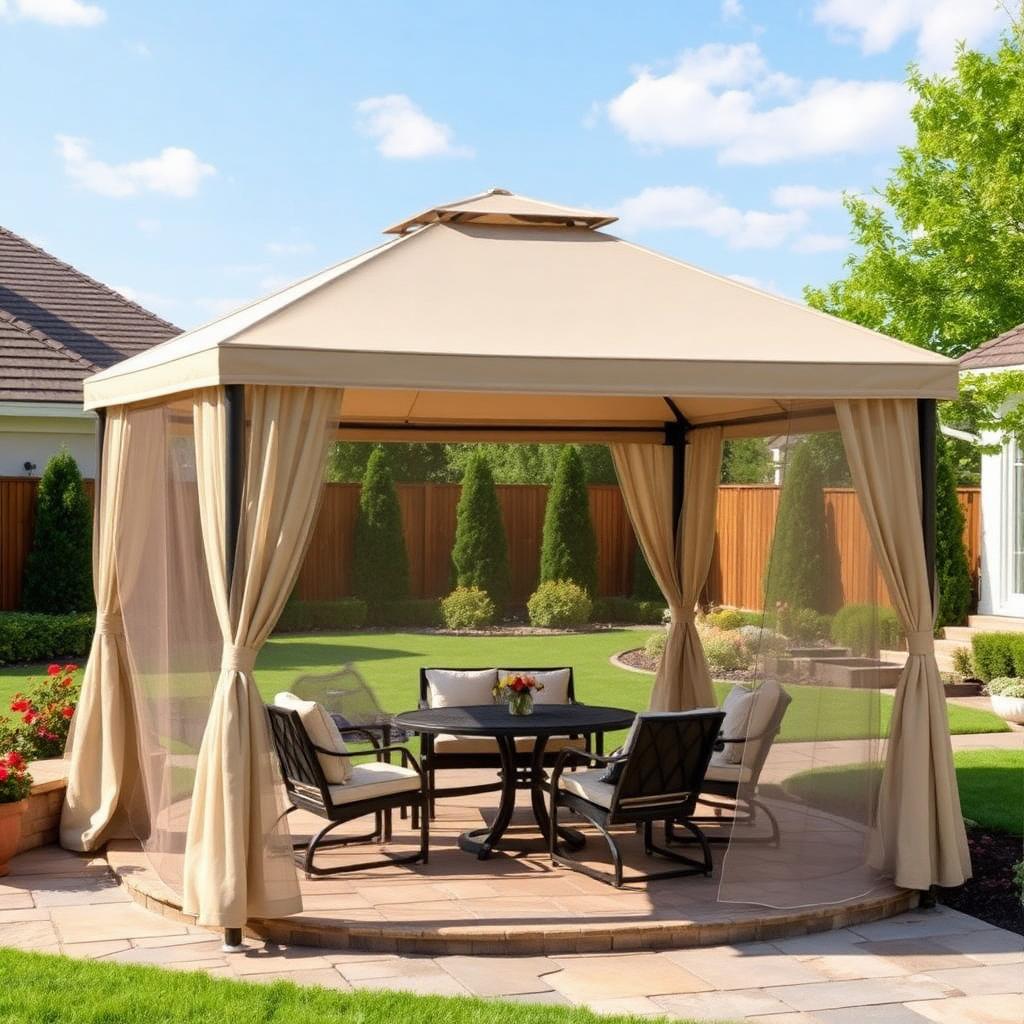
For the householder who wants a comfortable shaded outdoor room from May to September without remortgaging, a soft-top gazebo is the practical pick. Steel tube frames and heavyweight polyester canvas roofs run between £400 and £1,200 for a 3 m by 3 m unit with curtains and mosquito netting.
Things to insist on:
- UV 50+ rated canopy with a durable water-repellent (DWR) coating that beads off rain rather than soaking through.
- Double-tier vented top so wind passes through rather than turning the canopy into a sail.
- Zip-in mosquito netting on all four sides for evening use without insects.
- Replaceable canopy: good brands sell the top fabric as a spare part. Cheaper models are throw-away when the canopy fades.
Soft-top canopies typically last 3 to 5 years before UV degrades the fabric. Plan to take the canopy off and store it indoors over winter or it will not survive the first proper storm.
Pop-up event canopies
Pop-ups are not really garden furniture. They are temporary shelters for a barbecue, a market stall, or a kids' birthday party. Lightweight aluminum frames and thin coated nylon roofs go up in 5 minutes and come down just as fast. Even the best ones (E-Z UP, Vango, Trespass) are not designed to live outdoors for weeks at a time. Leave one up overnight in a stiff breeze and it will end up in next door's hedge.
Treat them as event gear: pitch, use, strike, store.
Anchoring: the step most people skip
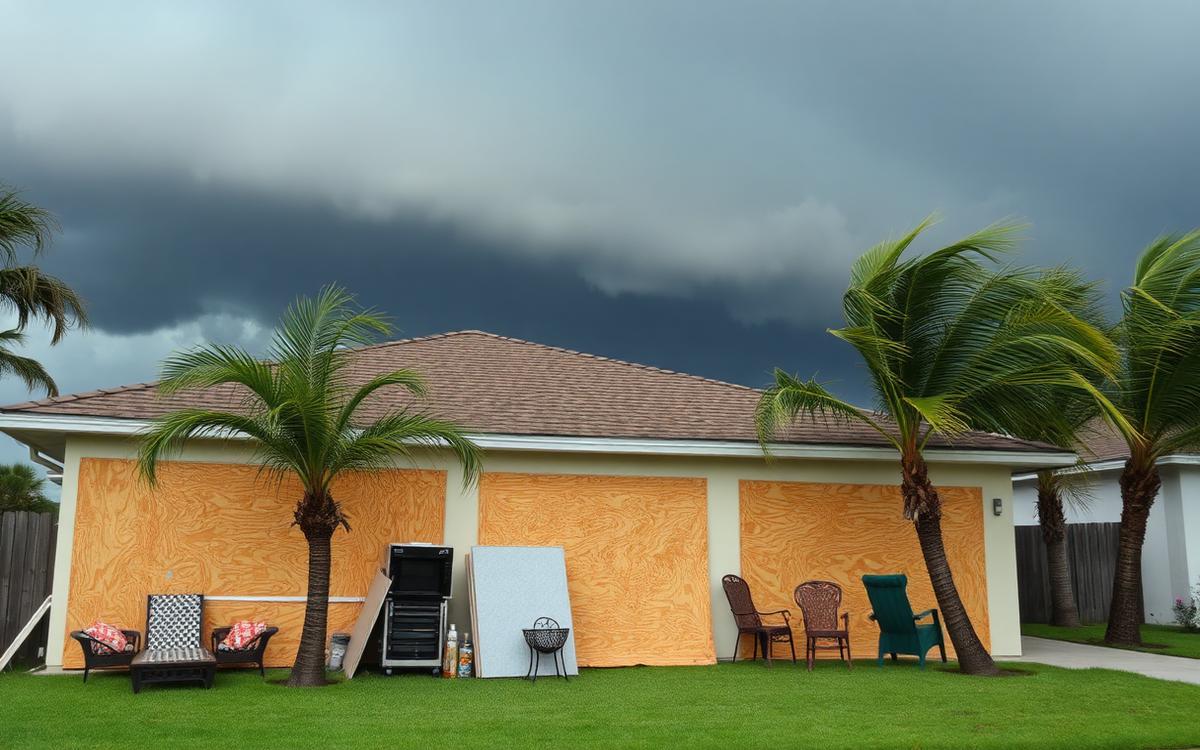
Every gazebo, regardless of weight class, behaves like an aircraft wing in strong wind. The roof generates lift, the legs leave the ground, and the whole structure flies. Anchoring is non-negotiable.
- On concrete patios: drill through the leg footplates and install expanding masonry bolts. This is the gold standard.
- On wooden decks: use long structural lag screws driven into the joists below, not just the decking boards.
- On grass: drive 45 cm steel rebar stakes through the footplates, or excavate a small footing and pour quick-set concrete around the leg base.
- Soft-top and pop-up gazebos on hard standing: use 20 kg sand or water weights on each leg as a minimum. Stack two per leg for prolonged outdoor use.
Take soft-top gazebos down when wind speeds above 50 km/h are forecast. The frame is rated for that and the canopy is not.
Sizing for the people who will use it
A 3 m by 3 m gazebo comfortably seats 4 to 6 around a small table. 3 m by 4 m fits a 6 person dining set with room to walk around it. 4 m by 4 m or larger turns into an outdoor living room with sofas. Allow 60 cm clearance between furniture edges and gazebo posts so you can pull chairs out without bumping the frame.
Pick a height that suits the people who will use it. Standard 2.4 m headroom under the eaves is fine for most adults; if anyone in the household is over 1.9 m tall, aim for 2.6 m headroom to avoid head-banging the cross beams.
Bottom line
For a long-term, year-round garden upgrade, a properly anchored hardtop aluminum gazebo in the £2,000 to £3,000 range is the strongest all-rounder for British and continental weather. For a budget-friendly summer-only setup, a UV-rated soft-top with mosquito netting and weighted legs is the smart pick. Pay attention to anchoring and you will get years of use either way.