Quick Answer
Pride Month is the annual June commemoration of LGBTQ+ civil rights, history, and community. It is observed in June because the Stonewall Inn uprising in New York City began on June 28, 1969, and the first Pride march, the Christopher Street Liberation Day March, was held one year later on June 28, 1970.
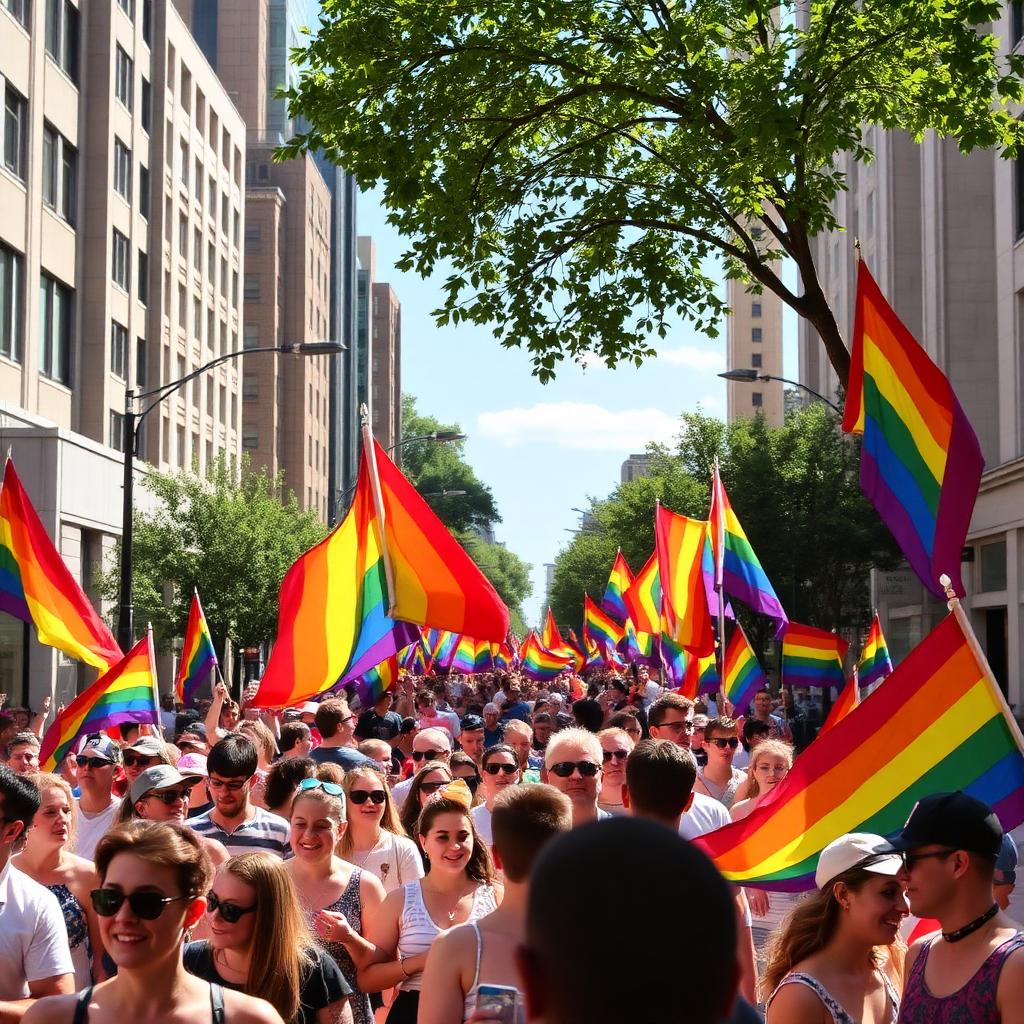
Today most U.S. and European cities hold their main parades on a Saturday or Sunday in mid to late June. Southern Hemisphere cities like Sydney shift theirs to February or March to land in their summer. The visual symbol is the Pride flag, originally an eight stripe rainbow by Gilbert Baker in 1978, now most often seen as the 2018 Progress Pride flag designed by Daniel Quasar.
The Spark: The Stonewall Inn Uprising
In the early morning hours of June 28, 1969, plainclothes officers from the New York Police Department raided the Stonewall Inn, a Mafia owned gay bar on Christopher Street in Greenwich Village. Bar raids targeting gay establishments were routine at the time. Same sex dancing was illegal in New York, gender appropriate clothing rules were enforced, and most arrested patrons quietly accepted booking.
That night the response was different. The crowd outside the bar refused to disperse. Witnesses describe coins, then bottles, then bricks flying at the police. Officers barricaded themselves inside the Stonewall as a crowd of several hundred grew on the street. Unrest continued for five more nights.
Activists including Marsha P. Johnson and Sylvia Rivera, both transgender women of color, were central to the uprising and the organizing that followed. Within months, the Gay Liberation Front and Gay Activists Alliance had formed in New York, and similar groups appeared in dozens of U.S. cities.
The First Pride March: June 28, 1970
To mark the one year anniversary, organizers including Brenda Howard, Craig Rodwell, and Ellen Broidy coordinated the Christopher Street Liberation Day March. Marchers walked from Christopher Street to Central Park, an estimated few thousand strong. It is widely recognized as the first Pride parade.
The same weekend, Los Angeles held its own Christopher Street West parade and Chicago held a smaller march. By 1971, Pride events had spread to Boston, Dallas, Milwaukee, London, Paris, West Berlin, and Stockholm. The June anchor stuck.
The Flag and Its Evolution
The visual identity of Pride has been redesigned several times, each iteration adding more groups to the symbol.
- 1978: Original eight stripe rainbow. Designed by Gilbert Baker for the San Francisco Gay Freedom Day Parade. Stripes for sex (hot pink), life (red), healing (orange), sunlight (yellow), nature (green), magic (turquoise), serenity (blue), and spirit (violet).
- 1979: Six stripe rainbow. Hot pink and turquoise were dropped to make mass manufacturing easier. This is the version most people picture.
- 2017: Philadelphia "More Color More Pride" flag. Added black and brown stripes above the standard six stripe rainbow, producing an eight stripe flag that explicitly centers Black and Brown LGBTQ+ people.
- 2018: Progress Pride flag. Designed by Daniel Quasar. Adds a chevron on the hoist side with black, brown, light blue, pink, and white stripes, representing communities of color, trans people, and those lost to HIV/AIDS.
- 2021: Intersex Inclusive Progress flag. Designed by Valentino Vecchietti. Adds the intersex yellow and purple circle inside the chevron.
Global Scheduling: Why Dates Move
The June anchor is a U.S. and Northern European convention tied to Stonewall. Many other regions schedule their main events to fit local climate, history, or politics:
- Sydney, Australia. The Sydney Gay and Lesbian Mardi Gras runs in late February and early March, anchored to a 1978 protest that turned into the first Sydney march.
- Sao Paulo, Brazil. The world's largest Pride parade, held on a Sunday in June, regularly draws 3 to 5 million attendees.
- Madrid, Spain. Holds its main parade in early July (MADO) anchored to the anniversary of the legalization of same sex marriage in Spain on July 3, 2005.
- Toronto, Canada. Late June, weekend closest to June 28.
- Tel Aviv, Israel. Mid June, one of the largest in the Middle East.
- Berlin, Germany. Christopher Street Day (CSD) on a Saturday in late July, named after the original Christopher Street March.
Modern Themes and Tensions
Pride in 2026 sits in a genuinely complicated cultural moment. Several U.S. states have passed legislation restricting drag performances, trans medical care, and classroom discussion of gender identity. Several European cities have seen attempted bans of Pride events overturned in court. The conversation inside the movement has also matured, with growing scrutiny of corporate "rainbow washing" and louder calls to recenter the political and protest roots of the original march.
Practically, this means most modern Pride events combine three things in the same weekend: a parade with civic and corporate floats, a free festival with stages and vendor booths, and a separate, smaller march (often called the Queer Liberation March or the Reclaim Pride march) that explicitly excludes corporate sponsors and police participation.
The Takeaway
Pride Month is observed in June because the Stonewall uprising began on June 28, 1969, and the first Christopher Street Liberation Day March happened exactly one year later. The visual symbol has evolved from Gilbert Baker's 1978 eight stripe rainbow to the 2018 Progress Pride flag and the 2021 Intersex Inclusive Progress flag, each adding more communities to the picture. Most cities hold their main parade on a weekend in mid to late June, though Sydney, Madrid, and Berlin shift dates to fit local history and climate. Behind the parades, the movement is once again wrestling with the same civil rights stakes that brought it into the streets in 1969.