
Quick Answer
Day of the Dead, or Dia de los Muertos, is a Mexican tradition held on November 1 and 2. Families remember relatives who have died and welcome their spirits home for a short visit.
People build home altars called ofrendas with photos, candles, marigolds, sugar skulls, favorite foods and pan de muerto. Many also clean and decorate family graves and spend the night in the cemetery.
It is a celebration of life and memory, not a sad or scary holiday, and it is not the Mexican version of Halloween.
When Is Day of the Dead?
The main days are November 1 and November 2. In many communities, November 1 is set aside for children who have died, sometimes called Dia de los Angelitos. November 2 honors adults.
Preparations start well before. Markets fill with marigolds, candles and sweets in late October, and some regions begin welcoming spirits as early as October 28 or 31.
Where Does the Tradition Come From?
The holiday blends Indigenous Mesoamerican customs for honoring the dead with the Catholic feasts of All Saints Day and All Souls Day, which fall on the same dates.
UNESCO recognizes the Indigenous festivity dedicated to the dead in Mexico as part of the Intangible Cultural Heritage of Humanity. The listing describes it as a time when families welcome the brief return of deceased relatives.
What Is an Ofrenda?
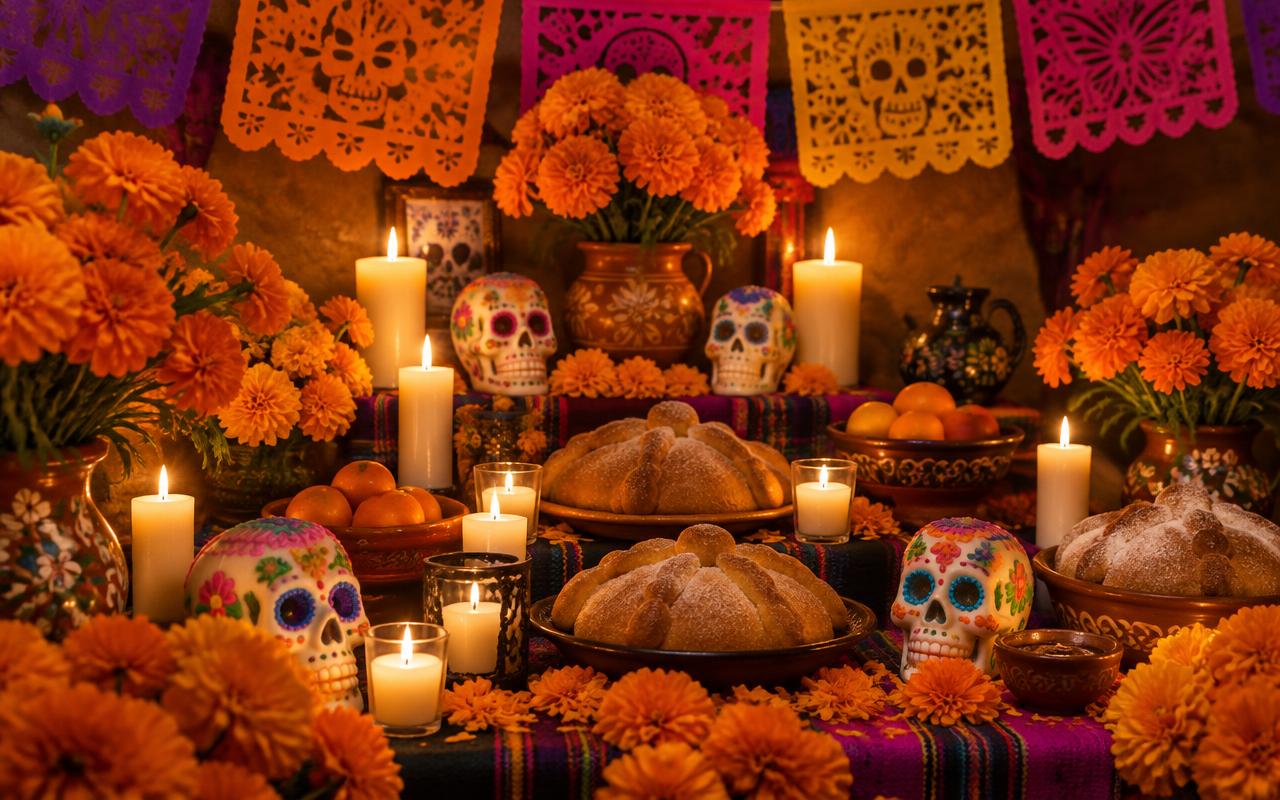
An ofrenda is the altar at the heart of the celebration. Families set it up at home, and sometimes in schools, businesses or public squares.
It is usually built on a table or a set of steps, covered in cloth and filled with items chosen for specific people. Each altar is personal, so no two look the same.
What Goes on a Day of the Dead Altar?
- Photos: pictures of the loved ones being honored.
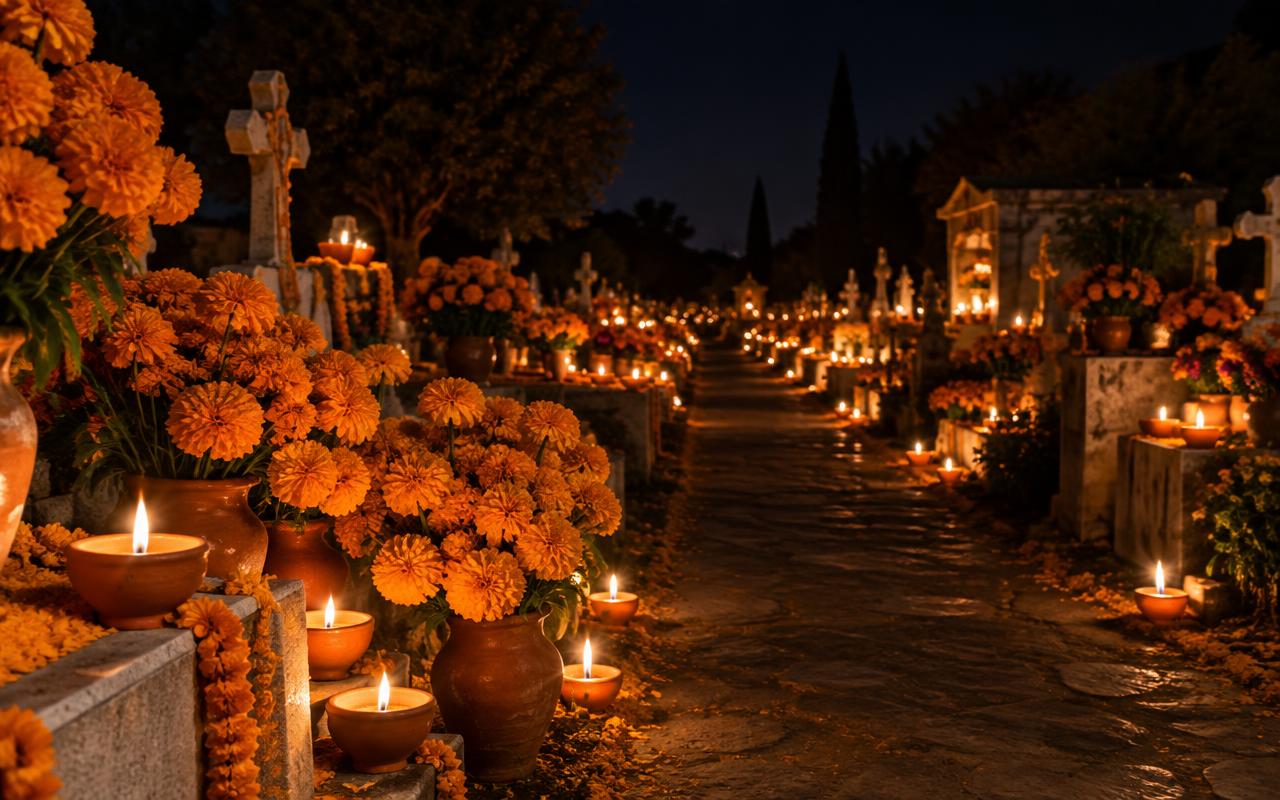
- Marigolds (cempasuchil): bright orange flowers whose color and scent are said to guide spirits home.
- Candles: light to show the way.
- Water: to refresh spirits after a long journey.
- Salt: a symbol of purification in many homes.
- Favorite foods and drinks: a grandmother's mole, a father's favorite beer, a child's candy.
- Pan de muerto: a soft, sweet bread decorated with dough shaped like bones.
- Sugar skulls (calaveras): often decorated with the name of the person.
- Papel picado: colorful cut paper banners that flutter above the altar.
- Personal items: a hat, a tool, a toy or anything that brings that person to mind.
Why Are Skulls and Skeletons Everywhere?
Skulls and skeletons in Day of the Dead art are playful, not frightening. They remind people that death is part of life and that everyone ends up equal.
The elegant skeleton lady known as La Catrina is the most famous image. She began as a satirical print by the Mexican artist Jose Guadalupe Posada in the early 1900s and was later popularized by the painter Diego Rivera.
How Do Families Celebrate at the Cemetery?
In many towns, families clean graves, pull weeds and cover headstones in marigolds and candles. Some bring food, music and blankets and stay through the night.
Stories are shared and favorite songs are played. The mood is warm and social, a reunion more than a mourning.
How Is Day of the Dead Different From Halloween?
The two fall close together and both use skulls, so they are often mixed up. They are very different.
- Purpose: Halloween plays with fear and costumes. Day of the Dead honors specific people who have died.
- Mood: Halloween is spooky. Day of the Dead is loving and festive.
- Roots: Halloween traces to Celtic Samhain and All Hallows Eve. Day of the Dead grows from Indigenous Mexican and Catholic traditions.
What Foods Are Eaten on Day of the Dead?
Pan de muerto is the star. Other favorites include tamales, mole, atole and champurrado (warm corn based drinks), candied pumpkin and sugar skulls.
Foods on the altar are meant for the spirits first. Families often share them afterward, saying the spirits have already taken the essence.
How Can You Celebrate Respectfully if You Are Not Mexican?
You are welcome to learn and take part, as long as you do it with care.
- Build a small ofrenda for someone you have lost and learn what each item means.
- Visit a local museum, cultural center or community event run by Mexican or Mexican American organizers.
- Buy pan de muerto and decorations from local Mexican bakeries and artists.
- Skip treating Catrina face paint as a generic Halloween costume, and never mock the dead it honors.
Where Is Day of the Dead Celebrated?
Mexico is the heart of the tradition, with famous celebrations in Oaxaca, Michoacan and Mexico City. Mexico City now holds a large parade with giant skeleton figures.
It is also widely celebrated across the United States, especially in Los Angeles, San Antonio, Chicago and Tucson, and in other parts of Latin America with local variations.
How Do You Make a Simple Ofrenda at Home?
1. Pick a spot. A small table, shelf or dresser top works. Cover it with a bright cloth.
2. Add levels. Stack a few sturdy boxes under the cloth to create two or three tiers.
3. Place photos. Put pictures of the people you are honoring at the top.
4. Add light and flowers. Arrange candles and marigolds, and scatter petals as a path toward the altar.
5. Offer favorites. Add a glass of water, a small dish of salt, pan de muerto and something each person loved.
Use battery candles if kids or pets are nearby, and never leave real flames unattended.
Frequently Asked Questions
Is Day of the Dead a sad holiday?
No. It is a happy time to remember and celebrate loved ones.
Is it Mexican Halloween?
No. The dates are close, but the meaning and customs are different.
Why marigolds?
Their bright color and strong scent are believed to help spirits find their way home.
Can I make an ofrenda at home?
Yes. A photo, a candle, a glass of water, flowers and a favorite food are a simple, meaningful start.
The Bottom Line
Day of the Dead, on November 1 and 2, is a joyful Mexican tradition that welcomes the spirits of loved ones home with altars, marigolds, candles and their favorite foods.
It mixes Indigenous and Catholic roots, is recognized by UNESCO, and is about memory and love rather than fear.