Quick Answer
The real dorm essentials are bedding that fits the odd mattress size, a shower caddy and flip flops, under bed storage, a laundry system, a small first aid and medicine kit, a fan, and enough hooks and command strips to use the walls.
Almost everything else on a typical retail checklist is optional, duplicated by your roommate, or bought better once you have seen the room.
Pack the list that solves daily friction. Sleep, showering, laundry, storage and temperature are the five problems that repeat every single day.
Bedding: The One Thing You Cannot Improvise
Most residence halls use extra long twin mattresses, roughly 38 by 80 inches, which standard twin sheets do not fit. Check the housing page for the exact size before buying anything, because a handful of schools use full or standard twin beds.
Buy two fitted sheets rather than one. Laundry day slips, and a spare sheet is the difference between remaking the bed and sleeping on a bare mattress. A mattress protector matters more than thread count, since institutional mattresses have long and unknowable histories.
A mattress topper is the most consistently recommended non-essential in the whole category. Dorm mattresses are firm vinyl-covered slabs, and two inches of foam changes sleep quality noticeably.
Storage Is the Real Constraint
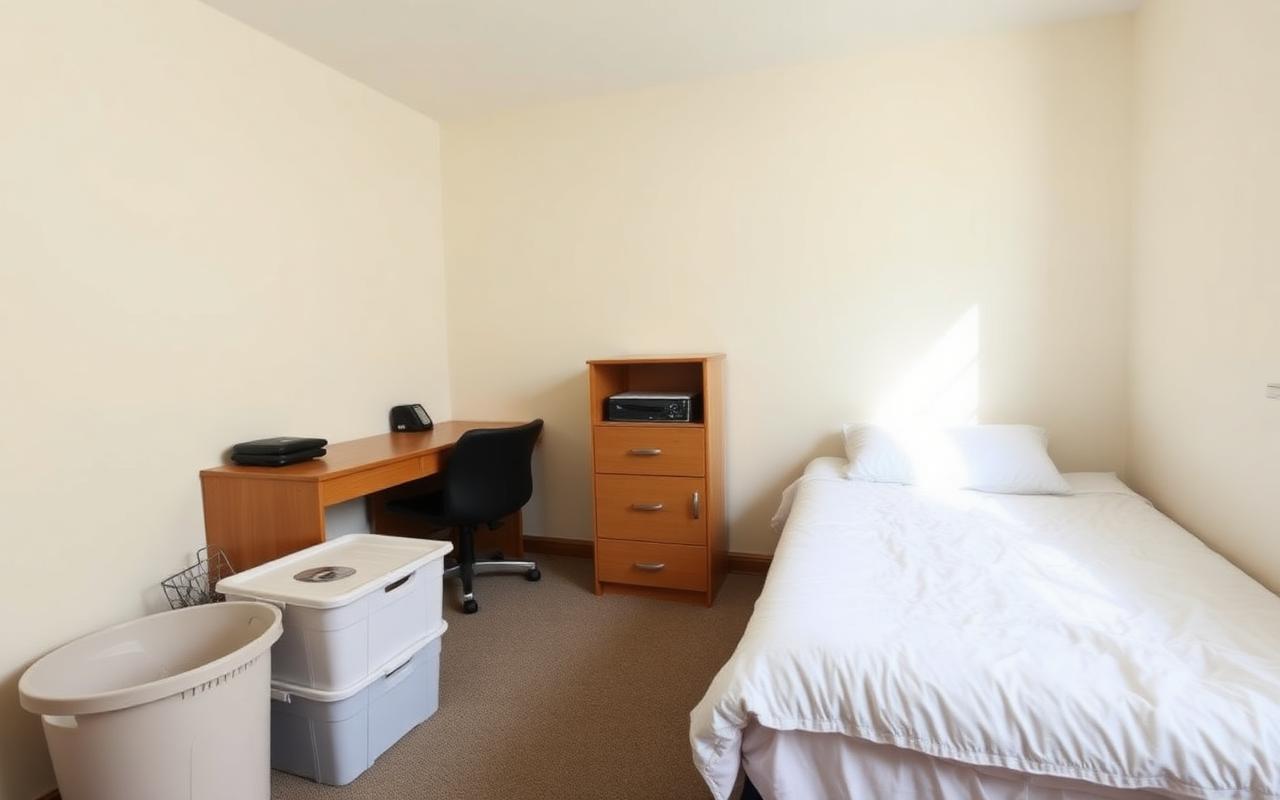
A typical double room gives each student a desk, a wardrobe or closet section, and a bed. Floor space is the scarce resource, so storage has to go up or under.
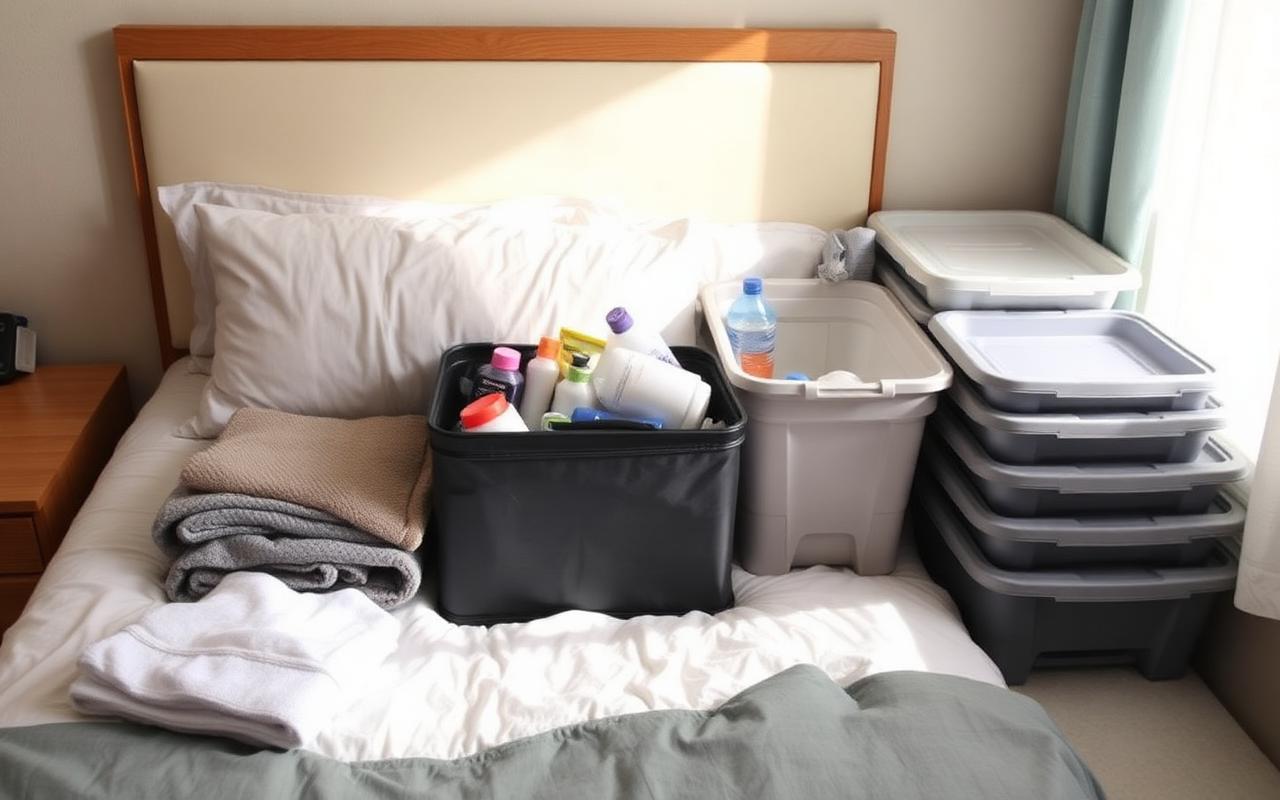
- Under bed bins on wheels that fit the clearance of a lofted or raised bed. Measure the height before buying.
- Bed risers if the bed does not loft, to create eight or more inches of storage.
- An over the door organiser for shoes, toiletries or snacks, which uses the one surface nobody competes for.
- Slim velvet hangers that roughly double closet rail capacity compared with plastic ones.
- Collapsible cubes for the shelf above the wardrobe.
Shower and Laundry: The Shared Bathroom Kit
Communal bathrooms change what you need. A mesh or plastic shower caddy with drainage holes carries everything in one trip and dries between uses. Shower shoes are non negotiable in a shared floor bathroom; plain rubber flip flops are fine.
For laundry, a pop up hamper wastes less space than a rigid basket, but a hamper you can actually carry down three flights matters more. A backpack-style laundry bag is the quiet winner for anyone whose laundry room is in another building.
Buy detergent pods rather than liquid. Liquid detergent leaks in a hamper and costs you both the detergent and the clothes.
Climate, Light and Air
Older residence halls frequently have no air conditioning and heating you cannot control. A compact fan solves the first problem and helps with the second by moving stale air.
Overhead dorm lighting is harsh and shared, so a clip on bed lamp and a desk lamp let one person work while the other sleeps. Choose warm-toned bulbs for the bed lamp; bright cool light at midnight fights the sleep schedule you are trying to hold together.
A small air purifier is worth it in a carpeted room, particularly for anyone with allergies, since dorm carpet is rarely deep cleaned between residents.
The Health Kit Nobody Packs Until They Need It
Campus health services close at five. A small kit prevents a 2am problem becoming a wasted day.
| Item | Why |
|---|---|
| Pain and fever medication | The single most used item in any dorm kit |
| Digital thermometer | Needed for health service triage and roommate reassurance |
| Plasters, antiseptic, tweezers | Small cuts and splinters are constant |
| Rehydration sachets | Stomach bugs travel fast through shared bathrooms |
| A copy of your insurance details | Required at every campus health visit |
What to Leave at Home
Every August students buy the same items and carry them home unopened in December.
- A second microwave or mini fridge. Coordinate with your roommate; two of each will not fit and often breaches the room's electrical limit.
- A full set of crockery. One plate, one bowl, one mug, one set of cutlery. That is genuinely it.
- Bulk cleaning supplies. Buy small, restock locally, and skip carrying litres across the country.
- Most of your wardrobe. Bring one season. Storage is the binding constraint and you will go home at least once.
- Candles and halogen lamps. Banned almost everywhere and a common cause of confiscation.
Coordinate With Your Roommate First
Message your roommate in July or early August and split the shared items: fridge, microwave, rug, fan, and any small television. It halves the cost and prevents the classic move-in day scene of two identical fridges and nowhere to put either.
Agree who takes what home at the end of the year while you are still cheerful about it, and write it down. That single message saves an argument in May.
Measure Before You Buy Anything Bulky
Three measurements decide most of the storage shopping list, and all three are usually published on the residence life page: mattress size, the height of the space under the bed once it is raised or lofted, and the internal width of the wardrobe.
If they are not published, email the housing office in July. They answer these questions constantly and will usually reply within a day or two. Failing that, current students in the hall's social group know the numbers by heart.
Buying storage that turns out to be an inch too tall is the most expensive dorm mistake, because you cannot easily return a bin once it has been driven across three states.
A Move-In Day Order of Operations
Unpacking in the wrong order costs a whole afternoon. Do it like this.
- Make the bed first, so if the day collapses you still have somewhere to sleep.
- Set up the desk and power second, so phones and laptops are charging while you work.
- Hang clothes third, then break down and remove every box before deciding where anything else goes.
- Leave decoration until the second day. The room looks completely different once it is full.
Keep one box of packing materials until the end of the week. Something always needs returning.
Frequently Asked Questions
What sheet size do dorm beds use?
Usually twin extra long, 38 by 80 inches, but always confirm with your specific housing office.
Are command hooks allowed?
Generally yes, and they are the standard way to avoid wall damage charges. Nails and screws almost always are not.
Do I need a rug?
Only on hard floors, and only if you or your roommate will actually vacuum it.
Should I buy everything before move-in?
Buy bedding, toiletries and storage in advance. Buy furniture, lamps and organisation after you see the room.
What is the most forgotten item?
A small toolkit or multi tool, plus a doorstop. Both get borrowed by the entire floor within a week.