Quick Answer
A 34,000 gallon industrial storage tank holding methyl methacrylate at the GKN Aerospace manufacturing site near Western and Lampson avenues in Garden Grove has been mechanically compromised. The primary control valve failed, which means specialised hazmat teams cannot safely drain or chemically neutralise the contents on site.
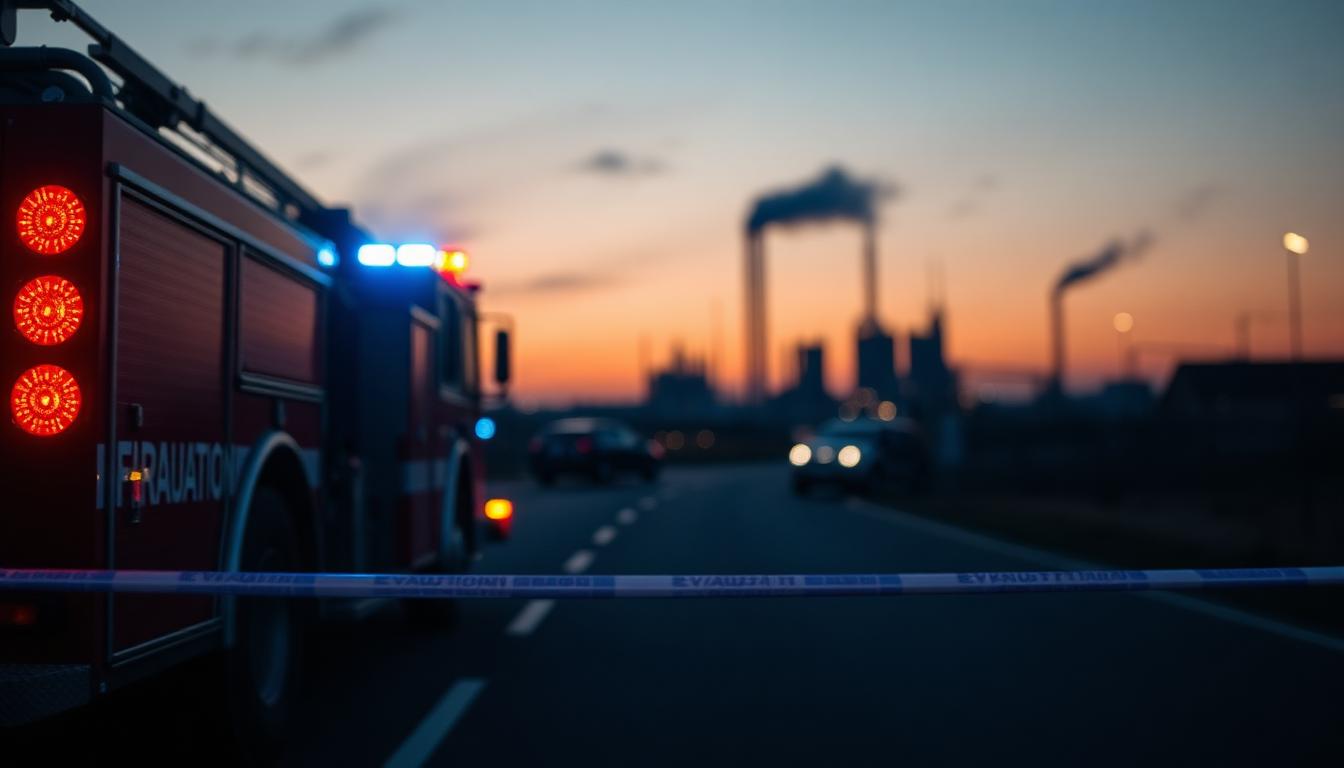
The Orange County Fire Authority and Garden Grove Police have ordered a mass evacuation across a large grid of streets, closed more than a dozen schools, and warned that the tank now sits between two possible outcomes: a structural rupture that spills roughly 6,000 to 7,000 gallons of chemical into the parking lot, or a thermal runaway that detonates the cylinder.
There is no active toxic plume drifting across the county at this time, but the blast radius is large enough that authorities are not taking chances. If you are inside the perimeter you should leave now.
What Actually Failed at the GKN Aerospace Site
The first emergency calls went out on Thursday afternoon after site operators noticed an irregular vapour release from one of the bulk chemical storage cylinders. Crews initially treated the call as a localised containment job. By Friday morning it had escalated sharply.
Engineering teams confirmed that the primary control valve on the 34,000 gallon tank had suffered structural damage. That valve is what lets responders connect transfer lines, vent pressure in a controlled way, or pump neutralising agents into the vessel. With it broken, every standard playbook for stabilising a compromised tank is off the table.
That is the reason the perimeter keeps widening. Crews are no longer trying to fix the tank in place. They are trying to keep people away from it while they work out a slower, riskier approach from the outside.
The Two Scenarios Officials Are Planning Around
Orange County Fire Authority Division Chief Craig Covey laid out the situation in unusually blunt terms during a televised briefing. There are two realistic outcomes from here, and the evacuation orders exist because both of them are dangerous.
- Scenario A, mechanical failure. The compromised seals give way under pressure and the tank ruptures. Roughly 6,000 to 7,000 gallons of methyl methacrylate spill across the parking lot. The vapour cloud at that point becomes the immediate threat to anyone nearby.
- Scenario B, thermal runaway. Internal temperature climbs past the safety threshold and the chemical inside boils and ignites. That outcome is a high energy detonation that would affect surrounding fuel storage and other chemical infrastructure on the site.
Neither scenario is acceptable with people inside the surrounding blocks, which is why the perimeter went up first and the engineering work is happening second.
The Evacuation Perimeter
The active evacuation zone covers a large grid pattern across northern Garden Grove. The current boundaries run from Ball Road and Orangewood Avenue in the north, down to Trask Avenue in the south, with Springdale Avenue and Valley View Street marking the western edge and Dale Street the eastern edge.
If you live inside that box, the instruction from emergency services is to pack essential belongings, take any pets, and leave the area immediately. A reception shelter has been opened at a nearby community park with temporary housing, food, and medical support for displaced families. Roadblocks are in place at the perimeter, so do not try to drive back in for non essential items.
School Closures and Student Relocations
The Garden Grove Unified School District closed and evacuated more than a dozen campuses sitting inside or adjacent to the hazard zone. Magnolia School District students from Esther L. Walter School were bussed to Dr. Jonas E. Salk School so parents could collect them from a safe location.
Across peripheral campuses in Anaheim and Westminster, outdoor athletics, recess, and after school programs were cancelled because wind direction can shift quickly and officials wanted to keep kids indoors. Several closed campuses moved to short term remote learning while structural monitoring continues at the GKN site.
What Methyl Methacrylate Actually Is
Methyl methacrylate is a clear, volatile liquid used heavily in aerospace and industrial manufacturing to produce high strength acrylic plastics, plexiglass windows, and specialised structural resins. It is the building block for the kind of transparent panels used in cockpit canopies, aircraft windows, and high performance enclosures.
In a controlled industrial environment it is routine. In an uncontained release it is a different problem entirely. Short term vapour exposure can cause acute respiratory irritation, chemical burns to the eyes and skin, severe dizziness, and nausea. If the tank goes into thermal runaway, combustion of the chemical releases toxic carbon oxides. That combination is what triggered state level engagement and why Governor Gavin Newsom moved to streamline state hazmat resources directly to the scene.
What Residents Should Do Right Now
If you are inside the active perimeter, leave. Do not wait for additional confirmation from emergency services beyond the orders already issued. Take pets with you. Take medication, identification, and a phone charger. Anything else can be replaced.
If you are outside the perimeter but downwind of the facility, keep windows and doors closed and turn off any HVAC system that pulls in outside air. Monitor local emergency alerts rather than social media for status updates, because the perimeter can expand again if conditions change.
If a family member attends one of the relocated schools, follow the pickup instructions from the district rather than driving to the original campus. Trying to navigate around the perimeter without coordination just adds traffic to the routes emergency vehicles need.
The Bottom Line
A 34,000 gallon methyl methacrylate tank at GKN Aerospace in Garden Grove is mechanically compromised, its primary control valve is broken, and emergency teams cannot safely drain it in place. The two possible outcomes are a spill of around 6,000 to 7,000 gallons or a thermal runaway detonation, and the wide evacuation perimeter exists because both are credible. Follow the official orders, leave the zone if you are inside it, and rely on emergency alerts for the next update.