Quick Answer
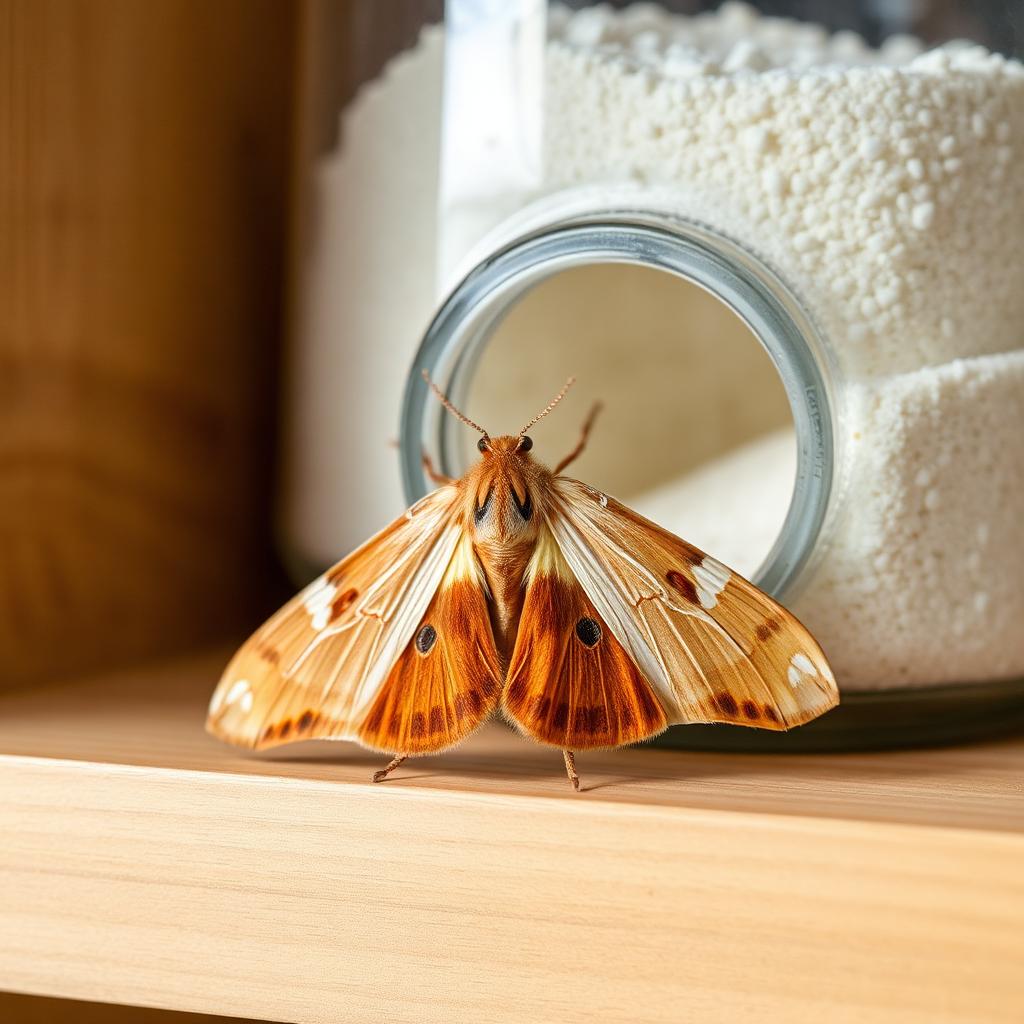
A pantry moth (Plodia interpunctella, also called the Indianmeal moth) is a small grain feeding moth roughly 8 to 10 mm long with two tone wings: light tan near the head and coppery brown across the back.
They almost always enter your home inside a sealed grocery package (flour, cereal, pet food, birdseed) rather than flying in from outside. The adults do not eat, but the larvae chew through cardboard and thin plastic and spin telltale silken webs in your dry goods.
Eradication takes four steps: discard infested food, freeze or heat treat anything questionable, deep clean the pantry, and store everything in airtight glass or rigid plastic going forward.
How to identify a pantry moth
Adult pantry moths are small, around 8 to 10 mm long with a wingspan of 16 to 20 mm. The defining feature is the wing pattern: the front third near the head is a pale gray tan, the back two thirds are a distinctive coppery, reddish brown. At rest they fold their wings flat along the body, making them look like a tiny streamlined sliver.
If you see a small moth fluttering near your kitchen ceiling, your fruit bowl, or your pantry door, that is almost certainly a pantry moth. They are drawn to light and warmth and tend to circle overhead lamps.
Do not confuse them with clothes moths. Clothes moths are smaller, solid golden buff, avoid light, and live in dark closets eating natural fibers like wool. Pantry moths only care about food.
Where they actually come from
The number one myth about pantry moths is that they signal a dirty kitchen. They do not. You almost certainly brought them home from the grocery store.
Eggs and microscopic larvae routinely contaminate flour mills, grain silos, pet food plants, and bulk bin facilities. They hitch a ride inside sealed cardboard or plastic packaging and hatch days or weeks later in the warmth of your pantry. From there, females mate within hours and each one can lay 100 to 400 eggs on nearby food sources.
This is also why infestations seem to appear from nowhere: the eggs were already in your house before you ever saw a moth.
The real damage comes from the larvae
Adult pantry moths do not eat. They have no functional mouthparts and live for 1 to 2 weeks with the sole purpose of mating. All the destruction comes from the larvae.
- Appearance: small whitish, yellowish, or pinkish caterpillars with dark brown heads. They reach about half an inch (12 mm) at full size.
- Behavior: strong chewing jaws that cut through thin plastic bags, wax paper, paper boxes, and cardboard.
- The giveaway sign: they spin sticky silken webs as they feed. If you lift a bag of flour or a box of crackers and see clumping grains with thread like webbing, you have an active infestation.
What they eat
Pantry moth larvae are generalists. Their favorite foods include:
- Flour, cornmeal, oats, and whole grains.
- Cereal, crackers, granola bars.
- Dried fruit, raisins, nuts, and seeds.
- White and brown rice.
- Dry pet food, birdseed, and livestock feed.
- Spices, cocoa powder, chocolate, and powdered drink mixes.
The 4 step eradication protocol
Missing a single fertile female or a hidden egg cluster restarts the entire cycle within weeks. Be thorough.
Step 1: Empty and triage
Take everything out of the pantry. Inspect each item. Anything with visible larvae, moths, or webbing goes into a sealed bag and straight into an outdoor trash bin, not your kitchen can.
Pay special attention to items in original cardboard, paper, or thin plastic. The larvae chew through those routinely.
Step 2: Temperature treat the survivors
For sealed items that look uncontaminated but were stored near infested goods, microscopic eggs may still be present. Kill them with extreme temperatures:
- Freeze: seal in zip top bags and freeze at 0F (minus 18C) for at least 4 to 7 days.
- Heat: spread grains on a sheet pan and bake at 140F (60C) for 30 minutes.
Step 3: Deep clean the pantry
Vacuum every shelf, focusing on cracks, the holes where shelf pegs sit, baseboard joints, and the corners where larvae crawl off to pupate. Empty the vacuum bag or canister into an outside bin immediately afterward.
Wipe everything down with a 50/50 mix of white vinegar and warm water plus a few drops of dish soap or peppermint oil. Vinegar kills eggs on contact and disrupts the pheromone trails adult moths use to find mates.
Step 4: Switch to airtight storage forever
This is the step that keeps moths out for good. Move all dry goods into heavy duty airtight containers: glass jars with rubber gaskets, OXO POP style canisters, or metal tins with tight lids. Larvae cannot chew through glass or rigid thick plastic, and airtight seals stop adults from depositing eggs.
Pheromone traps: useful but not a solution
Pheromone traps use synthetic female sex hormones to lure and stick male moths. They are excellent for two things: confirming whether you still have an active infestation, and reducing the breeding population.
What they do not do is kill larvae or eggs already buried inside your food. They are a monitoring tool, not a standalone fix. Use them alongside the four step protocol, not instead of it.
Frequently asked questions
Are pantry moths dangerous to eat?
No. Accidentally consuming pantry moth larvae, eggs, or webbing is gross but harmless. They do not bite, sting, transmit disease, or carry parasites. The contamination is aesthetic, not medical.
How long does it take to eradicate an infestation?
If you are thorough, the active flying adults disappear within 2 to 3 weeks. Hidden eggs can hatch for up to 6 weeks afterward, so keep pheromone traps in place for at least 8 weeks to confirm the cycle is broken.
Will they spread to other rooms?
Yes. Larvae crawl significant distances to find a quiet spot to pupate. Check the ceiling corners of your kitchen, the tops of cabinets, and behind picture frames. They especially love the inside lip of cabinet door hinges.
Do bay leaves keep pantry moths away?
There is folk evidence but limited scientific data. Bay leaves, cloves, and peppermint sachets may have mild deterrent effects but they will not stop an active infestation. Airtight containers are far more effective.
The takeaway
Pantry moths are not a sign of a dirty home. They are a sign that something you bought brought them in. Identify the source, throw out the infested food, freeze the survivors, scrub the shelves, and switch to airtight storage. Do those four steps in one weekend and you will not see another pantry moth for years.