Quick Answer
Lear Corporation (NYSE: LEA) is a global Tier 1 automotive supplier built around two segments, Seating and E-Systems, that together generated $5.8 billion in quarterly revenue, $172 million in net income, and a record adjusted EPS of $3.87. The 24 percent year over year jump in adjusted EPS is the highest baseline the company has posted since 2021.
Lear trades at a price to earnings ratio of roughly 14.35 with $2.9 billion in total liquidity, a stable $0.77 quarterly dividend, and $75 million of share repurchases in the latest quarter. For long term investors, the combination of disciplined capital returns and exposure to both combustion and electric vehicle platforms is the core thesis.
Why Lear Matters in the Auto Supply Chain
The global auto industry is in the middle of the most expensive technology transition since the move from carburetors to fuel injection. Automakers are juggling battery electric vehicles, plug-in hybrids, and refreshed combustion platforms at the same time, and the suppliers who survive are the ones who can flex production across all three architectures.
Lear sits at the centre of that flex. Almost every major automaker on the planet buys complete seat assemblies or electrical distribution systems from Lear, which means the company benefits regardless of which drivetrain wins a given regional market.
Top and Bottom Line Performance
The latest quarterly print is the clearest evidence that Lear's operational playbook is working. Revenue grew 5 percent year over year to $5.8 billion, up from $5.6 billion in the prior year comparable. That growth came despite ongoing volume softness in Europe and a slower than expected ramp at two North American EV programs.
- Revenue. $5.8 billion, up 5 percent year over year.
- Net income. $172 million reported, $200 million adjusted.
- Core operating earnings. $297 million, up 10 percent.
- Adjusted EPS. $3.87, the highest level since 2021.
- Free cash flow. Positive and on track for the company's full year guidance.
The 10 percent jump in core operating earnings is the number I watch most closely. It tells me Lear is converting incremental revenue into incremental profit faster than inflation, which is the cleanest possible signal of healthy plant level execution.
The Seating Segment, Lear's Cash Engine
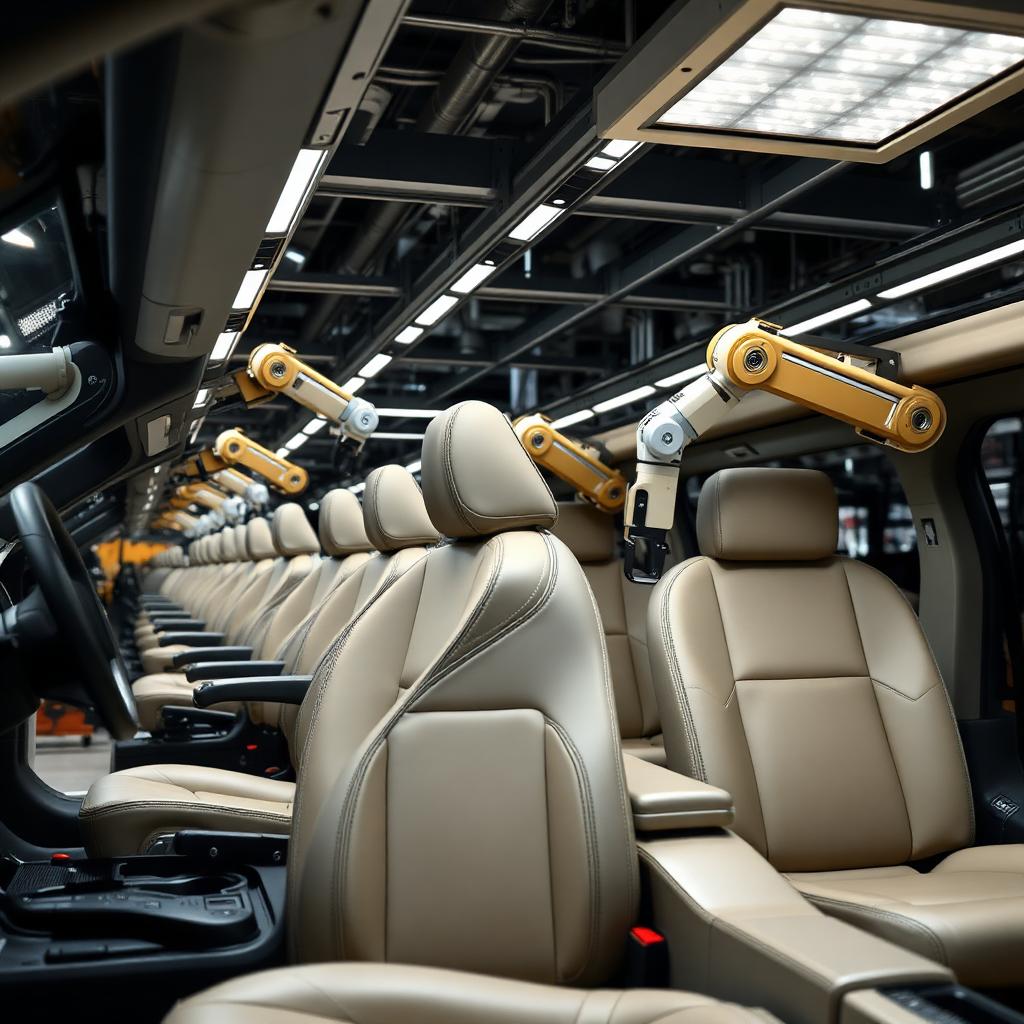
Seating remains the larger of the two divisions and the more profitable on an absolute basis. Lear designs and manufactures complete seat systems, including frames, foams, trim, and increasingly the electronic actuators that power memory and massage functions.
Two subsidiaries do a lot of the heavy lifting. Eagle Ottawa Leather supplies the premium hide that ends up in luxury cabins from Detroit to Stuttgart. Guilford Performance Textiles supplies the technical fabrics that show up in EV programs where weight reduction matters more than traditional leather feel.
The platform technology layer is where the real moat sits. Lear's Thagora material cutting system reduces leather and fabric waste, and the INTU intelligent seating platform integrates sensors, heating, ventilation, and adjustment electronics into a single modular assembly. Once an automaker designs a vehicle around an INTU seat, switching to a competitor mid program is almost impossible without re-engineering the entire cabin.
The E-Systems Segment, Lear's Future
E-Systems is the smaller segment by revenue but the higher growth one. It covers vehicle electrical distribution, wiring harnesses, battery disconnect units, and onboard charging modules. Every additional kilowatt hour of battery capacity in the global fleet creates more E-Systems content per vehicle, and the segment is structurally levered to the EV transition.
The growth math is straightforward. A combustion vehicle carries roughly $150 to $250 of Lear E-Systems content. A full battery electric vehicle can carry $600 to $900 of the same content, because the high voltage harness, the battery junction box, and the inverter wiring are all incremental. Even a slow EV adoption curve still translates into a meaningful per vehicle content uplift for Lear.
Capital Returns and Shareholder Discipline
The capital allocation story is the part of Lear that I think is underappreciated by retail investors.
- Dividend. A stable $0.77 quarterly payout, currently yielding roughly 2.15 percent.
- Buybacks. $75 million of share repurchases in the quarter, on top of $43 million in dividend payments.
- Liquidity. $2.9 billion of total liquidity, including cash and undrawn credit facilities.
- Net leverage. Below the company's stated target ceiling, leaving room for both buybacks and bolt-on acquisitions.
The pace of buybacks matters because it is mechanically lifting EPS. Every dollar Lear returns through repurchases shrinks the share count, which means the same dollar of net income produces a higher EPS the next quarter. That is part of why the adjusted EPS surge to $3.87 looks so dramatic.
Workplace and Brand Recognition
Lear was named a LinkedIn Top Company for the first time, and it is the only Tier 1 automotive supplier on the list. Brand recognition like this is not directly visible in the income statement, but it shows up in two places: engineering talent retention and OEM purchasing relationships. Both are intangible moats that compound over time.
Valuation, Risk, and the Investor Takeaway
At a price to earnings ratio of roughly 14.35, Lear trades below the broader S&P 500 multiple and at a discount to several of its closest peers. The discount reflects two real risks. First, the auto cycle is mature, and a North American recession would pull volumes down across every Lear customer. Second, EV adoption is uneven, which makes E-Systems revenue growth lumpier quarter to quarter than headline forecasts suggest.
The counter argument is that the dividend yield, the buyback velocity, and the structural EV content uplift together create a floor. Even in a soft year, Lear is generating enough free cash flow to keep the capital return programme intact, and the order book for both segments stretches multiple years into the future.
For a long term investor who wants exposure to the auto supply chain without picking which drivetrain wins, Lear is one of the cleanest single ticker bets available. The current setup, record EPS, healthy liquidity, and continued capital returns, looks structurally durable.
The Takeaway
Lear Corporation's latest quarter shows a Tier 1 supplier executing well across both its legacy Seating business and its growth oriented E-Systems business. Record adjusted EPS of $3.87, $2.9 billion of liquidity, and an active buyback programme combine to make LEA one of the more defensible names in the auto components space. The valuation is reasonable, the dividend is stable, and the structural exposure to higher electrical content per vehicle is intact. For investors who want auto industry leverage without picking winners between Ford, GM, Toyota, and the Chinese EV upstarts, Lear is a credible core holding.