Quick Answer
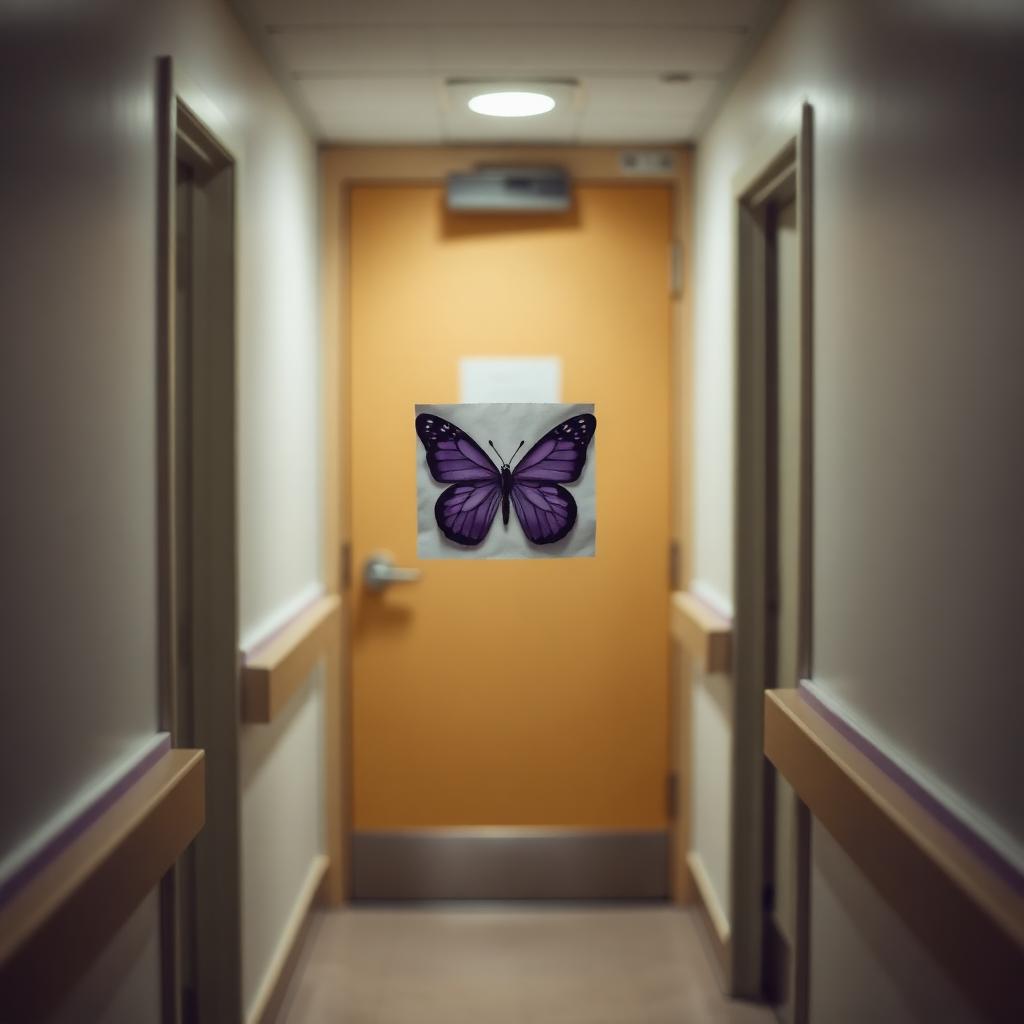
A butterfly posted on a hospital room door is a quiet clinical signal, not decoration. Depending on the country and the ward, it usually means one of three things: the patient inside is in end of life care, the patient has dementia or acute confusion, or a baby in the neonatal unit lost a twin or triplet during pregnancy or birth.
The point of the symbol is the same in every version. It tells every member of staff entering the room to slow down, lower their voice, and adjust the care they give without forcing the family to repeat a difficult conversation.
If you see one on a loved one's door and you are not sure which meaning applies, ask the charge nurse. They will explain the local protocol in plain language.
1. End of life care: the Butterfly Project

In palliative care wards, hospices, and many intensive care units, a purple or blue butterfly outside a room signals that the patient has transitioned to comfort care. The family and clinical team have agreed to stop aggressive treatment and focus entirely on dignity, symptom relief, and time together.
The symbol is sometimes called the Butterfly Project or, in the UK, the Swan or Butterfly icon, depending on the trust. Once it goes up, staff are trained to knock more gently, keep voices low, hold non urgent procedures, and give the family as much uninterrupted time as possible. Cleaning, catering, and lab teams use the same cue to avoid bursting in mid conversation.
For visitors, the symbol is also a soft heads up. You may walk in to a quieter atmosphere, dim lights, music playing, or extended family already present.
2. Dementia and confusion: the Butterfly Scheme
On general medical and geriatric wards, the same butterfly often means something completely different. The Butterfly Scheme, founded by Barbara Hodkinson in the UK in 2008, places a small butterfly icon by the bed or on the chart of a patient living with dementia or experiencing acute confusion.
The icon is intentionally discreet. It lets every nurse, doctor, porter, and cleaner know to follow the scheme's five point care response without putting a label on the door that visitors and other patients can read.
The care response is practical:
- Keep cups, glasses, and personal items in the same easy reach spots so the patient is not constantly searching.
- Explain what you are about to do, in short sentences, before you do it.
- Re orient gently. Mention where the patient is, what time it is, and why you are there.
- Take history from the chart or family rather than testing a confused patient's memory.
- Allow extra time for meals, medication, and getting out of bed.
Hospitals report fewer falls, less distress, and shorter stays when wards implement the scheme well.
3. Neonatal units: the purple butterfly for a lost twin
In neonatal intensive care units, a purple butterfly on or near an incubator carries a third, very specific meaning. It signals that the baby inside was part of a multiple pregnancy where one or more siblings did not survive.
The symbol was created in 2016 by Millie Smith, a UK mother whose daughter Skye died shortly after birth while her twin sister Callie survived. Smith found that nurses, cleaners, and visitors regularly asked cheerful questions about her "twins," not knowing what had happened, and each question reopened the wound.
The Skye High Foundation produces and distributes the purple butterfly stickers and cot cards. They are now used in NICUs across the UK, the US, Canada, Australia, and much of Europe. The cue lets staff speak with extra care, avoid casual phrases like "your other one," and acknowledge the missing sibling if the parents want to talk about them.
How to tell which meaning applies
The three uses look similar but are usually easy to tell apart by the ward you are visiting:
- Hospice, palliative care, or ICU. End of life signal.
- General, geriatric, or stroke ward. Almost always the Butterfly Scheme for dementia or confusion.
- Neonatal intensive care unit. A bereavement signal for a lost twin or triplet.
If the colour or shape looks slightly different from what you expected, your hospital may use a local variant. Some UK trusts use a swan or a forget me not flower instead of a butterfly for end of life. Some US systems use a teal ribbon for dementia. The point of all of them is the same: a one glance signal that this room needs a softer approach.
What you should do as a visitor
If you see a butterfly on the door of a family member's room:
- Knock softly before going in.
- Keep your voice low and your phone on silent.
- Ask the charge nurse what the symbol means in this ward if you are not sure.
- If it is the end of life signal, you do not need to fill the silence with cheerful conversation. Sitting quietly and holding a hand is enough.
- If it is the dementia signal, slow down, introduce yourself by name each visit, and let the patient set the pace of the conversation.
- If it is the neonatal purple butterfly, follow the parents' lead. Ask about the surviving baby and acknowledge the sibling who is missing if and when they bring it up.
Why a butterfly?
Butterflies appear across cultures as symbols of fragility, transformation, and the soul. They are universally recognisable, gentle, and unmistakably non clinical, which is exactly what these moments need. Unlike a written sign or a coloured wristband, the butterfly carries no jargon, no acronym, and no implication that the patient is a problem to be managed. It simply asks everyone who walks in to be a little more human for a few minutes.
Frequently asked questions
Does a butterfly on a hospital door always mean someone is dying?
No. In palliative and ICU settings it usually signals end of life care, but on general wards it most often signals dementia or confusion under the Butterfly Scheme. In neonatal units it signals the loss of a twin.
Who started the Butterfly Scheme?
Barbara Hodkinson founded the Butterfly Scheme in the UK in 2008 after her own mother's hospital admission as a dementia patient went badly.
Who created the purple butterfly for neonatal units?
Millie Smith, through the Skye High Foundation, after the death of her daughter Skye in 2016.
Should I take a butterfly down before going in?
No. Leave it in place. It is there to guide every visitor and every staff member, not just the next one through the door.