Quick Answer
The toughest shade performers are hostas, ferns, astilbe, bleeding heart, heuchera, and hellebores. Stack them by height, leaf shape, and bloom time, and a deep shade bed becomes more interesting than most sunny borders.
Match the plant to the shade level. Dry shade under maple roots is different from cool moist shade beside a north wall, and the wrong plant in the wrong spot will sulk no matter what you feed it.
First Read Your Shade
Shade is not one thing. Stand in your dark corner for a day and count the hours and quality of light.
- Part shade: 3 to 6 hours of direct sun, ideally morning.
- Dappled shade: Filtered light through high tree branches all day.
- Full shade: Less than 3 hours of direct sun, mostly bright indirect.
- Dry shade: Under thirsty surface rooted trees like maple or beech.
The Reliable Six
Hostas
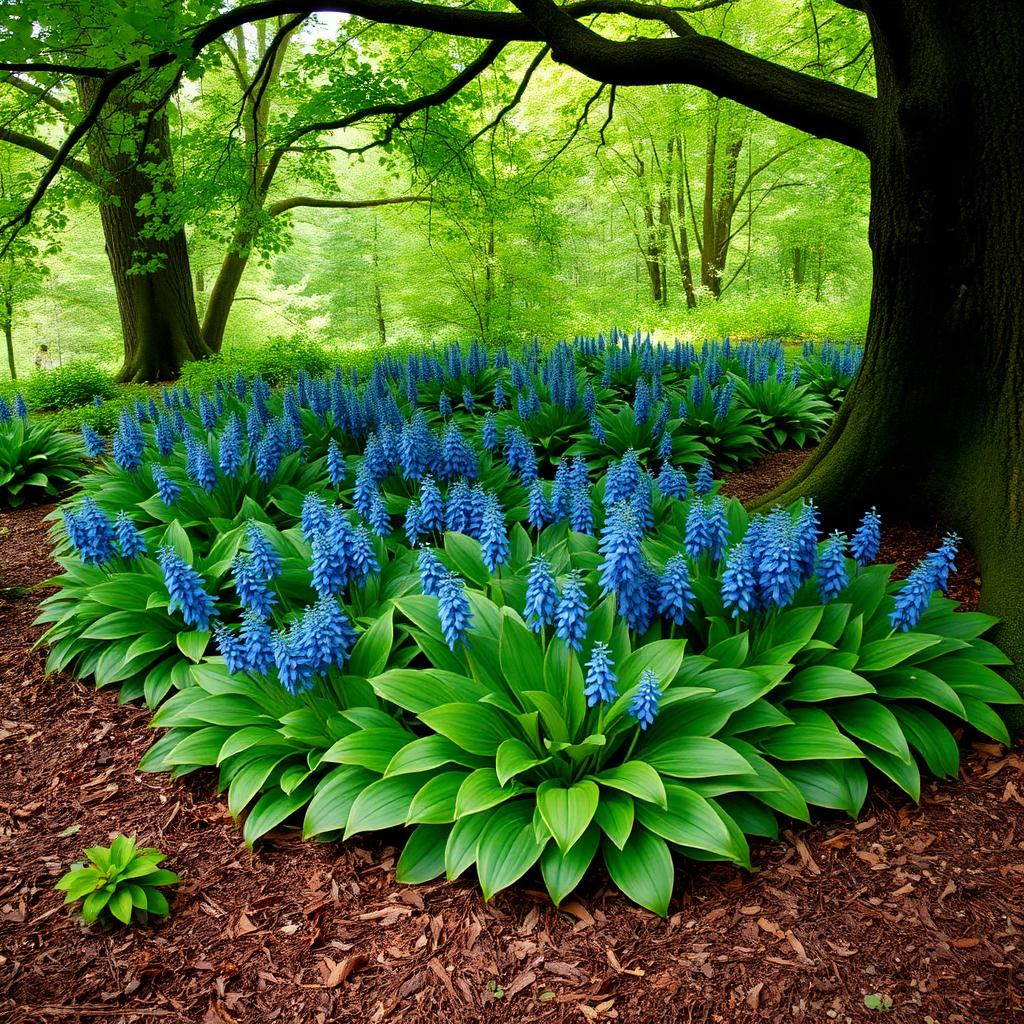
The backbone of any shade garden. Leaves range from teacup miniatures to four foot wide giants in blue, gold, chartreuse, and every variegation. They want consistent moisture and protection from slugs (a ring of crushed eggshell helps). Blue varieties hold colour best in deep shade.
Astilbe
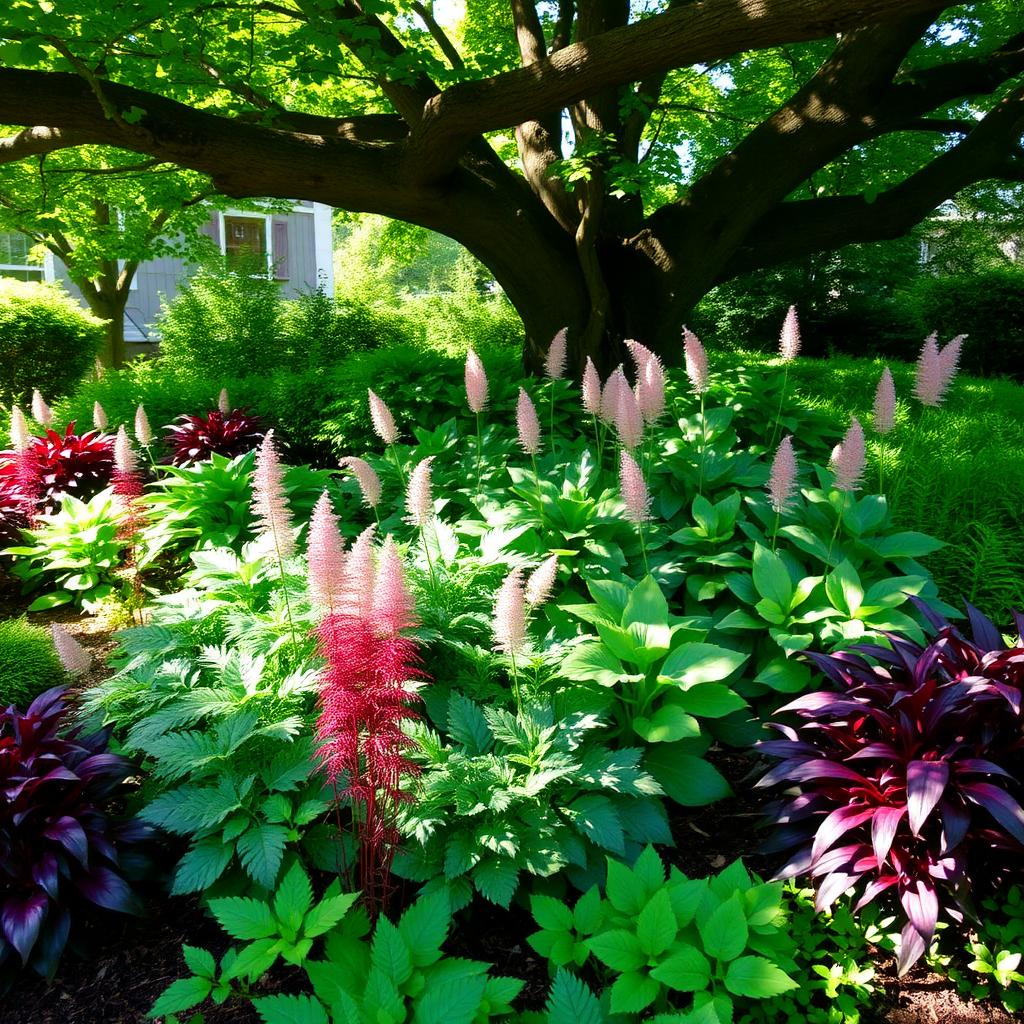
Fluffy plumes of pink, white, red, or lavender rise above ferny foliage in early summer. Astilbe is the one plant on this list that genuinely needs steady moisture. Drought turns the leaves crispy brown in a single afternoon.
Bleeding Heart
Lamprocapnos spectabilis sends out arching stems hung with pink and white heart shaped blooms in mid spring. It goes dormant in summer heat, so always plant it behind hostas or ferns that fill the gap when it disappears.
Heuchera (Coral Bells)
Grown for the foliage, not the flowers. Modern cultivars come in caramel, plum, lime, and silver. Heuchera tolerates part shade better than full shade and likes well drained soil. Refresh the mulch around the crown each spring to keep roots cool.
Ferns
From the towering ostrich fern to the silver and burgundy Japanese painted fern, ferns add texture nothing else can match. Most prefer cool moist shade. Christmas fern and autumn fern are evergreen in mild climates, giving the bed structure all winter.
Hellebores
Hellebores bloom in late winter when nothing else dares. The nodding cup shaped flowers come in white, pink, plum, and slate, and the leathery evergreen leaves last all year. They are deer proof, rabbit proof, and drought tolerant once established.
Plants for Dry Shade
The trickiest spot. Aim for tough survivors: epimedium, lamium, brunnera, lily of the valley, and the native wild ginger. Mulch heavily with shredded leaves to slow moisture loss, and water deeply once a week the first year while roots get below the tree feeder zone.
Building a Layered Bed
- Back layer (2 to 4 feet): Goatsbeard, tall astilbe, or large hostas like Empress Wu.
- Middle layer (1 to 2 feet): Standard hostas, bleeding heart, painted fern.
- Front layer (under 12 inches): Heuchera, lamium, sweet woodruff, miniature hostas.
- Spring jewels: Tuck in snowdrops, scilla, and woodland tulips that bloom before tree canopies leaf out.
Soil and Mulch
Most shade plants come from deciduous woodland floors and crave the same conditions: rich crumbly soil with constant organic matter on top. Each autumn, rake fallen leaves over the bed or shred and reapply as mulch in spring. That single habit feeds the bed for free and conserves moisture.
Lighting the Dark
To brighten a deep shade bed visually, use leaf colour instead of flowers. Variegated white hostas, silvery painted ferns, chartreuse heuchera, and pale Japanese forest grass act like spotlights, drawing the eye and making the space feel alive even when nothing is in bloom.
The Takeaway
Shade is not a problem, it is an invitation. Read the light, mulch with leaves, and layer hostas, astilbe, ferns, heuchera, bleeding heart, and hellebores by height and texture. Within two seasons that gloomy corner you used to ignore will be the calmest, coolest, most interesting part of the garden.