Quick Answer
The best aquarium fish for beginners are species that forgive small mistakes in water chemistry, stay small, eat ordinary flake food and behave peacefully toward tankmates. The strongest five are neon tetras, harlequin rasboras, cherry barbs, corydoras catfish and platies.
Almost every beginner failure comes from the same two errors: starting with too small a tank, and stocking flashy fish that need a perfectly cycled setup. If you start with a 20 gallon aquarium, run the filter for a full month before adding fish, and pick from the list below, the odds of a thriving tank go from coin-flip to near certainty.
Why fish choice is more important than gear
A common piece of bad advice in fish stores is that any aquarium can hold any small fish. In reality, freshwater species evolved in very specific water conditions. Discus need soft, acidic, warm water. African cichlids need hard, alkaline water. Bettas need still, warm water with no current. Mixing the wrong species, or putting a delicate fish into the wrong water, is the leading cause of beginner tank crashes.
The species below all share three traits. They tolerate a wide range of pH (roughly 6.5 to 7.8). They handle temperatures between 22 and 26 degrees Celsius without complaint. And they accept standard tropical flake food, which means no special diet planning in week one.
1. Neon tetras (Paracheirodon innesi)
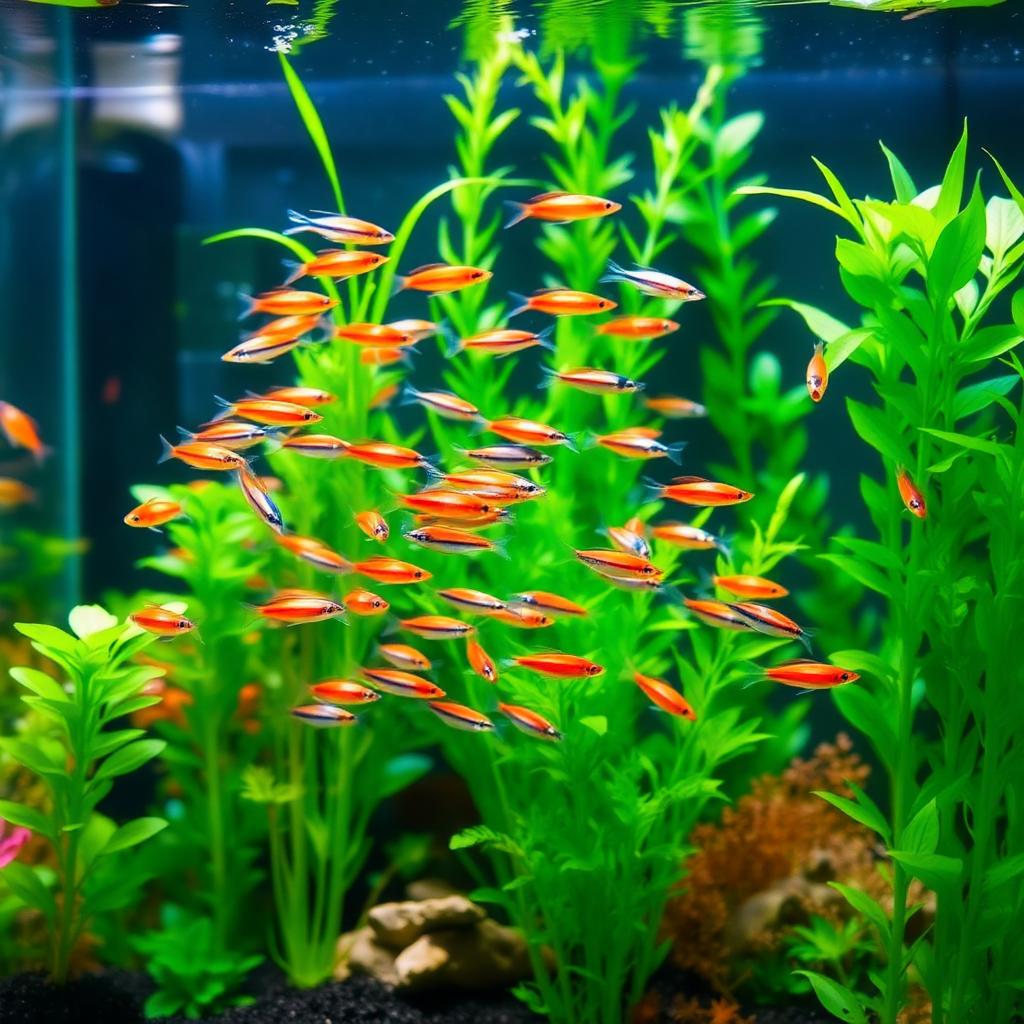
Neon tetras are the small, glowing, blue and red schoolers that almost everyone pictures when they hear the word aquarium. They stay around 3 centimetres long, live 5 to 8 years in good conditions, and behave entirely peacefully toward anything they cannot fit in their mouths.
The critical rule with neons is that they are obligate schoolers. A single neon in a tank is a stressed, faded, short-lived fish. Buy a minimum group of eight, ideally ten or twelve. In a planted 20 gallon tank they form a tight, shimmering cloud that weaves through the plants and looks far more impressive than the price tag suggests.
2. Harlequin rasboras (Trigonostigma heteromorpha)
Harlequins are slightly larger than neons (around 4 centimetres), with a copper body and a clean black wedge mark on the back half. They are arguably even more forgiving than neons, since they handle small water-quality swings without the sudden mortality neons sometimes show in their first week.
Like neons they school tightly. They also pair very well with bottom-dwellers, leaving the lower third of the tank entirely to the catfish and occupying the open middle water column themselves.
3. Corydoras catfish (Corydoras spp.)
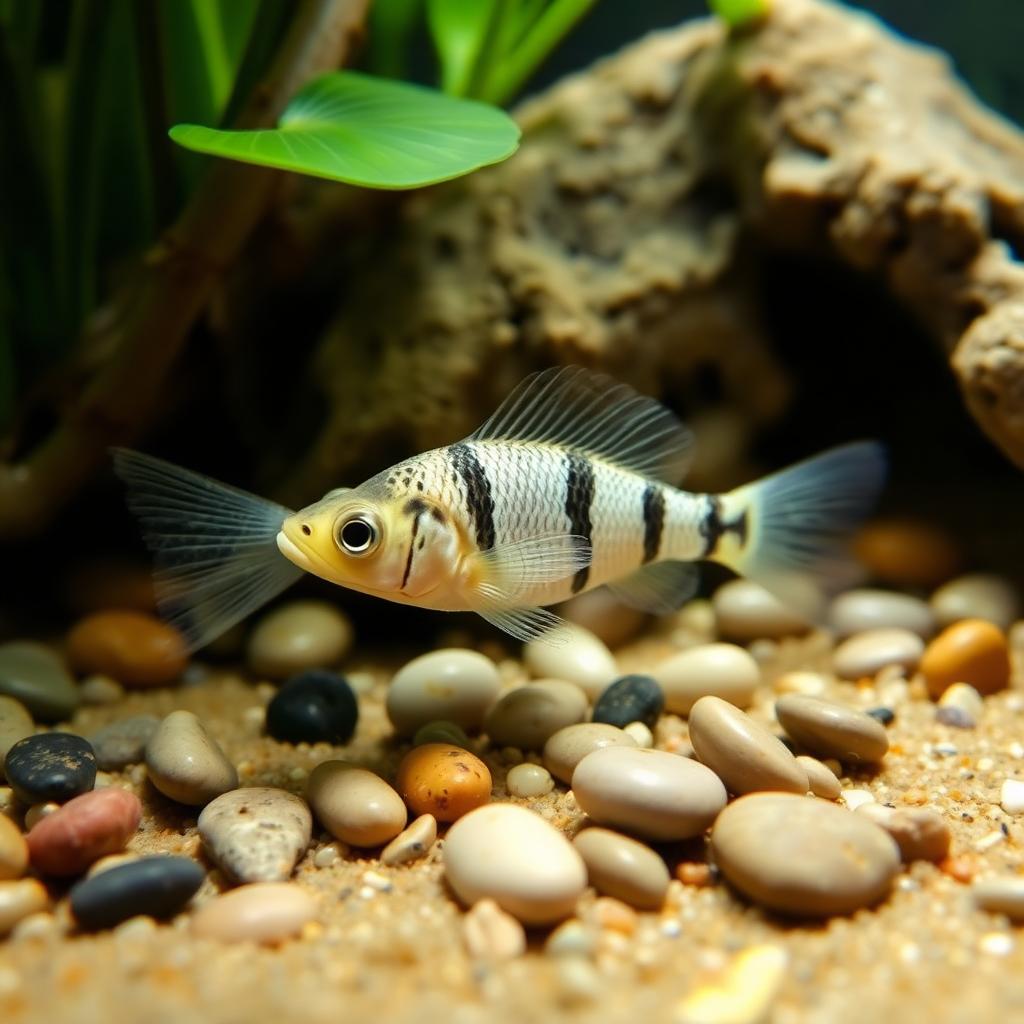
Corydoras (universally called corys) are the small, armoured bottom-dwellers that turn a beginner aquarium into a real ecosystem. They patrol the floor, hoover up uneaten food before it rots, and do it with personalities so active and curious that they are arguably the most charming fish on this entire list.
Two practical points. First, corys must be kept in groups of at least six. A lone cory will sulk in a corner and refuse to feed. Second, they need either sand or smooth, rounded gravel. Sharp gravel cuts the delicate barbels they use to sense food, and a barbel injury rapidly turns into a fatal infection. Bronze, peppered and panda corys are the easiest three varieties to find and the most forgiving for new keepers.
4. Cherry barbs (Puntius titteya)
Most barb species earned a deserved reputation as fin nippers. Cherry barbs are the polite exception. Males develop a deep cherry-red colour during display, females stay a softer pinkish tan, and the whole group behaves peacefully with tetras, rasboras and corys.
They tolerate a wide temperature range (22 to 27 degrees Celsius), eat anything offered, and reach about 5 centimetres. A group of six to eight cherry barbs gives a planted tank a flash of warm red that contrasts beautifully with the cooler blues and silvers of tetras and rasboras.
5. Platies (Xiphophorus maculatus)
Platies are the small, colourful livebearers sold in red, orange, yellow, blue and tuxedo colour morphs. They are essentially indestructible by beginner standards. They breed readily (in fact, often too readily), eat anything, and tolerate harder, more alkaline water than the tetras and rasboras above.
One warning. Platies are livebearers, which means a mixed-sex group will produce fry constantly. If a population explosion would bother you, buy an all-male group of four or five. Males still display their full colour and lack the bulging belly that signals a pregnant female.
Fish to avoid as a first purchase
Several species sold as beginner fish are anything but. Common goldfish grow to 30 centimetres or more, foul water rapidly and need a 75 gallon tank to be healthy. Bettas are hardy but aggressive toward almost any colourful tankmate and are best kept alone in a 10 gallon planted setup. Tiger barbs are notorious fin nippers. Common plecos grow to 50 centimetres and demolish small aquariums. And dwarf gouramis are sensitive to a viral disease (dwarf gourami iridovirus) that gives them a poor survival rate in stores. Skip all of these for your first tank.
The simple first-month plan
- Week 1. Set up the 20 gallon tank with substrate, plants, heater set to 24 degrees Celsius and a hang-on-back or sponge filter. Add a pinch of fish food daily to feed the bacteria starting the nitrogen cycle. Test water for ammonia, nitrite and nitrate every few days.
- Week 4. Once nitrite reads zero and nitrate sits between 10 and 20 ppm, the tank is cycled. Add eight neon tetras or harlequin rasboras as your first stock.
- Week 6. Add six corydoras and watch them work the substrate clean.
- Week 8. Add a small group of cherry barbs or male platies to fill the upper water column.
The takeaway
The best beginner fish are not the rarest or most expensive ones. They are the forgiving schoolers that have kept generations of new hobbyists in the hobby long enough to graduate to harder species. Start with neons, harlequins, corys, cherry barbs or platies, give your tank a real month to cycle before adding livestock, and you will skip the painful crash that ends most first attempts.