Quick Answer
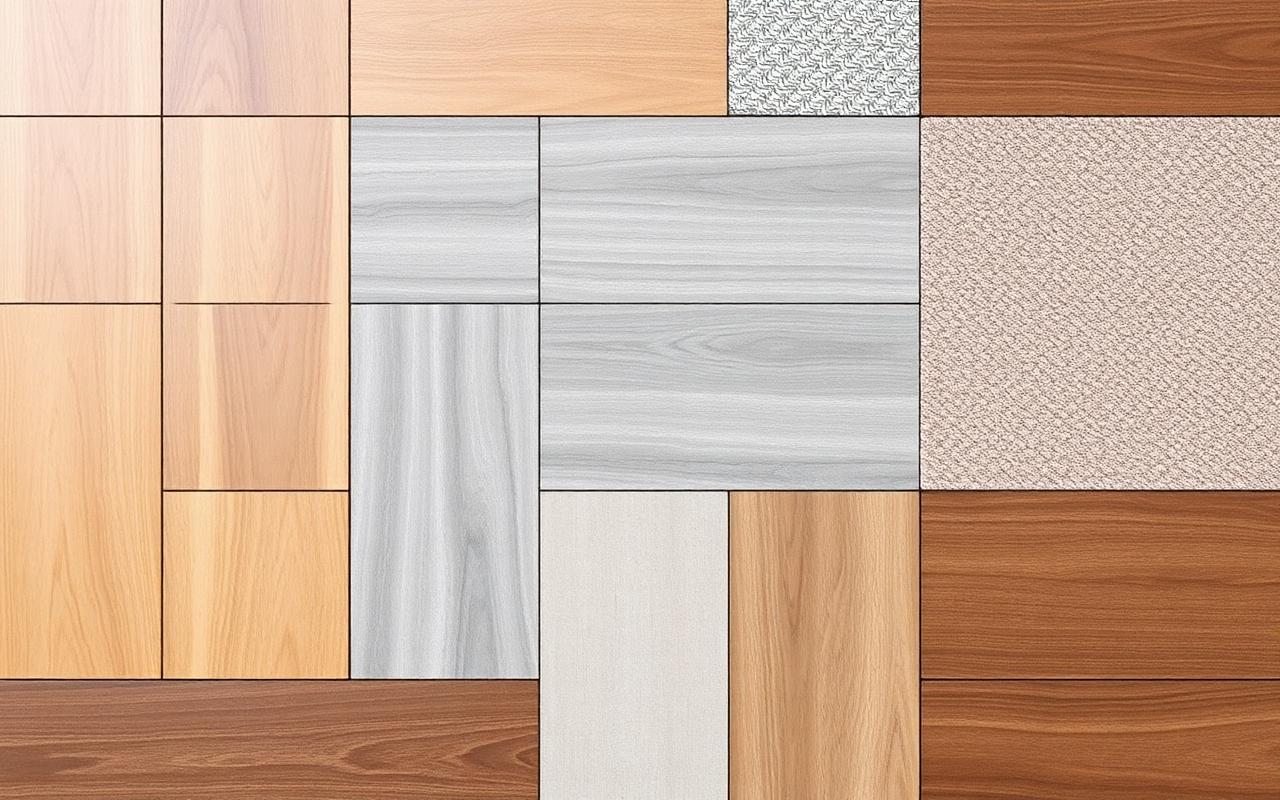
The major flooring types sold in 2026 are: solid hardwood, engineered hardwood, laminate, luxury vinyl plank (LVP/SPC/WPC), sheet vinyl, ceramic and porcelain tile, natural stone, carpet, bamboo, cork, linoleum, and polished or epoxy concrete. Each category has 3 to 10 sub-types within it, but those 12 categories cover virtually every residential and commercial install you will encounter.
The 12 Major Categories
- Solid hardwood: 3/4 inch thick milled boards in oak, maple, hickory, walnut, etc. Refinishable 6 to 10 times.
- Engineered hardwood: real wood veneer on a multi-ply plywood core. Refinishable 1 to 3 times depending on wear layer thickness.
- Laminate: melamine wear layer over HDF core with a photo-printed design layer. AC1 to AC5 wear ratings.
- Luxury vinyl plank (LVP/SPC/WPC): rigid-core waterproof plank with a wood-look top film. The current best-seller in the US market.
- Sheet vinyl: 6-foot or 12-foot rolls with a printed pattern. Cheapest waterproof flooring.
- Ceramic tile: kiln-fired clay tile. Glazed for stain resistance.
- Porcelain tile: denser, less porous version of ceramic. Better for wet areas.
- Natural stone: marble, slate, travertine, limestone, granite. Highest cost and most maintenance.
- Carpet: tufted or woven fibre with a backing. Broadloom or modular carpet tiles.
- Bamboo: strand-woven or horizontal bamboo, similar install to engineered hardwood.
- Cork: renewable, sound-absorbing, naturally antimicrobial.
- Concrete (polished or epoxy): the slab itself, finished. Common in basements, modern lofts and garages.
How to Pick
Wet areas (bathroom, laundry): tile, sheet vinyl, or rigid-core LVP.
High-traffic main living spaces: rigid-core LVP, laminate AC4+, engineered hardwood.
Bedrooms: carpet, laminate, LVP, engineered hardwood.
Basements: rigid-core LVP, epoxy concrete, or polished concrete.
Sun-blasted rooms: tile, stone, or high-UV LVP. Skip dark hardwood.
2026 Market Share (US)
- Luxury vinyl plank: ~28 percent
- Carpet: ~22 percent
- Ceramic and porcelain tile: ~14 percent
- Hardwood (solid + engineered): ~11 percent
- Laminate: ~8 percent
- Sheet vinyl: ~5 percent
- All others combined: ~12 percent
Price Range by Type (Installed, 2026)
- Sheet vinyl: $2 to $5 / sq ft
- Laminate: $3 to $8
- LVP: $4 to $9
- Carpet: $3 to $7
- Engineered hardwood: $8 to $15
- Solid hardwood: $10 to $22
- Ceramic / porcelain tile: $10 to $20
- Natural stone: $15 to $35
Lifespan by Type
Each flooring type has a different expected lifespan and refinish cycle. Solid hardwood can be sanded 6 to 10 times and last over 100 years. Engineered hardwood refinishes 1 to 3 times and lasts 30 to 80 years. Tile and natural stone routinely last the life of the building. LVP and laminate last 15 to 25 years before the wear layer dulls. Carpet runs 8 to 15 years depending on fibre and traffic.
Subfloor Compatibility
Not every flooring type works on every subfloor. Solid hardwood needs a wood subfloor and cannot install directly on slab. Engineered hardwood, LVP and tile all install on slab. Carpet needs a tack-strip-capable substrate. Always verify your subfloor type before falling in love with a finish, the wrong combination can blow your budget on substrate prep.
Resale Impact
NAR's annual Remodeling Impact report consistently ranks hardwood refinishing and new hardwood as two of the highest ROI projects in residential renovation. Carpet replacement returns less but is expected by buyers. LVP and laminate are considered neutral, neither plus nor minus. Avoid niche choices (cork, rubber) in spaces you plan to sell within 5 years.
Frequently Asked Questions
Will this answer change in 5 years?
Pricing and product lines drift, but the underlying physics of flooring (moisture, expansion, wear layer) does not. The buying principles in this guide hold long-term.
Is the answer different in the UK and Europe?
Mostly the same. Retailers like B&Q, Wickes and Carpetright sell equivalent product categories, and EU EN standards mirror North American ASTM tests closely.
What about commercial settings?
Commercial floors use the same materials but higher wear ratings (AC5 laminate, 28 mil vinyl, commercial-grade epoxy). Spec sheets state the heaviest foot traffic the product is rated for.
Where can I get a second opinion?
The National Wood Flooring Association (NWFA), Resilient Floor Covering Institute (RFCI), and World Floor Covering Association (WFCA) all publish free consumer guidance and certified-installer locators.
Pro Tips From the Trade
- Order 10 percent extra. Cuts, mistakes and future repairs add up. One spare carton stashed in the basement is cheap insurance.
- Photograph every layer. Subfloor, vapour barrier, expansion gap, transitions. Warranty claims hinge on documentation.
- Save the lot number. Replacement planks must match the production run or the colour will not line up.
- Acclimate before installing. 48 hours minimum in the room of installation for click-lock products; 7 to 14 days for engineered or solid hardwood.
Bottom Line
Flooring decisions are part budget, part lifestyle, part long-term resale. Prep the subfloor properly, match the product to the room, and follow the manufacturer's install spec, and even a mid-tier material will outperform a premium one that was rushed in. Cut corners on prep and even a top-shelf plank will telegraph every flaw underneath.