Quick Answer
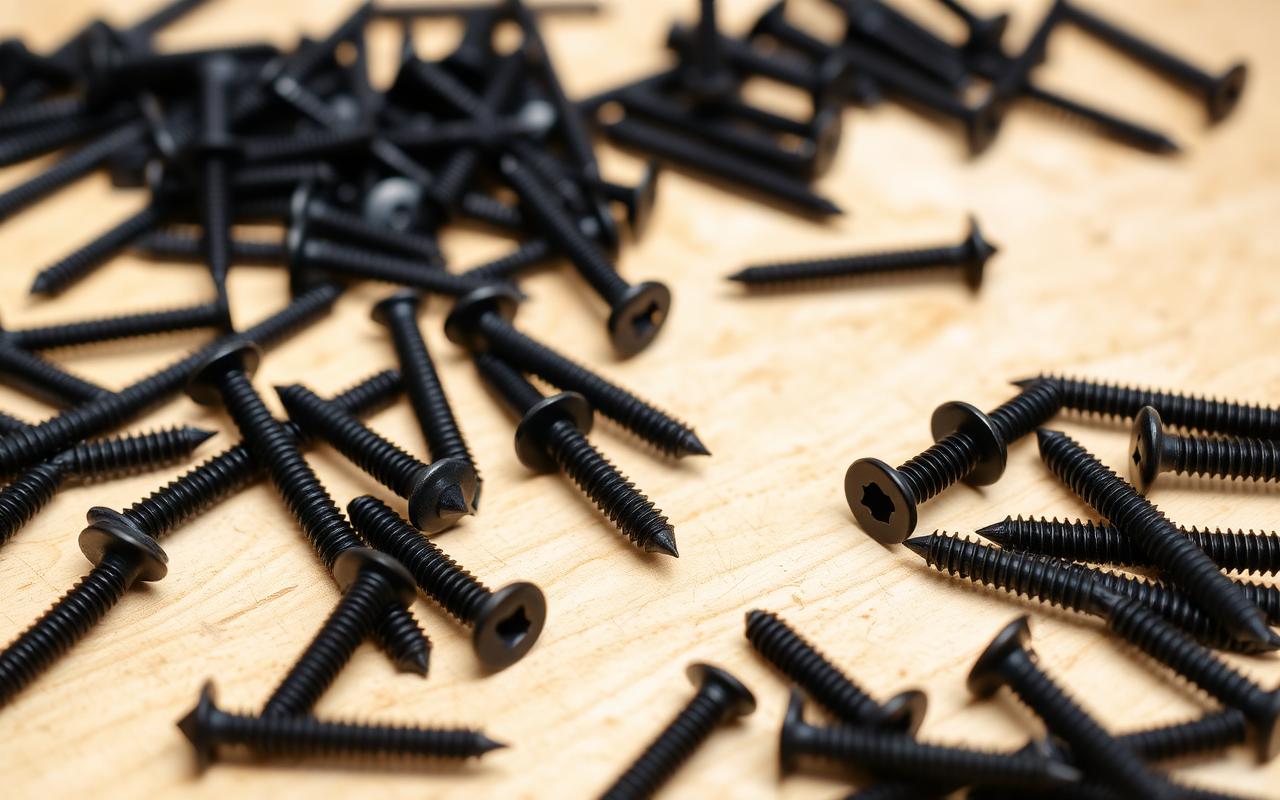
"Flooring screws" almost always means subfloor screws: coarse-thread, bugle-head screws designed to pull plywood or OSB subfloor tight to the floor joists. They are typically #8 or #10 gauge, 2 to 3 inches long, with a corrosion-resistant coating (yellow zinc, ceramic, or black phosphate). Common brands: GRK R4, Spax PowerLags, Simpson Strong-Tie SDS, Hillman PowerPro.
They are not the same as drywall screws, deck screws, or wood screws , though they look similar.
What Makes a "Flooring Screw" Different
- Coarse, deep threads for grip in softwood joists.
- Bugle head that sinks flush without splitting the plywood face.
- Star drive (T20 or T25) resists cam-out under high torque.
- Auger or self-drilling tip reduces the need for pilot holes.
- Corrosion coating rated for prolonged contact with treated wood and damp concrete.
Sizes for Different Applications
- 3/4 inch plywood to 2x10 joist: #8 x 2 1/2 inch.
- 5/8 inch plywood to 2x8 joist: #8 x 2 1/4 inch.
- Two layers of plywood to joist: #10 x 3 inch.
- 3/4 inch underlayment to existing subfloor: #6 x 1 1/4 inch.
Why Not Use Drywall Screws?
Drywall screws are brittle. They snap under shear load and corrode quickly. They are also fine-thread, which gives weak grip in subfloor wood. Subfloor screws are heat-treated for shear strength and coated for corrosion. The difference is the same as wallpaper paste vs construction adhesive , both stick, but only one belongs on a structural assembly.
Nails vs Screws for Subfloor
Code allows ring-shank or spiral nails for subfloor attachment, but screws are increasingly preferred because they eliminate squeaks. Most modern builders combine glue (PL Premium or AdvanTech adhesive) with screws every 6 inches on the edges and 8 to 10 inches in the field.
Hardwood Flooring Cleats and Staples
Hardwood and engineered hardwood are not installed with screws. They use either cleats (L-shaped flooring nails, fired through a flooring nailer) or staples (narrow-crown or wide-crown). See the cleats-vs-staples post for the comparison.
Pre-Drilling and Countersinking
Most modern subfloor screws are self-drilling and self-countersinking thanks to nibs or wings under the head. For dense subfloor materials like Advantech, pre-drilling is still recommended near edges to prevent splitting.
Cost
A 5-pound box of #8 x 2 1/2 inch subfloor screws runs $25 to $40 in 2026 and covers approximately 1,500 to 2,000 square feet of subfloor at typical spacing. Pro-grade premium brands (GRK, Spax) cost 2 to 3x generic boxes but rarely strip or snap.
Common Failures and Fixes
The two most common subfloor-screw problems are stripped heads and screws that snap mid-drive. Stripped heads usually mean the wrong driver bit or a worn bit, switch to a fresh T25 bit before assuming the screw is bad. Snapping mid-drive means you hit a hidden knot or you drove without a pilot hole through dense engineered subfloor. Pre-drilling solves both.
When You Need a Specialty Screw
Squeaky existing floors can be silenced from above with Squeeeeek-No-More or Counter-Snap screws, which break off below the surface and disappear under carpet. Hardwood face-screw repairs use trim-head screws with a colour-matched plug. Cement board to subfloor uses corrosion-resistant cement-board screws, not generic subfloor screws.
Storage and Shelf Life
Coated subfloor screws keep indefinitely if stored dry in their original packaging. If the coating shows white powder or rust spots, the corrosion protection is compromised, do not use them in damp or treated-wood applications. A sealed plastic tub in a heated workshop is the gold standard.
Frequently Asked Questions
Will this answer change in 5 years?
Pricing and product lines drift, but the underlying physics of flooring (moisture, expansion, wear layer) does not. The buying principles in this guide hold long-term.
Is the answer different in the UK and Europe?
Mostly the same. Retailers like B&Q, Wickes and Carpetright sell equivalent product categories, and EU EN standards mirror North American ASTM tests closely.
What about commercial settings?
Commercial floors use the same materials but higher wear ratings (AC5 laminate, 28 mil vinyl, commercial-grade epoxy). Spec sheets state the heaviest foot traffic the product is rated for.
Where can I get a second opinion?
The National Wood Flooring Association (NWFA), Resilient Floor Covering Institute (RFCI), and World Floor Covering Association (WFCA) all publish free consumer guidance and certified-installer locators.
Pro Tips From the Trade
- Order 10 percent extra. Cuts, mistakes and future repairs add up. One spare carton stashed in the basement is cheap insurance.
- Photograph every layer. Subfloor, vapour barrier, expansion gap, transitions. Warranty claims hinge on documentation.
- Save the lot number. Replacement planks must match the production run or the colour will not line up.
- Acclimate before installing. 48 hours minimum in the room of installation for click-lock products; 7 to 14 days for engineered or solid hardwood.
Bottom Line
Flooring decisions are part budget, part lifestyle, part long-term resale. Prep the subfloor properly, match the product to the room, and follow the manufacturer's install spec, and even a mid-tier material will outperform a premium one that was rushed in. Cut corners on prep and even a top-shelf plank will telegraph every flaw underneath.