Quick Answer
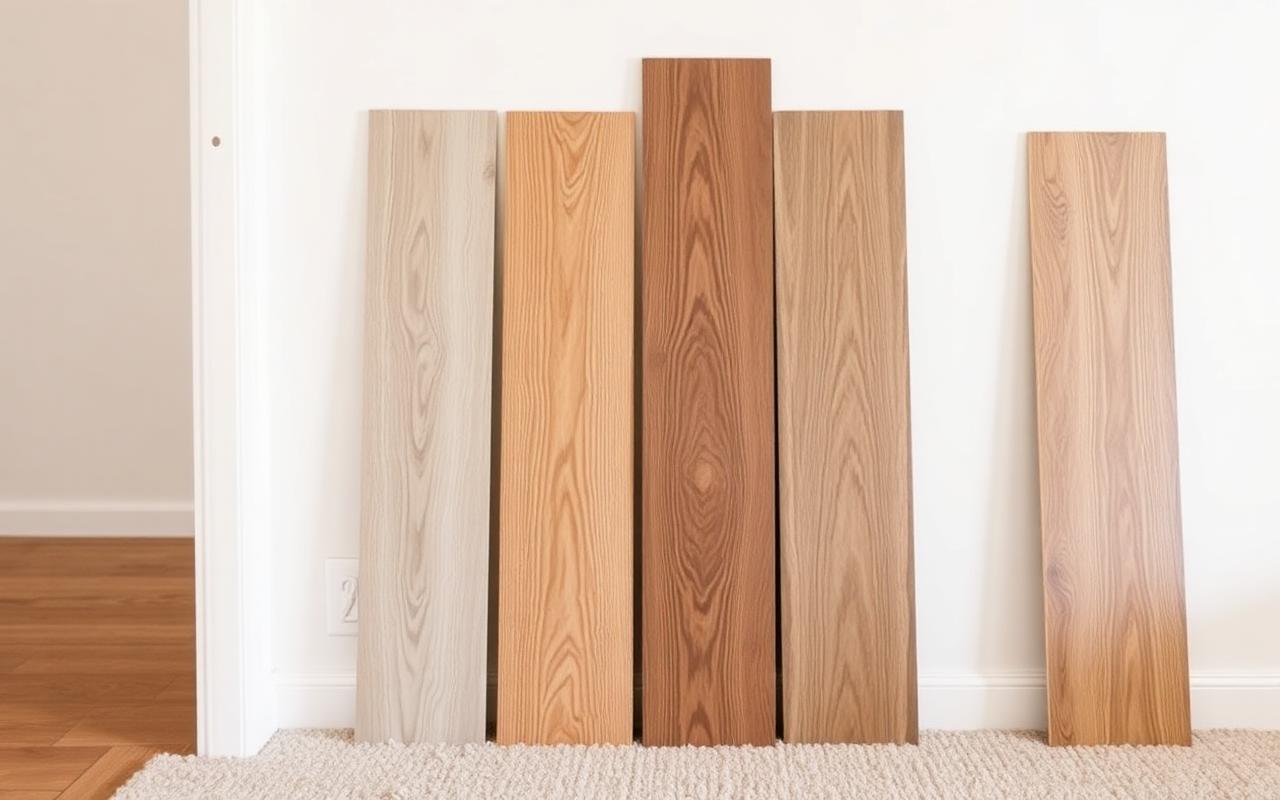
The 10 mainstream flooring options for residential builds and remodels in 2026 are: luxury vinyl plank (LVP), laminate, engineered hardwood, solid hardwood, ceramic or porcelain tile, broadloom carpet, sheet vinyl, bamboo, cork, and polished or epoxy concrete. Each has clear strengths in specific rooms.
Best Option by Room
- Kitchen: rigid-core LVP, porcelain tile, or sealed engineered hardwood.
- Living room: engineered or solid hardwood, LVP, or wool carpet.
- Bedroom: carpet (the most popular), LVP, or laminate.
- Bathroom: porcelain tile, sheet vinyl, or rigid-core LVP only.
- Basement: rigid-core LVP, epoxy concrete, or carpet tile.
- Entry / mudroom: porcelain tile or rigid-core LVP.
- Home office: LVP, laminate, or low-pile carpet.
- Garage: epoxy or polyaspartic-coated concrete.
- Sunroom: porcelain tile or UV-rated LVP.
- Stairs: oak treads, carpet runner, or matching LVP with stair-nose moulding.
Decision Framework
Three questions narrow any decision:
- Will the room get wet? If yes , tile, sheet vinyl, or rigid-core LVP only.
- How heavy is the traffic? If high , AC4+ laminate, 20+ mil LVP, porcelain tile, or solid hardwood.
- What is the budget? Under $5/sq ft installed: laminate, LVP, sheet vinyl, carpet. Over $10: hardwood, tile, stone.
What's Hot in 2026
- Wide-plank rigid-core LVP (7 to 9 inch wide planks).
- European white oak engineered hardwood with matte or wire-brushed finish.
- Large format porcelain tile (24 by 48 or larger) with wood-look or stone-look print.
- Microcement and polished concrete for modern minimalist builds.
- Antimicrobial wear layers on LVP, especially in healthcare-adjacent residential.
What's Fading
- Pillowed-edge laminate , replaced by squared-edge waterproof laminate.
- Tile-look sheet vinyl with print-only grout lines.
- Wall-to-wall carpet in main living areas (still strong in bedrooms).
- Dark, glossy hardwood (matte and wire-brushed dominate).
Eco Options Worth Knowing
If sustainability is a priority, lean toward linoleum, cork, FSC-certified solid hardwood, or strand-woven bamboo. All four have lower embodied carbon than vinyl or imported stone. Refinishing existing hardwood is almost always greener than replacing it.
Where to Compare in Person
Visit at least three retailers before deciding: a big-box (Home Depot or Lowes), a flooring specialty store (Flooring America, Floor and Decor), and one independent local installer. The breadth of samples and pricing variation between them is significant.
Underfoot Comfort and Sound
Material affects how a floor sounds and feels far more than most buyers expect. Tile and stone are the loudest, with footfalls and dropped utensils echoing through hard rooms. Engineered hardwood with a quality underlayment falls in the middle. LVP with attached IXPE pad is one of the quietest hard-surface options, and carpet is quietest of all. If your bedroom sits above a living room, that matters a lot.
Underfoot temperature is the other comfort dimension. Tile feels cold underfoot in winter unless paired with radiant heat. Cork and carpet feel warmest. Wood and laminate are in between. Many buyers in northern climates pair tile in wet rooms with radiant heat for the best of both: waterproof surface, warm feet.
Maintenance by Material
Low maintenance options include LVP, porcelain tile and laminate, all of which need only routine sweeping and a damp mop. Higher maintenance options include natural stone (re-seal yearly), solid hardwood (recoat every 7 to 10 years), and carpet (deep clean annually). Pick a material whose maintenance schedule matches your willingness to do it, otherwise the floor will look older than its age.
Frequently Asked Questions
Will this answer change in 5 years?
Pricing and product lines drift, but the underlying physics of flooring (moisture, expansion, wear layer) does not. The buying principles in this guide hold long-term.
Is the answer different in the UK and Europe?
Mostly the same. Retailers like B&Q, Wickes and Carpetright sell equivalent product categories, and EU EN standards mirror North American ASTM tests closely.
What about commercial settings?
Commercial floors use the same materials but higher wear ratings (AC5 laminate, 28 mil vinyl, commercial-grade epoxy). Spec sheets state the heaviest foot traffic the product is rated for.
Where can I get a second opinion?
The National Wood Flooring Association (NWFA), Resilient Floor Covering Institute (RFCI), and World Floor Covering Association (WFCA) all publish free consumer guidance and certified-installer locators.
Pro Tips From the Trade
- Order 10 percent extra. Cuts, mistakes and future repairs add up. One spare carton stashed in the basement is cheap insurance.
- Photograph every layer. Subfloor, vapour barrier, expansion gap, transitions. Warranty claims hinge on documentation.
- Save the lot number. Replacement planks must match the production run or the colour will not line up.
- Acclimate before installing. 48 hours minimum in the room of installation for click-lock products; 7 to 14 days for engineered or solid hardwood.
Bottom Line
Flooring decisions are part budget, part lifestyle, part long-term resale. Prep the subfloor properly, match the product to the room, and follow the manufacturer's install spec, and even a mid-tier material will outperform a premium one that was rushed in. Cut corners on prep and even a top-shelf plank will telegraph every flaw underneath.