Quick Answer
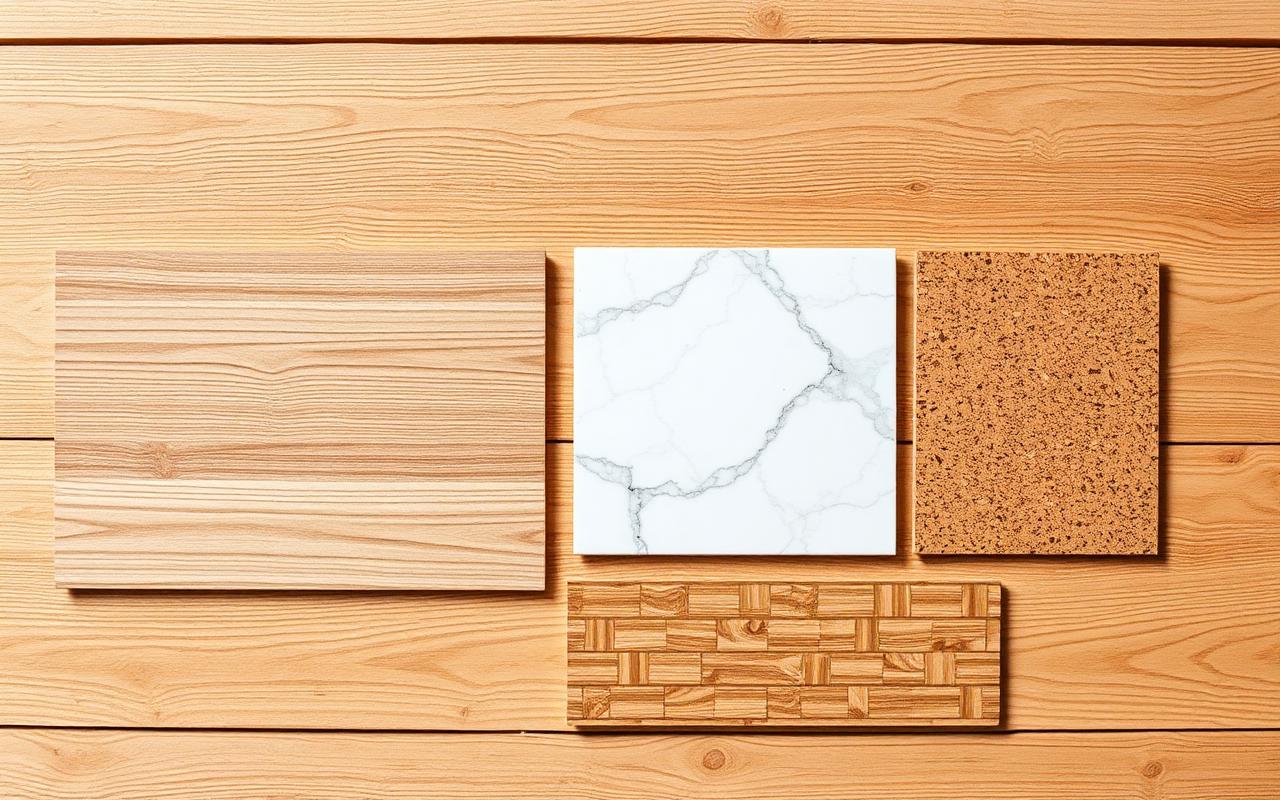
Flooring materials fall into four families: wood-based (solid hardwood, engineered hardwood, bamboo, cork), resilient (vinyl, linoleum, rubber), hard (ceramic, porcelain, natural stone, concrete), and soft (broadloom carpet, carpet tile, area rugs). Laminate sits awkwardly between wood-based and resilient because its wear layer is plastic but its core is wood-fibre HDF.
Wood-Based
- Solid hardwood: 3/4 inch milled plank, refinishable 6 to 10 times.
- Engineered hardwood: real wood veneer (2 to 6 mm) on multi-ply plywood. Better for slab installs and radiant heat.
- Bamboo: strand-woven bamboo rivals oak for hardness. Renewable in 5 to 7 years vs 40+ for oak.
- Cork: harvested from cork-oak bark without killing the tree. Naturally antimicrobial and sound-absorbing.
Resilient
- Sheet vinyl: 6-foot and 12-foot rolls, printed pattern, waterproof.
- Luxury vinyl tile and plank (LVT/LVP/SPC/WPC): the dominant residential category in 2026.
- Linoleum: linseed oil, wood flour, cork dust on a jute backing. The "original" natural resilient floor.
- Rubber: commercial and gym flooring. Excellent slip resistance.
Hard
- Ceramic tile: clay-bodied tile, glazed for stain resistance.
- Porcelain tile: denser ceramic with under 0.5 percent water absorption. Frost resistant and harder.
- Natural stone: marble, granite, limestone, travertine, slate, soapstone. Highest material cost.
- Concrete: polished, stained, or epoxy-coated. Increasingly popular in modern and industrial-style homes.
Soft
- Broadloom carpet: 12-foot or 15-foot wide rolls. Tufted or woven construction.
- Carpet tile: 18 by 18 or 24 by 24 inch modular squares. Easier to repair and replace.
- Area rugs: not technically flooring but often the warmth layer over hard floors.
Where Laminate and Hybrid Fit
Modern laminate has an HDF (high-density fibreboard) core wrapped in a melamine wear layer with a printed décor layer in between. It is technically wood-based but performs like resilient. Newer hybrid products like Pergo Extreme, Mohawk RevWood Plus and Shaw Floorté Pro Plus blur the line further by using a waterproof core.
Sustainability by Material
- Lowest embodied carbon: linoleum, cork, locally sourced solid hardwood, bamboo.
- Mid: engineered hardwood, polished concrete (if the slab already exists), ceramic tile.
- Highest embodied carbon: imported natural stone, vinyl, carpet from virgin nylon.
How to Choose Material
Three questions filter most decisions: (1) Is the room wet, sometimes wet, or always dry? (2) How heavy is the foot traffic? (3) What is your budget per square foot installed? Cross-reference those with the family lists above and the shortlist usually drops to 2 to 3 candidate products. See nwfa.org for wood-floor guidance and rfci.com for resilient flooring standards.
How Materials Behave with Moisture
The single biggest sorting axis for flooring materials is moisture tolerance. Tile, stone, sheet vinyl, rigid-core LVP and epoxy concrete are fully waterproof. Engineered hardwood, laminate and cork are water-resistant for brief spills. Solid hardwood and carpet are damaged by sustained moisture. Knowing this ordering filters out wrong choices fast for bathrooms, kitchens and basements.
Indoor Air Quality Differences
Carpet, vinyl and laminate can off-gas VOCs in the first 30 to 90 days after installation. Look for FloorScore, GREENGUARD Gold, or CRI Green Label Plus certification, all of which cap VOC emissions. Solid hardwood with a water-based site-applied finish is the cleanest air-quality choice; pre-finished products vary widely.
Pet and Kid Considerations
Households with dogs lean LVP or porcelain tile for claw and accident resistance. Households with toddlers often pair carpet bedrooms with LVP main living. Avoid soft woods (pine, fir) in pet households, they dent and scratch in months.
Frequently Asked Questions
Will this answer change in 5 years?
Pricing and product lines drift, but the underlying physics of flooring (moisture, expansion, wear layer) does not. The buying principles in this guide hold long-term.
Is the answer different in the UK and Europe?
Mostly the same. Retailers like B&Q, Wickes and Carpetright sell equivalent product categories, and EU EN standards mirror North American ASTM tests closely.
What about commercial settings?
Commercial floors use the same materials but higher wear ratings (AC5 laminate, 28 mil vinyl, commercial-grade epoxy). Spec sheets state the heaviest foot traffic the product is rated for.
Where can I get a second opinion?
The National Wood Flooring Association (NWFA), Resilient Floor Covering Institute (RFCI), and World Floor Covering Association (WFCA) all publish free consumer guidance and certified-installer locators.
Pro Tips From the Trade
- Order 10 percent extra. Cuts, mistakes and future repairs add up. One spare carton stashed in the basement is cheap insurance.
- Photograph every layer. Subfloor, vapour barrier, expansion gap, transitions. Warranty claims hinge on documentation.
- Save the lot number. Replacement planks must match the production run or the colour will not line up.
- Acclimate before installing. 48 hours minimum in the room of installation for click-lock products; 7 to 14 days for engineered or solid hardwood.
Bottom Line
Flooring decisions are part budget, part lifestyle, part long-term resale. Prep the subfloor properly, match the product to the room, and follow the manufacturer's install spec, and even a mid-tier material will outperform a premium one that was rushed in. Cut corners on prep and even a top-shelf plank will telegraph every flaw underneath.