Quick Answer
Nailed-down hardwood and tile should run under base cabinets. Floating floors (laminate, click-lock vinyl plank, engineered floating wood) should never run under cabinets, the weight pins the floor and it cannot expand. Glue-down vinyl and sheet vinyl can go either way.
The deeper rule: if the floor needs to move with humidity, do not pin it under heavy cabinets. If it is permanently attached to the subfloor, install it first.
By Flooring Type
- Solid nail-down hardwood. Install first. The floor is permanently attached, the cabinets sit on top.
- Engineered hardwood, nail or glue. Same as solid, install first.
- Ceramic or porcelain tile. Install first, mortar bonds to the subfloor, cabinets bear weight on the tile.
- Laminate. Install around cabinets. It needs to expand and contract.
- Click-lock LVP / SPC. Install around cabinets. Same expansion issue.
- Glue-down LVT. Either way works, most pros install first for a cleaner look.
- Sheet vinyl. Install first if reasonable, around if the room is huge.
- Carpet (uncommon in kitchens). Install around.
Why Floating Floors Cannot Go Under
A floating floor is engineered to expand and contract several millimetres in every direction across a room with seasonal humidity. Cabinet weight (300 to 800 lbs per linear foot loaded) pins the floor in place. When the floor tries to move, it either buckles in the open part of the room or pulls apart at the click joints.
What Changes With the Decision
Going under cabinets means the floor is the lowest layer, cabinet height plus countertop sets the working height. Going around cabinets means the floor sits 1/4 to 3/8 inch lower than the cabinet base, which is hidden by the toe kick.
Future Renovation Argument
Running hardwood or tile under cabinets gives you maximum flexibility for a future kitchen remodel. You can change the entire cabinet footprint without worrying about a gap of bare subfloor where old cabinets used to be. This is the strongest case for "always go under" when the floor is nail-down or tiled.
Appliance Garages and Dishwashers
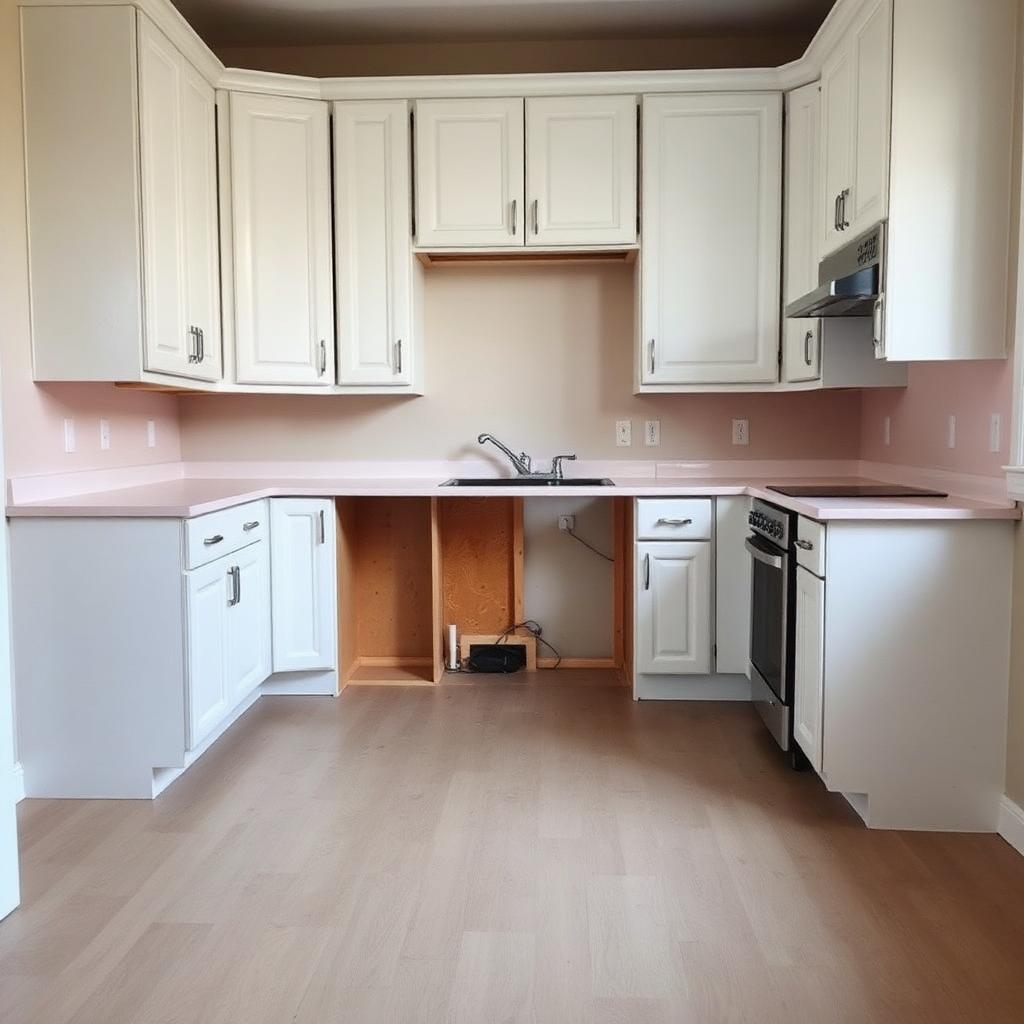
Even when the field floor stops at the cabinet, the floor must run under the dishwasher and fridge cavities so those appliances can be pulled out and serviced. Plan for a full plank width under each appliance opening.
Order of Operations
- Subfloor prep, leveling.
- Hardwood or tile install (if floating, skip this step).
- Cabinet install (shimmed off the new floor).
- Floating floor install around the cabinets (if applicable).
- Countertops.
- Toe kick to cover any reveal at the cabinet base.
The Insurance Argument for Tile
If a dishwasher floods (a leading kitchen claim per Travelers and State Farm reports), tile that runs under the cabinet means the water sits on top of waterproof tile until you find it. A floating floor that stops at the cabinet means water can wick under the cabinet base where you cannot see it for days.
Bottom Line
Hardwood and tile, install first and run under cabinets. Laminate and click-lock vinyl, install around cabinets so they can expand. Always run the floor through dishwasher and fridge cavities so appliances can be serviced. Use the toe kick to hide any height differences.
FAQ: Flooring Under Kitchen Cabinets
Does flooring go under kitchen cabinets in a remodel?
Tile and hardwood do. Floating laminate and click-lock LVP stop at the cabinet base. The new kitchen designs of 2026 still follow the same rule.
What if I want to change cabinet layout later?
Hardwood or tile installed under cabinets gives you the most flexibility. You can rework the kitchen footprint without exposing bare subfloor.
How is appliance height handled?
Always run flooring under dishwasher, fridge and range cavities so appliances can be serviced. Add a full plank width under each appliance opening.
Does the floor need a vapor barrier under cabinets?
For tile and hardwood installed under cabinets in a basement-level kitchen, yes. Add the moisture barrier across the whole floor before any install.
Final Tips
- Nail-down hardwood and tile go first.
- Floating floors stop at the cabinet base.
- Always run under appliances.
- Use the toe kick to hide height differences.
Pro Tips From Installers
Professional installers in 2026 share a few habits that keep cabinet-floor jobs out of trouble. First, they always run a moisture meter on the subfloor before any install, especially in kitchens where dishwasher and ice-maker leaks are common. A reading above 14 percent moisture content means you wait or you risk warping the new floor within months.
Second, they shim cabinets level to a string line, not to the new floor surface. Cabinets installed before a floating floor get shimmed to the subfloor with packing strips so the toe kick clears the future floor by a quarter inch.
Third, the dishwasher cavity gets a moisture-resistant floor regardless of what runs in the kitchen. Even if the rest of the kitchen is laminate, the dishwasher slot is often tile or LVT for spill protection.
Fourth, expansion gaps around cabinets matter even when the floor stops at the cabinet. Leave 1/4 inch between the last plank and the cabinet base, then cover with quarter round or shoe moulding for a clean finish.