Quick Answer
Yes, flooring should be installed under the dishwasher in nearly every case. It protects the subfloor from leaks, gives you the correct cabinet height for opening the dishwasher door, and lets you remove the appliance later without tearing up the floor in the surrounding kitchen.
The one exception is when you are floating click-lock flooring across the entire kitchen, the dishwasher should rest on the floor, not be installed on top of it, because the floor needs room to expand and contract.
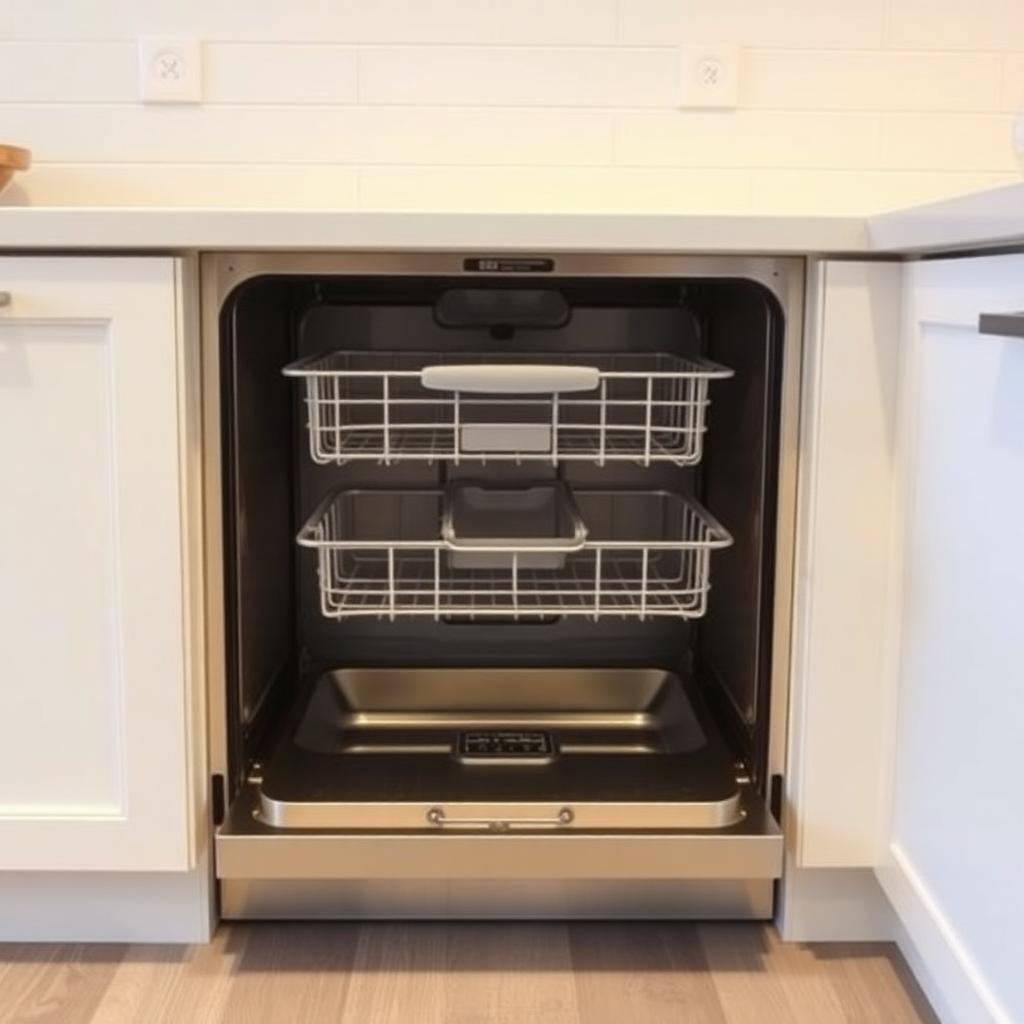
Why Flooring Goes Under the Dishwasher
- Leak protection. Dishwashers leak. Statistically about 1 in 6 households deal with a dishwasher leak in any 10-year span. A waterproof or sealed floor underneath limits subfloor damage.
- Future appliance swaps. Dishwasher dimensions change. A new appliance pulled out of an alcove with no floor under it will sit lower than the new finished floor, leaving an ugly gap or, worse, jamming.
- Height matching. The dishwasher's leveling feet adjust into a finished floor, not a subfloor. Without the floor under it, the appliance sits lower than the countertop opening.
- Resale. Home inspectors flag flooring that stops at the dishwasher opening as cut-corner work.
The Floating Floor Exception
Click-lock laminate, LVP and engineered floating floors need an expansion gap around the entire perimeter, including under heavy appliances. If you trap the floor under a 200 pound dishwasher, the floor cannot move and will buckle in summer or gap in winter.
The correct sequence for a floating floor is:
- Install the cabinets.
- Install the floating floor up to the cabinet edges.
- Set the dishwasher ON the floor (the feet rest on the floor, the appliance is not anchored through the floor).
- Anchor the dishwasher to the side cabinets or the underside of the countertop, never through the floor.
The Glue-Down or Nail-Down Sequence
For tile, glue-down LVP, and nail-down hardwood, the order is different:
- Install the cabinets.
- Tile or glue down the floor across the entire kitchen, including into the dishwasher alcove.
- Set the dishwasher on top.
If You Are Replacing Just the Floor
You will need to pull the dishwasher out (turn off water and power, disconnect the supply line, drain hose and electrical, unscrew the brackets from the underside of the countertop). Slide it out, replace the floor in the alcove, then reinstall.
Most homeowners can do this in an hour. A plumber charges 100 to 250 dollars in 2026 if you do not want to handle the supply line yourself.
If You Did Not Install Flooring Under the Existing Dishwasher
You can leave it for now, but plan to fix it before:
- You replace the dishwasher.
- You sell the house.
- You replace the surrounding floor.
A new dishwasher of different dimensions will not match the floor cut you have now.
Plumbing Considerations
The supply line and drain run through the cabinet wall, not the floor, so flooring underneath does not interfere with plumbing. The electrical outlet is typically in the adjacent cabinet, also not the floor.
Common Mistakes
- Stopping tile at the dishwasher cutout and grouting up to the edge (looks unfinished, traps water).
- Anchoring a dishwasher through a floating floor (causes buckling).
- Forgetting to adjust the dishwasher's leveling feet after installing the floor (door scrapes).
- Not leaving a 1/4 inch gap at the floating floor edge under the dishwasher (no expansion room).
Bottom Line
Run the flooring under the dishwasher in almost every case. For floating floors, set the dishwasher on top of the floor (not anchored through it) to preserve expansion. For tile, glue-down vinyl and nail-down hardwood, install the floor first and set the dishwasher on top. The future-you who is replacing the dishwasher will thank you.
FAQ: Should Flooring Be Installed Under Dishwasher?
Should flooring be installed under the dishwasher if it is a floating floor?
The floor should run into the dishwasher alcove with a 1/4 inch expansion gap. The dishwasher rests on the floor but is anchored to the surrounding cabinets, not through the floor itself.
Should flooring be installed under the dishwasher with tile?
Yes. Tile and glue-down floors are installed across the entire kitchen, including under the dishwasher footprint, before the appliance is set.
Should flooring be installed under the dishwasher for resale?
Yes. Home inspectors flag flooring that stops at the dishwasher opening as a cut-corner job; appraisers note it on premium homes.
What if my current floor stops at the dishwasher?
Plan to fix it before you replace the dishwasher, sell the house, or replace the surrounding floor. A new dishwasher with different dimensions will not match the existing cut.
How do I retrofit flooring under the dishwasher?
Turn off water and power, disconnect the supply line, drain hose and electrical, unscrew the anchor brackets, slide the appliance out, install the floor in the alcove, then reinstall and re-level.
Will the dishwasher fit after I add flooring?
Adjust the leveling feet to compensate for the new floor thickness. Standard dishwashers have 1 to 2 inches of height adjustment.
Should flooring be installed under the dishwasher in a rental?
Yes if you are doing a full kitchen reno. For a quick freshen-up, you can leave the existing dishwasher in place and cut flooring around it, but plan to do it right the next time the appliance changes.